Tuesday, February 10, 2009
Finally starting to pack for the Left Coast trip. Hope the plane gets out in the 50 MPH winds tomorrow.
Read the full post here ...
Monday, February 02, 2009
Talked too much and listened too little. Got carried away by common interests, and forgot to shut up.
Read the full post here ...
Monday, January 26, 2009
"Intro" to a couple of developers I've only known over the phone for 3 years! Great to put faces w/ names.
Read the full post here ...
Wednesday, December 31, 2008
Late nominee for Woman of the Year 2008. I want to adopt her as my honorary Nana.
http://ping.fm/IaATy Read the full post here ...
Saturday, November 04, 2006
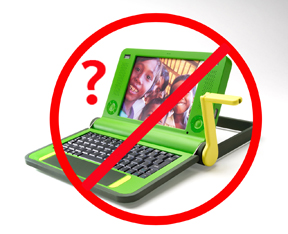
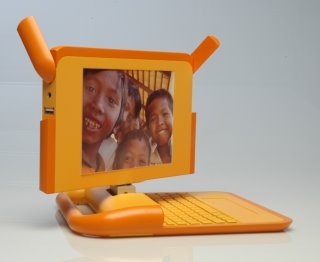
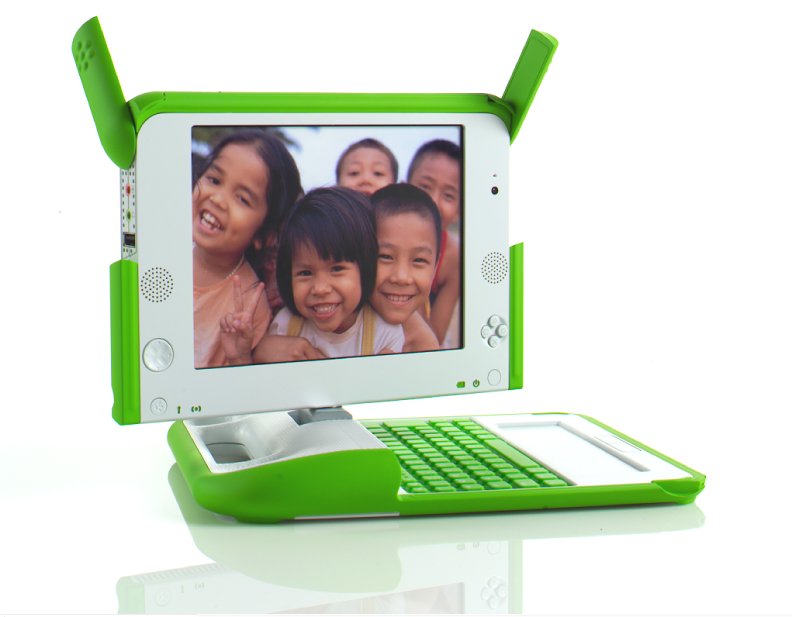
Thailand Bails on OLPC (now known simply as "XO")
Well, apparently the new military-led government in Thailand has a thing about cheap computers. Or, at least it would seem that way. The Thai government, according to sources there, has backed out of a deal to buy a million of the OLPC Project's lappies. The information minister has derided the project as a "toy," and they've called off the whole deal.

This as the first 50 real, live units ship out to Brazil for testing in the wild. Way to kill the buzz, Thailand! Sheesh!
And lest we go two months without another alphabet-soup moniker to throw around, Negroponte's gang has rechristened their machine the XO. It's all, like, totally huggy-kissy and all, but like, c'mon, dudes ... we were just getting used to calling it "2B1," and now you go and change and we have to get all new keywords and labels and search engine tags and whatnot. Read the full post here ...

This as the first 50 real, live units ship out to Brazil for testing in the wild. Way to kill the buzz, Thailand! Sheesh!
And lest we go two months without another alphabet-soup moniker to throw around, Negroponte's gang has rechristened their machine the XO. It's all, like, totally huggy-kissy and all, but like, c'mon, dudes ... we were just getting used to calling it "2B1," and now you go and change and we have to get all new keywords and labels and search engine tags and whatnot. Read the full post here ...
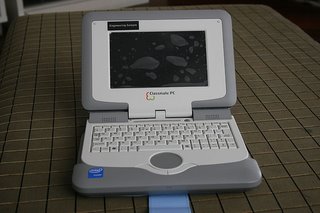
Classmate PC Gets (Almost) Real
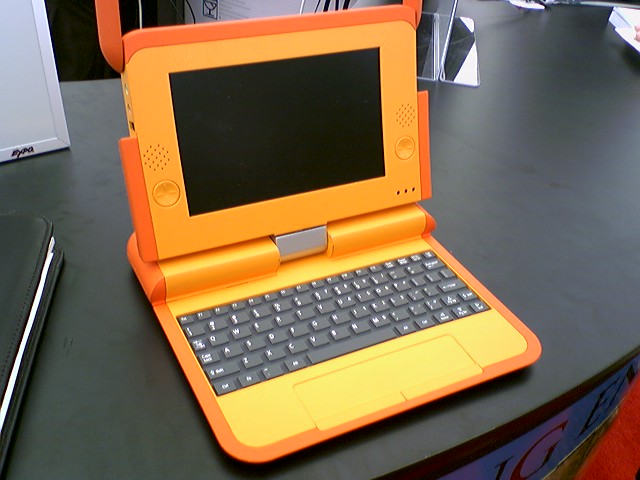
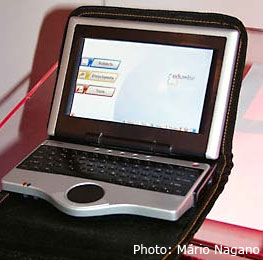
Those of you scoring at home can add a tally mark to the until-now-empty Intel column on the scorecard of low-cost, third-world-loving computers. The Classmate PC, which can be had for the price of three units from that other organization, has finally got some specs.

Firstly, lest we think the developing world will be completely Micro$uck-free in the oh-so-connected future, the Classmate will be sporting everybody's FAVE OS, Windows XP. (There's a third of the $400 price tag, right there!)
To power that resource-loving XP, the Classmate will carry a whopping 256MB DDR2 RAM (can you even boot XP past a Blue Screen Of Death with that?), a single lonely GB of NAND flash storage, a 7" display at 800x400, and a 6-cell lithium-ion battery (Sony? Wait, do we smell smoke??). Oddly, the Classmate d33t5 FROM INTEL fail to mention a processor. What up with that?
Anyway, you can get your Classmate on in the Spring of 2007, allegedly. For those developing nations who will eschew the open-source OLPC, the Classmate will be the, uh, not exactly "Cadillac," but probably a (small) step up from the hand-crank love. Cool, huh?
Photo credit: Ricardo's Blog, at (oddly enough) www.ricardosblog.com. Read the full post here ...

Firstly, lest we think the developing world will be completely Micro$uck-free in the oh-so-connected future, the Classmate will be sporting everybody's FAVE OS, Windows XP. (There's a third of the $400 price tag, right there!)
To power that resource-loving XP, the Classmate will carry a whopping 256MB DDR2 RAM (can you even boot XP past a Blue Screen Of Death with that?), a single lonely GB of NAND flash storage, a 7" display at 800x400, and a 6-cell lithium-ion battery (Sony? Wait, do we smell smoke??). Oddly, the Classmate d33t5 FROM INTEL fail to mention a processor. What up with that?
Anyway, you can get your Classmate on in the Spring of 2007, allegedly. For those developing nations who will eschew the open-source OLPC, the Classmate will be the, uh, not exactly "Cadillac," but probably a (small) step up from the hand-crank love. Cool, huh?
Photo credit: Ricardo's Blog, at (oddly enough) www.ricardosblog.com. Read the full post here ...
Sunday, October 22, 2006
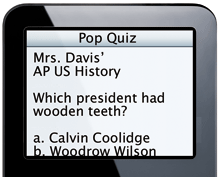
Education Tools for iPod
A company called Talking Panda has come up with what appears to be a neat little Mac application (sorry, Windows users!) that lets you build "study tools" that can be replayed on an iPod. Details are a bit sketchy, but from the product writeup it appears that teachers would use iWriter to create combinations of text, audio, and even video that is specifically formatted for replay on the iPod display. For students without the indispensible and ubiquitous little wonder, the files can also be uploaded to .Mac or to a teacher's website for use on a Windows machine.

Templates provided include syllabi for college and high school, lecture notes, multimedia presentation, "ESL Listen and Learn," and "radio show." As you create your project, you can click a button to see how it will appear on an iPod, making sure your ideas translate to the small screen. You can attach audio to your lecture notes, so you can "illustrate" your lecture notes rather than just provide an audio version of your lecture. You can also link to the audio of the lecture, though, so you can provide both. But hey, why not have both?? iWriter lets you build multi-page projects, similar to building a multi-page website, and then you can upload to .Mac, or even use the final project as a website of sorts, by posting the pages to your class site.
Talking Panda doesn't disclose pricing or let you download a demo without providing an e-mail address (shame on them!) but at least they promise not to sell your d33ts to someone else. The software is only $30, but you can try it free for 15 days. Cool, huh? Read the full post here ...

Templates provided include syllabi for college and high school, lecture notes, multimedia presentation, "ESL Listen and Learn," and "radio show." As you create your project, you can click a button to see how it will appear on an iPod, making sure your ideas translate to the small screen. You can attach audio to your lecture notes, so you can "illustrate" your lecture notes rather than just provide an audio version of your lecture. You can also link to the audio of the lecture, though, so you can provide both. But hey, why not have both?? iWriter lets you build multi-page projects, similar to building a multi-page website, and then you can upload to .Mac, or even use the final project as a website of sorts, by posting the pages to your class site.
Talking Panda doesn't disclose pricing or let you download a demo without providing an e-mail address (shame on them!) but at least they promise not to sell your d33ts to someone else. The software is only $30, but you can try it free for 15 days. Cool, huh? Read the full post here ...
Saturday, October 21, 2006
Univ. of Arizona and IBM to Unleash Web 2.0
Web 2.0 is coming to the classroom at Arizona University, and, eventually, to Global 1,000 businesses. The new program, for MIS and Marketing students, is designed to attract and train students in Web 2.0 technologies, and how they can be applied to business in the 21st century.

Wikis, blogs, social networking, tagging, and other popular technologies are destined not just to impact businesses, but to attract students to an MIS program with dwindling enrollment. By one estimate, enrollment in computer science programs is down a whopping 32% nationwide over the last four years. AU and Big Blue intend to reverse the trend, in part by offering a curriculum steeped in technologies the kiddies are already using online. The logic goes something like this: "the kids dig this stuff on their favorite sties; let's teach 'em how to build it and put some butts in the seats."
Of course, the ultimate effect on modern business remains to be seen. While companies such as YouTube (now GooTube), MySpace, and Digg show explosive growth in traffic, they have yet to establish clear monetization models. Perhaps the Econ department at AU should look at this program as well, offering tips not just in how to build Web 2.0 tools, but how to leverage them and make money.
The program at AU will probably be one of many efforts to build MIS enrollment across the country, but the partnership with IBM may well give it a technical and financial foundation that bodes well for success.
Cool, huh? Read the full post here ...

Wikis, blogs, social networking, tagging, and other popular technologies are destined not just to impact businesses, but to attract students to an MIS program with dwindling enrollment. By one estimate, enrollment in computer science programs is down a whopping 32% nationwide over the last four years. AU and Big Blue intend to reverse the trend, in part by offering a curriculum steeped in technologies the kiddies are already using online. The logic goes something like this: "the kids dig this stuff on their favorite sties; let's teach 'em how to build it and put some butts in the seats."
Of course, the ultimate effect on modern business remains to be seen. While companies such as YouTube (now GooTube), MySpace, and Digg show explosive growth in traffic, they have yet to establish clear monetization models. Perhaps the Econ department at AU should look at this program as well, offering tips not just in how to build Web 2.0 tools, but how to leverage them and make money.
The program at AU will probably be one of many efforts to build MIS enrollment across the country, but the partnership with IBM may well give it a technical and financial foundation that bodes well for success.
Cool, huh? Read the full post here ...
Tuesday, October 17, 2006
Want to Learn Something Cool?
If you've been following Google's new offering, still in Beta, of Blogger.com, you may already have found "Want to Learn Something Cool?" But just in case, it's worth a quick post here.
Want to Learn Something Cool is, for the moment, a mirror of Want to Know Something Cool. That is, the posts are identical, though the design is a bit different. Why two blogs, you wonder? Well, the new version that's still in Beta offers post tagging-- a handy way to throw a few keywords against each post, theoretically making it easier to find the posts of most relevance to a given reader.
So while it's in Beta, we're running Want to Learn Something Cool over there, with the same posts that appear here, where you've (hopefully) set your bookmark. Eventually, the post tagging option will find its' way from Beta to general release, and theoretically we won't need two blogs anymore. But for now, we're running parallel blogs to try out the new toolsets from Google. This is just a heads-up that Learn Something Cool is out there; we'll still publish here for the foreseeable future. If you check it out and find you have a preference, by all means, post a comment to either place and let us know what you like (or don't) about the new blog. Thanks for reading! Read the full post here ...
Want to Learn Something Cool is, for the moment, a mirror of Want to Know Something Cool. That is, the posts are identical, though the design is a bit different. Why two blogs, you wonder? Well, the new version that's still in Beta offers post tagging-- a handy way to throw a few keywords against each post, theoretically making it easier to find the posts of most relevance to a given reader.
So while it's in Beta, we're running Want to Learn Something Cool over there, with the same posts that appear here, where you've (hopefully) set your bookmark. Eventually, the post tagging option will find its' way from Beta to general release, and theoretically we won't need two blogs anymore. But for now, we're running parallel blogs to try out the new toolsets from Google. This is just a heads-up that Learn Something Cool is out there; we'll still publish here for the foreseeable future. If you check it out and find you have a preference, by all means, post a comment to either place and let us know what you like (or don't) about the new blog. Thanks for reading! Read the full post here ...
Monday, October 16, 2006
Bully to be Set Loose on the World Tomorrow
Note To Self, October 17th: Wear wedgie-proof undies.
"Bully," the controversial T-rated videogame, has been greenlighted for release by Florida Judge Ronald Friedman. Rockstar Games, home of the not-for-the-fainthearted Grand Theft Auto series, will release the game October 17th as planned.

The Judge's ruling comes with a caveat, however: he will delay ruling on whether "Bully" constitutes a "public nuisance" until after the game is released. So while he has not held up publication, he has reserved judgment.
The case was brought to court by one Jack Thompson, a lawyer named by the BBC as "a well-known campaigner against what he believes are violent video games."
"Bully" has graced the pages of Want to Know Something Cool? before (here and here), when the case first garnered publicity. Public reaction was, uh, quiet.
In the game, the player takes the role of a kid who is potentially bullied by "bad guys," and needs to avoid being pummeled for lunch money while forming alliances with various cliques in the school population, who, presumably, are also going to torment, taunt, and give swirlies. It should be noted that the player of the game does NOT take on the role of bullying other characters.
In his ruling, which essentially deferred a ruling, Judge Friedman said, "There's a lot of violence. A whole lot. [But] Less than we see on television every night."
What's he watching, do you think? (Besides CSI: Miami?) Read the full post here ...
"Bully," the controversial T-rated videogame, has been greenlighted for release by Florida Judge Ronald Friedman. Rockstar Games, home of the not-for-the-fainthearted Grand Theft Auto series, will release the game October 17th as planned.

The Judge's ruling comes with a caveat, however: he will delay ruling on whether "Bully" constitutes a "public nuisance" until after the game is released. So while he has not held up publication, he has reserved judgment.
The case was brought to court by one Jack Thompson, a lawyer named by the BBC as "a well-known campaigner against what he believes are violent video games."
"Bully" has graced the pages of Want to Know Something Cool? before (here and here), when the case first garnered publicity. Public reaction was, uh, quiet.
In the game, the player takes the role of a kid who is potentially bullied by "bad guys," and needs to avoid being pummeled for lunch money while forming alliances with various cliques in the school population, who, presumably, are also going to torment, taunt, and give swirlies. It should be noted that the player of the game does NOT take on the role of bullying other characters.
In his ruling, which essentially deferred a ruling, Judge Friedman said, "There's a lot of violence. A whole lot. [But] Less than we see on television every night."
What's he watching, do you think? (Besides CSI: Miami?) Read the full post here ...
Sunday, October 15, 2006
More From Google on Classroom Potential
A recent post to the Official Google Blog spells out a bit more about how Google wants to integrate itself into the classroom workaday. From Writely and Google Spreadsheets to 3-D rendering to historical information and news, Google clearly aims to make itself *the* go-to resource for students and teachers. And hey, maybe that's not such a bad thing. After all, there are plenty of great tools and services available through the Mighty G, and while they're not the only game in town, they've done a pretty darn good job with the tools and services they've developed.

And according to analysts, Google has recently shifted focus, from a "build" mentality to an "integrate" mindset. This means that Google services will be increasingly seamless and mashups will make them easier to use and closer to the point of use.
Sure, there's Ask and Yahoo! and MSN for search, and Accuweather, and the websites of various libraries and museums, and there are other word processors and spreadsheet applications, other ways to get things done. But increasingly, Google is putting itself in the closest proximity to actual point-of-use. The breadth of services continues to grow, but their johnny-on-the-spot pervasiveness may be what gives Google the edge, as a one-stop shop for myriad mash-ups and tools and services that can enrich, engage, and enlighten. On the other hand, critics worry that making one vendor too central to the academic process can lead to dependence and narrow-mindedness.
Wherever you fall on the debate, there's no denying that there are lots of ways that Google can "play" in education. Whether or not they're accepted, and implemented, by teachers, remains to be seen. Read the full post here ...

And according to analysts, Google has recently shifted focus, from a "build" mentality to an "integrate" mindset. This means that Google services will be increasingly seamless and mashups will make them easier to use and closer to the point of use.
Sure, there's Ask and Yahoo! and MSN for search, and Accuweather, and the websites of various libraries and museums, and there are other word processors and spreadsheet applications, other ways to get things done. But increasingly, Google is putting itself in the closest proximity to actual point-of-use. The breadth of services continues to grow, but their johnny-on-the-spot pervasiveness may be what gives Google the edge, as a one-stop shop for myriad mash-ups and tools and services that can enrich, engage, and enlighten. On the other hand, critics worry that making one vendor too central to the academic process can lead to dependence and narrow-mindedness.
Wherever you fall on the debate, there's no denying that there are lots of ways that Google can "play" in education. Whether or not they're accepted, and implemented, by teachers, remains to be seen. Read the full post here ...
College Students Go Phishing More Than You'd Think
According to a study conducted by Indiana University at Bloomington, college students are not quite as safety-savvy as we'd like to believe. In fact, an alarming number of students fell for a "benevolent" (for research only) phishing scam conducted by the university.

According to the Gartner Group, about 5% of US adults are successfully scammed by a phishing scheme, with "successful" being defined as ultimately releasing personal information to a bogus site or organization.
Using a common scam, the Hoosier researchers sent unsolicited e-mail messages purporting to be from eBay. They prompted students to "verify their account information;" and a startling 14% of them actually submitted personal information to the website linked from the e-mail ... which was at IU, not eBay. The complete study is available as a PDF at this link (NOTE: DIRECT DOWNLOAD LINK), and runs a manageable 10 pages.
The upshot doesn't take ten pages, though: Students need to be better-educated about online scams and safety on the interwebs. It's high time somebody-- maybe an army of Google-certified teachers?-- builds technological safety into the basic "intro to computers" curriculum offered at the lower grades, and that they refresh that instruction every year. Read the full post here ...

According to the Gartner Group, about 5% of US adults are successfully scammed by a phishing scheme, with "successful" being defined as ultimately releasing personal information to a bogus site or organization.
Using a common scam, the Hoosier researchers sent unsolicited e-mail messages purporting to be from eBay. They prompted students to "verify their account information;" and a startling 14% of them actually submitted personal information to the website linked from the e-mail ... which was at IU, not eBay. The complete study is available as a PDF at this link (NOTE: DIRECT DOWNLOAD LINK), and runs a manageable 10 pages.
The upshot doesn't take ten pages, though: Students need to be better-educated about online scams and safety on the interwebs. It's high time somebody-- maybe an army of Google-certified teachers?-- builds technological safety into the basic "intro to computers" curriculum offered at the lower grades, and that they refresh that instruction every year. Read the full post here ...
STAReBOOK Reader Joins the Crowd
Not content to let Sony and Panasonic hog the limelight, the internationall renowned STAReBOOK (?) of China is release the aptly named STAReBOOK, with two models for China and one for the U.S. of A. A six-inch e-ink display, made by PVI, is the same as that of the Sony product, and overall the STAReBOOK (it's such a catchy name) is a svelte 7.4" by 4.65" by a lean .33" thick, and weighs in at a manageable half-pound (8.9 ounces, to be exact).

The STAReBOOK (you just can't stop saying it) uses a proprietary eBook format (known as STK) but is apparently built to accept-- and maybe even convert?-- other types of files, as it has a built-in mono speaker in the back, an SD slot, a headphone jack, and USB 2.0, so there's probably some media formats that will play/display on the unit. It sports a 250MHz Samsung processor and 64MB of SDRAM.
Priced higher than the Sony and Panny jobs at $440, the STAReBOOK (OK, last time) isn't going to win on price alone, but given Sony's "overwhelming demand" issues, it will probably be available sooner. And based on what we can read from the translation on the MobileRead Network, it's probably worth a look, if only as a point of comparison with the Sony and Panasonic products. There's no telling the build quality or reliability of such a, ahem, "well-known" company, but it appears to be using reputable components, so it may be worth a second look. And like its' competitors, it could be a way to lighten the backpacks of Billy and Susy as early as the second term of the school year. Read the full post here ...

The STAReBOOK (you just can't stop saying it) uses a proprietary eBook format (known as STK) but is apparently built to accept-- and maybe even convert?-- other types of files, as it has a built-in mono speaker in the back, an SD slot, a headphone jack, and USB 2.0, so there's probably some media formats that will play/display on the unit. It sports a 250MHz Samsung processor and 64MB of SDRAM.
Priced higher than the Sony and Panny jobs at $440, the STAReBOOK (OK, last time) isn't going to win on price alone, but given Sony's "overwhelming demand" issues, it will probably be available sooner. And based on what we can read from the translation on the MobileRead Network, it's probably worth a look, if only as a point of comparison with the Sony and Panasonic products. There's no telling the build quality or reliability of such a, ahem, "well-known" company, but it appears to be using reputable components, so it may be worth a second look. And like its' competitors, it could be a way to lighten the backpacks of Billy and Susy as early as the second term of the school year. Read the full post here ...
Schoogle?
What do you get when you combine a school classroom with search, blogging, document and spreadsheet creation/sharing/storage, satellite photos and maps, and communication tools like IM and e-mail? Well, for lack of a better term, let's call Google's push into the classroom, um, "schoogle."

Not only is Google courting teachers to implement Google technology and services into the curriculum, but the search maven is also instituting a "certification" program (in quotes because nobody knows yet exactly what it takes to be a "certified" Google teacher). Ostensibly, the idea is to leverage all the googlicious goodness to make education more engaging, technologically empowered, connected, relevant, and effective. However, cynics might well note that this is a great way to googlize the tender lambs in their formative years, forging a pre-adolescent bond between students and the beneficent interweb Big Brother. To be sure, there's upside for all three parties, assuming a teacher "certified" by Google is able to teach more effectively. But there's no denying that Google services are "sticky;" users are often loathe to switch providers once the habits of blogging, e-mail, IM, and even search, are formed.
What say you, O purveyors of knowledge? Are teachers interested in becoming "certified?" Is there value in receiving guidance from the Mighty G-unit to better integrate their services in your classroom? Let fly the comments, if you please: LSC and KSC are curious whether their readers will pursue professional development from the purveyor of "interweb schtuph." Schoogle? Yea or nay? Read the full post here ...

Not only is Google courting teachers to implement Google technology and services into the curriculum, but the search maven is also instituting a "certification" program (in quotes because nobody knows yet exactly what it takes to be a "certified" Google teacher). Ostensibly, the idea is to leverage all the googlicious goodness to make education more engaging, technologically empowered, connected, relevant, and effective. However, cynics might well note that this is a great way to googlize the tender lambs in their formative years, forging a pre-adolescent bond between students and the beneficent interweb Big Brother. To be sure, there's upside for all three parties, assuming a teacher "certified" by Google is able to teach more effectively. But there's no denying that Google services are "sticky;" users are often loathe to switch providers once the habits of blogging, e-mail, IM, and even search, are formed.
What say you, O purveyors of knowledge? Are teachers interested in becoming "certified?" Is there value in receiving guidance from the Mighty G-unit to better integrate their services in your classroom? Let fly the comments, if you please: LSC and KSC are curious whether their readers will pursue professional development from the purveyor of "interweb schtuph." Schoogle? Yea or nay? Read the full post here ...
Tuesday, October 10, 2006
Sun Devils Get Their Google On

In a move that lends some cred to the 800-pound gorilla of the interwebs, and adds some hip to their own bad selves, Arizona State has adopted the search giant's "Google Apps for Education." Hosted e-mail, Google Calendar, and a bevy of googlicious integrations with sundry apps, hacks, and APIs will make students [@] ASU all Web2.0-ish. I guess that means at least a few profs may have to accept papers submitted as "collaborate" links to Writely, or some of the engineering department will be spreadsheeting online. And of course, let's not leave out the ubiquitous Blogger.com and blogspot, for all those late-night who-was-drunk-at-the-party posts. And-- watch out!-- now YouTube integration.
It's all very postmodern ultra-hip. And, quite frankly, probably a great score for both parties, in that Google gets a high-profile client in the higher-ed space, and ASU scores some (relatively) cheap IT support. Cool, huh? Read the full post here ...
'Nuff Said ...

And in case you're wondering, I wear a 2x. C'mon, it's funny, right? Right?? Read the full post here ...
Thursday, October 05, 2006
Panasonic's eBook Reader Live

There's little else to say, other than "just look at that 1024x600 color display." Though it's admittedly not e-ink, and yes, it's shameless that Panny would go all hucksterish and put a skimpy bikini where your e-book should go. But if you read further at the Engadget post, they've got shots of that LCD screen showing text and manga, and frankly, the display looks like it's pretty sharp. Battery life may be an issue, but it's better than a laptop and plays almost as many file formats, so this little number may make one heck of a textbook one day. And, at $350, it's competitive with Sony's yet-to-deliver grayscale wonder. And far, far less than the $900 iLiad from iRex, which earned first-to-market props for e-ink technology but so far hasn't done much more than offer pilot flight documentation in a sublicense deal.
Click the Source link to check out Engadget's other cool pictures of the Word Gear from Panasonic. Read the full post here ...
Sony's Late (Again!)
OK, so when your PlayStation 3 didn't show up in 2005, you thought, "I can live with it." But when it didn't come in the first half of 2006, you thought, "maybe I should have gotten an XBox 360." Then, when you heard that Sony batteries were causing Dell laptops to explode, you thought, "well, they'll nip this in the bud." Months later, with battery recalls and explosions reported from Apple, Fujitsu, and IBM/Lenovo, you thought, "maybe these guys have problems with timeliness." Oh, and let's not even GO to the whole Blu-Ray debacle, whereby you've got discs but no players or burners ... they're just running a little behind, is all.
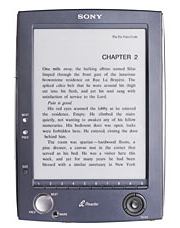
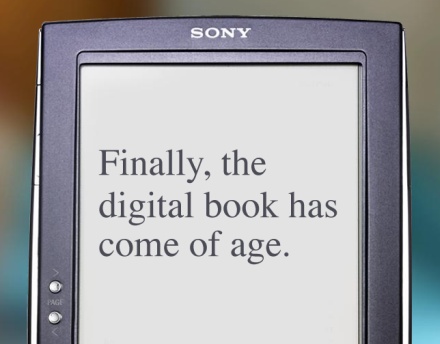
Now, Sony is delaying the launch of their fancy-pants eBook reader, the catchily-named PRS500. Blogged here and breathlessly anticipated by, well, everybody who wants a grayscale (in 4 lifelike shades!) eBook reader, the PRS500 is now ... wait for it ... delayed.

Originally promised for $350 "on or before October 31st," the unit is now hoping to ship in mid-November, but they're on backorder "due to overwhelming demand." Demand for what?? There's precious little content announced for the device. And people are leery about downloading Sony content on their computers (rootkit!) anyway, so, how "overwhelming" can that demand be? Still, according to Engadget, you'll be lucky if you can get your eBook on in time for the holidays. Oh, well, you can always pass the time watching hi-def movies on your Blu-Ray player. Oh, wait. UMD movies then, on your PSP. Oh, wait. Never mind. Better call the whole thing an early-adopter's curse and just wait the extra month for the Panasonic color job. For the same price. With more formats supported. It will make for a much more immersive reading-- and studying!-- experience. Read the full post here ...
Now, Sony is delaying the launch of their fancy-pants eBook reader, the catchily-named PRS500. Blogged here and breathlessly anticipated by, well, everybody who wants a grayscale (in 4 lifelike shades!) eBook reader, the PRS500 is now ... wait for it ... delayed.

Originally promised for $350 "on or before October 31st," the unit is now hoping to ship in mid-November, but they're on backorder "due to overwhelming demand." Demand for what?? There's precious little content announced for the device. And people are leery about downloading Sony content on their computers (rootkit!) anyway, so, how "overwhelming" can that demand be? Still, according to Engadget, you'll be lucky if you can get your eBook on in time for the holidays. Oh, well, you can always pass the time watching hi-def movies on your Blu-Ray player. Oh, wait. UMD movies then, on your PSP. Oh, wait. Never mind. Better call the whole thing an early-adopter's curse and just wait the extra month for the Panasonic color job. For the same price. With more formats supported. It will make for a much more immersive reading-- and studying!-- experience. Read the full post here ...
Wednesday, October 04, 2006
OLPC: "Hack Me!"
What do you get when you install millions of mesh-connected computers in markets that are largely under-developed and unprotected? The potential for big-time security problems. Attending the recent TOORCON security conference, OLPC's Ivan Kristi said the project "will create the largest monoculture in history," and invited hackers-- hopefully of the white hat persuasion-- to bang on OLPC's 2B1.

The idea is to get pummeled prior to widespread release, ostensibly so you can patch the holes uncovered in a pre-release assault.
The potential for misuse and abuse is very real, given the 2B1's mesh-connected configuration, which would allow individual units to share applications and OS code ... or malware, if it finds its' way onto a machine.
With orders pending from Nigeria, Brazil, and Southeast Asia, OLPC is naturally and justifiably concerned that the bad guys may be tripping over themselves to exploit the open nature of the 2B1 system. As if we didn't have enough 419 scams from Nigeria already!
Preventive pre-release security tests: definitely Something Cool. Read the full post here ...

The idea is to get pummeled prior to widespread release, ostensibly so you can patch the holes uncovered in a pre-release assault.
The potential for misuse and abuse is very real, given the 2B1's mesh-connected configuration, which would allow individual units to share applications and OS code ... or malware, if it finds its' way onto a machine.
With orders pending from Nigeria, Brazil, and Southeast Asia, OLPC is naturally and justifiably concerned that the bad guys may be tripping over themselves to exploit the open nature of the 2B1 system. As if we didn't have enough 419 scams from Nigeria already!
Preventive pre-release security tests: definitely Something Cool. Read the full post here ...
Virtual Tutors Leverage VOIP
The trend of moving traditionally American jobs offshore has now affected education. TutorVista, a young company based in the US, now offers tutoring services and test prep using VOIP and TCP/IP to connect students in the US with English-speaking tutors based in India and Spanish-speakers in Central America.

With rates for basic secondary subject tutoring as low as $20/month for unlimited tutoring, TutorVista dramatically undercuts live-in-person American services that can cost upwards of $50/hour. Preparatory tutoring in advance of MCAT, SAT, GED, and other standardized exams is provided at a higher rate, but nonetheless at steep discounts compared to live domestic services.
Questions for readers of Something Cool: Can offshore tutors supplant services offered by live teachers? Is this "the way of the future" for beyond-school learning? And with the growing number of virtual schools springing up across the country, could we see virtual teachers from India or elsewhere teaching full-on curricula? TutorVista, for its' part, claims that it does not have any "current plans" to supplant live teachers in the US. However, providing virtual instruction to virtual students would seem to be a natural extension of their business model.
So, you tell us: Is this something cool? Or is it merely chilling? Read the full post here ...

With rates for basic secondary subject tutoring as low as $20/month for unlimited tutoring, TutorVista dramatically undercuts live-in-person American services that can cost upwards of $50/hour. Preparatory tutoring in advance of MCAT, SAT, GED, and other standardized exams is provided at a higher rate, but nonetheless at steep discounts compared to live domestic services.
Questions for readers of Something Cool: Can offshore tutors supplant services offered by live teachers? Is this "the way of the future" for beyond-school learning? And with the growing number of virtual schools springing up across the country, could we see virtual teachers from India or elsewhere teaching full-on curricula? TutorVista, for its' part, claims that it does not have any "current plans" to supplant live teachers in the US. However, providing virtual instruction to virtual students would seem to be a natural extension of their business model.
So, you tell us: Is this something cool? Or is it merely chilling? Read the full post here ...
Tuesday, September 26, 2006
Sony's eBook Reader Details
Sure, it's monochrome, with an attention-grabbing 4-scale gray display. But it IS an eBook reader, and while Panasonic may edge this unit (the PRS500) in color displays, the Sony version handles several file formats including rss feeds via built-in wifi, and is priced to move at $350-- the same price point as Panny's color job.
Of course, the "preferred" format for the Sony device is Sony's own BBeB. And we all know how familiar Sony is with Digital Rights Management (DRM) ... remember their rootkit solution on their CDs back in 2005?

So far, it looks like Panny may have a late-to-the- party -but-better-gadget edge, but until the content wars start and we see what the respective libraries look like, don't expect a particular eBook reader win the adoption wars. Read the full post here ...
Of course, the "preferred" format for the Sony device is Sony's own BBeB. And we all know how familiar Sony is with Digital Rights Management (DRM) ... remember their rootkit solution on their CDs back in 2005?

So far, it looks like Panny may have a late-to-the- party -but-better-gadget edge, but until the content wars start and we see what the respective libraries look like, don't expect a particular eBook reader win the adoption wars. Read the full post here ...
Panasonic Announces Another eBook Reader
OK, it's not like there's a dearth of devices, but it does make some sense that a "playa" in the handheld gadget gearhead garage band would join Sony in the space for an eBook reader.
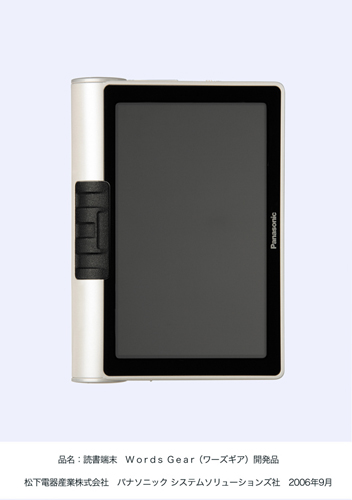
Panny's device, cleverly named "Words Gear," has a major leg up on the other horses in this race, however-- COLOR! Their display is smallish, measuring about 5.6" diagonally, but it busts a move resolution-wise, sporting a very respectable 1024 x 600 resolution.

The whole device weighs in at a bestseller-ish .717 pounds, and takes up 4.13" x 1.1" x 6"-- roughly the size of a dog-eared paperback.
The screen, alas, is not touch-sensitive, though there is a touchy-feely area to the left (the, uh, "gutter" side, maybe?) of the screen.
Panasonic promises a Q1 2007 release at a price in the area of $340-- another advantage over the Clio or the Sony monochrome do-dads.
Cool, huh? Read the full post here ...
Panny's device, cleverly named "Words Gear," has a major leg up on the other horses in this race, however-- COLOR! Their display is smallish, measuring about 5.6" diagonally, but it busts a move resolution-wise, sporting a very respectable 1024 x 600 resolution.

The whole device weighs in at a bestseller-ish .717 pounds, and takes up 4.13" x 1.1" x 6"-- roughly the size of a dog-eared paperback.
The screen, alas, is not touch-sensitive, though there is a touchy-feely area to the left (the, uh, "gutter" side, maybe?) of the screen.
Panasonic promises a Q1 2007 release at a price in the area of $340-- another advantage over the Clio or the Sony monochrome do-dads.
Cool, huh? Read the full post here ...
Panasonic Announces Another eBook Reader
OK, it's not like there's a dearth of devices, but it does make some sense that a "playa" in the handheld gadget gearhead garage band would join Sony in the space for an eBook reader.
Panny's device, cleverly named "Words Gear," has a major leg up on the other horses in this race, however-- COLOR! Their display is smallish, measuring about 5.6" diagonally, but it busts a move resolution-wise, sporting a very respectable 1024 x 600 resolution.

The whole device weighs in at a bestseller-ish .717 pounds, and takes up 4.13" x 1.1" x 6"-- roughly the size of a dog-eared paperback.
The screen, alas, is not touch-sensitive, though there is a touchy-feely area to the left (the, uh, "gutter" side, maybe?) of the screen.
Panasonic promises a Q1 2007 release at a price in the area of $340-- another advantage over the Clio or the Sony monochrome do-dads.
Cool, huh? Read the full post here ...
Panny's device, cleverly named "Words Gear," has a major leg up on the other horses in this race, however-- COLOR! Their display is smallish, measuring about 5.6" diagonally, but it busts a move resolution-wise, sporting a very respectable 1024 x 600 resolution.

The whole device weighs in at a bestseller-ish .717 pounds, and takes up 4.13" x 1.1" x 6"-- roughly the size of a dog-eared paperback.
The screen, alas, is not touch-sensitive, though there is a touchy-feely area to the left (the, uh, "gutter" side, maybe?) of the screen.
Panasonic promises a Q1 2007 release at a price in the area of $340-- another advantage over the Clio or the Sony monochrome do-dads.
Cool, huh? Read the full post here ...
Friday, September 22, 2006
Distributed Computing Offers Alternative Path to 1:1
According to a story posted here by eSchool News-- a story which runs only slightly shy of being a press release-- there's a new alternative to attain 1:1 computing for US schools.
nComputing, a Korean company with operations around the world, has developed a hybrid hardware/software offering that allows the creation of up to 30 "thin client" terminals running from one server or computer. Delivering everything from data to power over cabled connections, the technology allows users to share centralized processing power and RAM, a solution that may take a performance hit on high-overhead applications like gaming, but according to the company, not on more routine school tasks like surfing the interwebs, word processing, e-mail, and basic productivity applications.

In the nComputing model, a monitor, keyboard, and mouse are hooked up to a small box that is cable-connected to a central computer. The "client" actually has no processor, RAM, or overhead of its' own. According to nComputing, costs for the boxes and software can be as low as $70 per seat, though it's likely that keyboards, monitors, and mice would not be included in that figure.
There was a demonstration of a thin-client setup at NECC; it might even have been nComputing. KSC/LSC actually played with the technology, putting it through some basic paces that might happen in a regular school setting. We surfed a little, ran a few web-based apps like Writely and Google Spreadsheets, picked up e-mail through gmail and Yahoo, and even watched a YouTube video. The video took a few minutes to load, but then played nearly flawlessly (*IF* you can call a YouTube video "flawless"). The concept, and at least the practical demo, seem to make a lot of sense.
nComputing says that most computers and their human users barely scratch the surface of chip/system capability for the most common tasks we use. Their theory is that several users can share those computing resources simultaneously and not take a significant performance hit. The clients don't even have software installed; it's all centralized on the single server or computer that's being shared. This makes for easy maintenance and updates, with lower costs to upgrade when the time comes, according to the company.
Whether or not distributed computing is "the next big thing," it's certainly an option to consider for institutional use, given the growing demand for 1:1 computing capability. Schools in Colorado and Idaho have already adopted nComputing solutions, and the company is counting on word of mouth to spread their success story around the nation and the world. But with the growing availability of web-based applications and productivity tools, it's a safe bet that distributed computing will at least get a second look from schools and organizations with high seat-count demands for low-overhead computing.
Cool, huh? Read the full post here ...
nComputing, a Korean company with operations around the world, has developed a hybrid hardware/software offering that allows the creation of up to 30 "thin client" terminals running from one server or computer. Delivering everything from data to power over cabled connections, the technology allows users to share centralized processing power and RAM, a solution that may take a performance hit on high-overhead applications like gaming, but according to the company, not on more routine school tasks like surfing the interwebs, word processing, e-mail, and basic productivity applications.

In the nComputing model, a monitor, keyboard, and mouse are hooked up to a small box that is cable-connected to a central computer. The "client" actually has no processor, RAM, or overhead of its' own. According to nComputing, costs for the boxes and software can be as low as $70 per seat, though it's likely that keyboards, monitors, and mice would not be included in that figure.
There was a demonstration of a thin-client setup at NECC; it might even have been nComputing. KSC/LSC actually played with the technology, putting it through some basic paces that might happen in a regular school setting. We surfed a little, ran a few web-based apps like Writely and Google Spreadsheets, picked up e-mail through gmail and Yahoo, and even watched a YouTube video. The video took a few minutes to load, but then played nearly flawlessly (*IF* you can call a YouTube video "flawless"). The concept, and at least the practical demo, seem to make a lot of sense.
nComputing says that most computers and their human users barely scratch the surface of chip/system capability for the most common tasks we use. Their theory is that several users can share those computing resources simultaneously and not take a significant performance hit. The clients don't even have software installed; it's all centralized on the single server or computer that's being shared. This makes for easy maintenance and updates, with lower costs to upgrade when the time comes, according to the company.
Whether or not distributed computing is "the next big thing," it's certainly an option to consider for institutional use, given the growing demand for 1:1 computing capability. Schools in Colorado and Idaho have already adopted nComputing solutions, and the company is counting on word of mouth to spread their success story around the nation and the world. But with the growing availability of web-based applications and productivity tools, it's a safe bet that distributed computing will at least get a second look from schools and organizations with high seat-count demands for low-overhead computing.
Cool, huh? Read the full post here ...
Friday, September 08, 2006
Philadelphia Opens "School of the Future"
Built for $63 million, Philadelphia's new "School of the Future" is open for business. Developed in partnership between Philly and Micro$oft, the school is physically, pedagogically, and strategically innovative. The building is constructed to be "green," the homework and assessments are online, and the school's robust intranet will serve as a platform for student collaboration, teacher-parent communication, content delivery, and workspace.

Located in West Philadelphia, the school opened to 170 ninth-graders (95% of whom are black, 85% of whom come from low-income families) chosen by lottery from a field of 1500 applicants. There are/were no entrance exams, and the school is tuition-free. The lottery system, according to Philadelphia School District CEO Paul Vallas, means that the "experiment" inherent in cutting-edge education isn't "rigged" by selecting only "the best and the brightest."
Microsoft collaborated heavily with the Philadelphia board of education and school administrators, to develop a robust infrastructure that is designed to minimize paper and to maximize collaboration and information flow. Textbooks are eschewed in favor of interactive content, software, and multimedia assets. (You may recall Microsoft's failed foray into the education space with Microsoft Class Server, a "curriculum manager" that was built as a virtual learning management system.)
Microsoft has gone further with the School of the Future, envisioning a school without walls or limits, where research on the internets is par for the course, and where institutional partners such as the Philadelphia Zoo and the Museum of Art are as integrated with the school as the "food court" that replaces the traditional cafeteria.
Time will tell how well the School of the Future serves today's students, but it's a grand vision and a bold step. Whether it can shed some of the burdens on more traditional schools remains to be seen.
Cool, huh? Read the full post here ...

Located in West Philadelphia, the school opened to 170 ninth-graders (95% of whom are black, 85% of whom come from low-income families) chosen by lottery from a field of 1500 applicants. There are/were no entrance exams, and the school is tuition-free. The lottery system, according to Philadelphia School District CEO Paul Vallas, means that the "experiment" inherent in cutting-edge education isn't "rigged" by selecting only "the best and the brightest."
Microsoft collaborated heavily with the Philadelphia board of education and school administrators, to develop a robust infrastructure that is designed to minimize paper and to maximize collaboration and information flow. Textbooks are eschewed in favor of interactive content, software, and multimedia assets. (You may recall Microsoft's failed foray into the education space with Microsoft Class Server, a "curriculum manager" that was built as a virtual learning management system.)
Microsoft has gone further with the School of the Future, envisioning a school without walls or limits, where research on the internets is par for the course, and where institutional partners such as the Philadelphia Zoo and the Museum of Art are as integrated with the school as the "food court" that replaces the traditional cafeteria.
Time will tell how well the School of the Future serves today's students, but it's a grand vision and a bold step. Whether it can shed some of the burdens on more traditional schools remains to be seen.
Cool, huh? Read the full post here ...
Thursday, August 31, 2006
Cellies Get Their Campus Phreak On
The campus grapevine is going high-tech. Move over, word-of-mouth virality, and make room for Rave Wireless, a service being launched on fifteen college campuses this year, and shooting for a hundred schools in 2007.

Rave Wireless is a MVNO (Mobile Voice Network Operator), essentially leasing time from the big-infrastructure wireless companies and then launching their own suite of services, handsets, and plans. (Other examples of MVNOs include ESPN, Disney, and Helio, each with their own "hook.")
Rave is designed specifically for an on-campus college student. The service/handset combination includes several student-friendly features, including the ability to pick up and track classwork assignments from a Learning Management System (LMS), instructor-generated push messaging, and handset access to an online gradebook to check out your GPA, with future plans to allow blogging, social networking, and other savory 3G/Web 2.0 snacks. In addition, the handset includes a GPS (Global Positioning System) chip, and a unique capability that is designed to increase campus safety: a student traveling from point A to point B on campus can set a timer for the duration of their trip. Then, if they don't deactivate the timer or make a call, the GPS unit transmits a "distress" call to campus security, and alerts local authorities that there may be a problem. The campus cops can call the cellie, and if they don't get an answer, can scramble fighter planes or whatever to respond to the phone's location.
There are other campus cell services out there, doing everything from notifying students of their grades to notifying them when a dryer is free in the laundry room. But Rave Wireless seems to have the richest set of offerings to date. Sheesh-- add music downloads to the handset on some kind of subscription service like Yahoo or Napster and this thing would probably be close to perfect.
The article, here, on USA Today doesn't mention monthly service fees, but one can imagine that these services carry some kind of premium. But if Mumsy and Daddums are footing the bill anyway ... . Of course, most student phones are adjuncts to some kind of family plan, so Rave, for the moment, probably means students would have to carry two handsets-- one for talking and texting, and another for all the other 3G goodness. But it's not hard to imagine services like these finding their way to the major carriers in the not-too-distant future. Converged data and communication, after all, is the name of the game. And as mentioned above, if a clever carrier adds content, the "Three Cs" will be covered and enrollment would seem to be a slam-dunk.
Cool, huh? Read the full post here ...

Rave Wireless is a MVNO (Mobile Voice Network Operator), essentially leasing time from the big-infrastructure wireless companies and then launching their own suite of services, handsets, and plans. (Other examples of MVNOs include ESPN, Disney, and Helio, each with their own "hook.")
Rave is designed specifically for an on-campus college student. The service/handset combination includes several student-friendly features, including the ability to pick up and track classwork assignments from a Learning Management System (LMS), instructor-generated push messaging, and handset access to an online gradebook to check out your GPA, with future plans to allow blogging, social networking, and other savory 3G/Web 2.0 snacks. In addition, the handset includes a GPS (Global Positioning System) chip, and a unique capability that is designed to increase campus safety: a student traveling from point A to point B on campus can set a timer for the duration of their trip. Then, if they don't deactivate the timer or make a call, the GPS unit transmits a "distress" call to campus security, and alerts local authorities that there may be a problem. The campus cops can call the cellie, and if they don't get an answer, can scramble fighter planes or whatever to respond to the phone's location.
There are other campus cell services out there, doing everything from notifying students of their grades to notifying them when a dryer is free in the laundry room. But Rave Wireless seems to have the richest set of offerings to date. Sheesh-- add music downloads to the handset on some kind of subscription service like Yahoo or Napster and this thing would probably be close to perfect.
The article, here, on USA Today doesn't mention monthly service fees, but one can imagine that these services carry some kind of premium. But if Mumsy and Daddums are footing the bill anyway ... . Of course, most student phones are adjuncts to some kind of family plan, so Rave, for the moment, probably means students would have to carry two handsets-- one for talking and texting, and another for all the other 3G goodness. But it's not hard to imagine services like these finding their way to the major carriers in the not-too-distant future. Converged data and communication, after all, is the name of the game. And as mentioned above, if a clever carrier adds content, the "Three Cs" will be covered and enrollment would seem to be a slam-dunk.
Cool, huh? Read the full post here ...
Monday, August 28, 2006
Dramatic MySpace Vulnerability Exposed, Closed
Members or readers of social network site digg.com are today engaging in some self-congratulation. Seems the "digg effect" was in play Sunday, whereby a digg user posted a blog post about a major security hole in MySpace. Turns out, all you had to do was append a few letters to the end of a "private" MySpace url and you could see everything that was intended to be password-protected. In other words, "private" was really public, with the simplest of hacks. Literally all you had to do was enter a few characters at the end of the url in your browser; this is something anyone could have done, and probably "anyone" was doing it.

Apparently the vulnerability was originally discovered in April of 2006, and was-- allegedly-- brought to the attention of MySpace administrators. But it took something of a wake-up call to get the MySpace techies mobilized, it seems. After months of inaction, someone posted the details of the vulnerability on digg, where the story received thousands of diggs (votes) and which doubtless generated hundreds of hits to MySpace to try the hack. The story appeared on digg on August 27.
By the following day, the vulnerability had been plugged, at least temporarily, by an abashed MySpace. Digg users, naturally, claim credit for bringing focus to the issue and forcing MySpace to do something about it. There isn't an obvious mention of the issue on the front pages of myspace; it's unclear whether there's any way to tell if a user's "private" content was viewed by someone using the exploit.
This is yet another example of the potential "dangers" of online social networks, but it's also a great example of how another social network (digg) was able to rally their user base and create a positive outcome. While it's scary that lots of private data may have been compromised, it's also good to know that there are enough "good guys" out there to rally around an issue that needs attention, and bring about a resolution (however belated). Let's hope the diggers and other networks like them keep a weather eye open for John Q Public. And for heaven's sake, PLEASE be smart about what you post to your online presence-- even private stuff is likely to be viewed by people you don't know. Be smart, and don't post anything online that you wouldn't put on a billboard along a major highway. Read the full post here ...

Apparently the vulnerability was originally discovered in April of 2006, and was-- allegedly-- brought to the attention of MySpace administrators. But it took something of a wake-up call to get the MySpace techies mobilized, it seems. After months of inaction, someone posted the details of the vulnerability on digg, where the story received thousands of diggs (votes) and which doubtless generated hundreds of hits to MySpace to try the hack. The story appeared on digg on August 27.
By the following day, the vulnerability had been plugged, at least temporarily, by an abashed MySpace. Digg users, naturally, claim credit for bringing focus to the issue and forcing MySpace to do something about it. There isn't an obvious mention of the issue on the front pages of myspace; it's unclear whether there's any way to tell if a user's "private" content was viewed by someone using the exploit.
This is yet another example of the potential "dangers" of online social networks, but it's also a great example of how another social network (digg) was able to rally their user base and create a positive outcome. While it's scary that lots of private data may have been compromised, it's also good to know that there are enough "good guys" out there to rally around an issue that needs attention, and bring about a resolution (however belated). Let's hope the diggers and other networks like them keep a weather eye open for John Q Public. And for heaven's sake, PLEASE be smart about what you post to your online presence-- even private stuff is likely to be viewed by people you don't know. Be smart, and don't post anything online that you wouldn't put on a billboard along a major highway. Read the full post here ...
Friday, August 25, 2006
OLPC Launches CM1, First Production Model
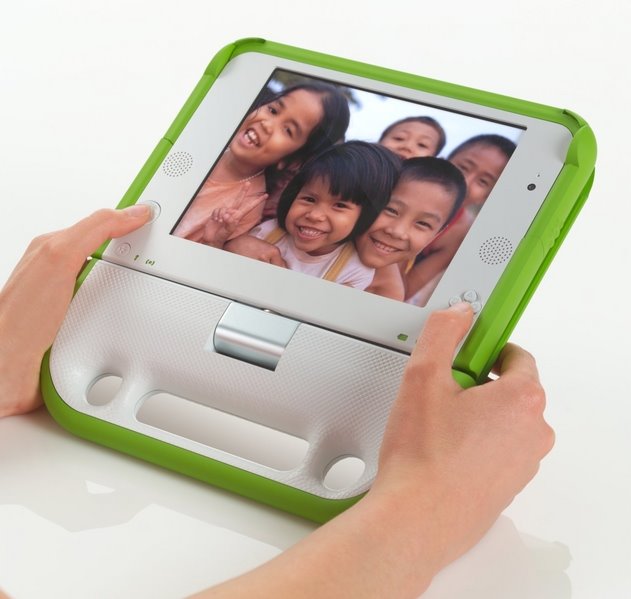
Finally, finally, we can stop calling the machine being developed by the OLPC project "the OLPC," which really didn't make much sense practically or grammatically. The do-dad has at last been christened with the catchy moniker "CM1," or, "Children's Machine 1."

Not only have they launched an actual product with a name and everything, they've actually upped the ante hardware-wise and are throwing in some unexpected gadget love on the $140 lapsters.

Derided by critics as being "too small," the 8" display on CM1 will actually carry a higher resolution than most full-sized lappies: a whopping 1200x900 resolution! In addition, the CM1 will launch with speaker and microphone jacks, which is fueling speculation about VoIP capabilities when the production models roll in 2007. The mesh-networkable CM1 will still only carry 128MB of DRAM and 512MB of flash-based storage, but work is underway to upgrade the processor to a speedier 400MHz and there will be a built-in still/video camera. Skype video calls, anyone? "Hello, future? It's Thailand calling ... ." (Of course, now you can be solicited more personally by the displaced Nigerian royalty as they earnestly offer to share their wealth with you, for just allowing them to deposit to your bank account ... .) Read the full post here ...

Not only have they launched an actual product with a name and everything, they've actually upped the ante hardware-wise and are throwing in some unexpected gadget love on the $140 lapsters.

Derided by critics as being "too small," the 8" display on CM1 will actually carry a higher resolution than most full-sized lappies: a whopping 1200x900 resolution! In addition, the CM1 will launch with speaker and microphone jacks, which is fueling speculation about VoIP capabilities when the production models roll in 2007. The mesh-networkable CM1 will still only carry 128MB of DRAM and 512MB of flash-based storage, but work is underway to upgrade the processor to a speedier 400MHz and there will be a built-in still/video camera. Skype video calls, anyone? "Hello, future? It's Thailand calling ... ." (Of course, now you can be solicited more personally by the displaced Nigerian royalty as they earnestly offer to share their wealth with you, for just allowing them to deposit to your bank account ... .) Read the full post here ...
Monday, August 21, 2006
$80M in Tech Funding to Florida's Poorest Districts
The latest in a series of lawsuit settlements has impoverished school districts in Florida slated to receive $80M from Micro$oft. Following on the heels of a similar payout in California (to the tune of about $500M), the Florida deal sends much-needed tech funding to districts with 50% or more of their enrolled students receiving reduced-cost or no-cost lunch. This according to an article from the wire services and eSchool News (here).
The Florida payout actually saves Micro$oft tens of millions of dollars. The original antitrust lawsuit was brought against the company by the Attorneys General of several states (including Minnesota, Montana, Vermont, California, and Florida). As part of the terms of the settlement, consumers who were unfairly "forced" into using MicroSoft products were able to receive vouchers for between $5 and $12 for computer software or hardware from any company. The money going to the schools in Florida represents 50% of the funds unclaimed by consumers. MicroSoft is able to recoup some of the unclaimed funds as well. Florida's total payout was not to exceed $202,000,000. Read the full post here ...
Friday, August 18, 2006
User Interface of the Future
This is absolutely amazing. Jeff Han, from New York University, gives a demo of a multi-touch-sensitive screen interface that can literally and dramatically change the interface between humans and machines.
The software he demonstrates in the video clip are cool in a gee-whiz kind of way, but more importantly they offer a glimpse into how software can interpret sensory input, or maybe it's more accurate to say "sensory output," a tactile and intuitive means of adjusting everything from scale to axis to 3-D mesh objects.
The video was posted on the Wired Campus blog from the Chronicle of Higher Education. No subscription is required (click the Source link below to see that post). The demo is very impressive, but more dramatic are the things that can be envisioned and now enacted by people to completely reshape the way we interact with data, images, and machines. You seriously need to check out the manipulative capabilities of this input device.
Read the full post here ...
The software he demonstrates in the video clip are cool in a gee-whiz kind of way, but more importantly they offer a glimpse into how software can interpret sensory input, or maybe it's more accurate to say "sensory output," a tactile and intuitive means of adjusting everything from scale to axis to 3-D mesh objects.
The video was posted on the Wired Campus blog from the Chronicle of Higher Education. No subscription is required (click the Source link below to see that post). The demo is very impressive, but more dramatic are the things that can be envisioned and now enacted by people to completely reshape the way we interact with data, images, and machines. You seriously need to check out the manipulative capabilities of this input device.
Read the full post here ...
One Dude Talks Smack on OLPC
OK, we get it: not everbody is a fan of the OLPC program-- peer-to-peer mesh networks of no-storage hand-cranked (or pull-stringed) minicomputers. According to Christopher Dawson, in his blog post (here) on ZDNet's education page, "AMD Gets It." "It" being shared, fully-functional, hyper-utilized community resources with a more robust infrastructure.
While nobody debates the lilliputian computing capacity of the OLPC lappies, it's interesting to note how the debate over developing-world technology draws itself into a tri-polar battlefield. There are the OLPC believers, who think that unleashing a personal device with the ability to connect to its' peers with minimal infrastructure means a more "democratic" platform of distributed computing. Then there are the non-computing campers, such as Micro$oft's Billy Gates, who claim that converged devices like a phone/pda/pim are the way to go. Then there's Dawson's platform: spend the money building out infrastructure and put in communal, fully-functional machines (refurbished discards are often touted) that will unleash the full computing power of the industrialized world upon the 'poor, huddled masses yearning to key free.'
Thailand will pilot 500 OLPCs for an eventual rollout of 1 million units in 2007. Brazil, meanwhile, is on the fence, courting proposals from Negroponte and also AMD. Then there's India, who have soundly rejected OLPC but haven't announced what they'll do instead. Sadly, while the debate is so polarizing, some governments-- Nigeria, for example-- may choose to sit out the mating dances and wait for some models to emerge. On the one hand, that's probably good, because no one solution is necessarily "right" for every nation. But on the other hand, the clock is ticking, and every day that goes by is another 419 scam opportunity wasted.
Where do you stand on computing and technology in the emerging world? Comment this post and let's start the debate afresh in these very pages. Read the full post here ...
While nobody debates the lilliputian computing capacity of the OLPC lappies, it's interesting to note how the debate over developing-world technology draws itself into a tri-polar battlefield. There are the OLPC believers, who think that unleashing a personal device with the ability to connect to its' peers with minimal infrastructure means a more "democratic" platform of distributed computing. Then there are the non-computing campers, such as Micro$oft's Billy Gates, who claim that converged devices like a phone/pda/pim are the way to go. Then there's Dawson's platform: spend the money building out infrastructure and put in communal, fully-functional machines (refurbished discards are often touted) that will unleash the full computing power of the industrialized world upon the 'poor, huddled masses yearning to key free.'
Thailand will pilot 500 OLPCs for an eventual rollout of 1 million units in 2007. Brazil, meanwhile, is on the fence, courting proposals from Negroponte and also AMD. Then there's India, who have soundly rejected OLPC but haven't announced what they'll do instead. Sadly, while the debate is so polarizing, some governments-- Nigeria, for example-- may choose to sit out the mating dances and wait for some models to emerge. On the one hand, that's probably good, because no one solution is necessarily "right" for every nation. But on the other hand, the clock is ticking, and every day that goes by is another 419 scam opportunity wasted.
Where do you stand on computing and technology in the emerging world? Comment this post and let's start the debate afresh in these very pages. Read the full post here ...
Friday, July 28, 2006
Dopey DOPA Language Passes House

By a really big margin (something like 400 to 15!), the US House of Representatives passed the Delete Online Predators Act today (DOPA), which has basically just deleted Web 2.0 from every school and library in America.
The act, not content with going after online predators, instead bans access to ANY community site, collaborative space, or peer-mediated/edited/commented site on the internets. Wikipedia? Gone (OK, some may cheer about that one). Digg? Gone. Naturally the MySpace and Friendster and Facebook and Xanga sites are going down. But so too are del.ici.ous, Flickr, Picasa, Yahoo!, MSN, and any other site that actually accepts incoming traffic. Blogger, Blogspot, and the others? History. Your class blog, where you post your podcasts or whatever? Unless it's on a school server behind your firewall, it's gone. Basically, if a user can put up content, the site is off limits.
This is a blatant example of over-reaction and hyperbolic hysteria. Now, rather than being able to teach our kids how to be safe on the internets, how to contribute, how to collaborate; we can't show them examples (good nor bad) of the power of interconnectivity. It's like closing down all roads and highways that aren't dead ends. To be crass, but 100% to-the-point: WTF?
If you're an activist of any kind; if you've EVER written to your representatives in government about anything, this would be a good time to do so again. Click the link, use the little drop-down menu in the top right, get to your Senator's page, and send an e-mail. The bill still has to pass the Senate, so there's a chance-- a slim, snowball's chance-- that the language can be fixed. Naturally no politician wants to look like he's soft on pedophilia in an election year, so odds are that nobody will do anything to stop this travesty. But maybe, just maybe, if we all get up our nerve and let them know, maybe they'll realize they've thrown the baby out with the bathwater on this one. Read the full post here ...
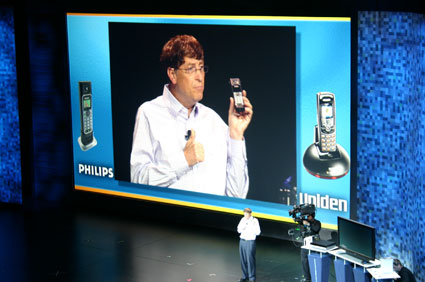
Gates Unveils "FonePlus," the NextThing with TwoCaps and NoSpace
With their own horse now in the race, Microsoft has joined the illustrious ranks of players in the game of computing for the "poor, huddled masses, yearning to browse." Or, more accurately, "Many people, including us, have been looking at different ways to lower the cost" of computing, according to Craig Mundie, the Chief Research and Strategy Officer (CRASO?) at Microsoft. "Clearly one of the things that is just booming globally is the use of the cell phone." This according to CNet News (article here).

Chairman Gates (the reknowned champion for consumer-friendly businesses!) has said, here in this very blog (OK, he was quoted here, he didn't actually sit for an interview), that he believes that smartphones are the way to bring computing and connectivity to the masses. Now he's unveiled FonePlus, which apparently will do just that (but obviously not help with spelling skillz).
Specs are short for now, but the gist is that Microsoft is backing a play to put Windows CE into the hands of the developing world. Ostensibly a challenge to the OLPC and/or Intel's EduWise (another SuperSpeller!), the FonePlus will deliver reliable (Windows CE?!), affordable (no price announced), portable (how good is the battery?) technology to the burgeoning mobile phone community. Gates seems to feel that cellular waves are more ubiquitous than WiFi, thus making the FonePlus more apt to bring users online (are there really 3G networks outside of Bangalore?).
Time will tell whether this concept-- or any of these concepts-- will truly unleash the developing world onto the internets, but a variety of approaches is more likely to have "the" right answer, n'est-ce pas? Read the full post here ...

Chairman Gates (the reknowned champion for consumer-friendly businesses!) has said, here in this very blog (OK, he was quoted here, he didn't actually sit for an interview), that he believes that smartphones are the way to bring computing and connectivity to the masses. Now he's unveiled FonePlus, which apparently will do just that (but obviously not help with spelling skillz).
Specs are short for now, but the gist is that Microsoft is backing a play to put Windows CE into the hands of the developing world. Ostensibly a challenge to the OLPC and/or Intel's EduWise (another SuperSpeller!), the FonePlus will deliver reliable (Windows CE?!), affordable (no price announced), portable (how good is the battery?) technology to the burgeoning mobile phone community. Gates seems to feel that cellular waves are more ubiquitous than WiFi, thus making the FonePlus more apt to bring users online (are there really 3G networks outside of Bangalore?).
Time will tell whether this concept-- or any of these concepts-- will truly unleash the developing world onto the internets, but a variety of approaches is more likely to have "the" right answer, n'est-ce pas? Read the full post here ...
Oh, SNAP! OLPC Gets Chilly Reception in India
Seems the HRD Ministry of India (Human Relations and Development, I think) doesn't like to be told how to spend their money. At least, reading between the lines of the article in the Times of India, that was the apparent message.

Apparently, the presentation in April by Nicholas Negroponte of the OLPC project failed to win him friends or influence people. In fact, the Ministry went as far as to claim that implementing computers for the subcontinent's students was little more than junk science. " It would be impossible to justify an expenditure of this scale on a debatable scheme when public funds continue to be in inadequate supply for well-established needs listed in different policy documents," the ministry said.
"Debatable scheme" though it may be, the OLPC project has garnered worldwide attention in recent months as prototype models have been unveiled. Negroponte will be returning to India for another presentation in August, for what may be a bit of windmill-tilting. This while the program is assailed by competitors, no less.
While pragmatic debate about resource allocation may doom the project in India, other countries including Nigeria* and China appear to be more open to providing a lappie to every lamb in the flock. That the OLPC program has failed to gain financial commitments in the Western world, however, seems a harbinger for India's HRD Ministry. Time will tell whether empowerment through democratization of technology is a better salve to developing nations' challenges. Mayhap some industrialized nation needs to step up to the plate and lend some cred to the diminutive device?
*POSTSCRIPT: Do 100,000 laptops in Nigeria mean more princes who need our help to rescue the millions in private family riches, if we'll only send our bank account information?? Read the full post here ...

Apparently, the presentation in April by Nicholas Negroponte of the OLPC project failed to win him friends or influence people. In fact, the Ministry went as far as to claim that implementing computers for the subcontinent's students was little more than junk science. " It would be impossible to justify an expenditure of this scale on a debatable scheme when public funds continue to be in inadequate supply for well-established needs listed in different policy documents," the ministry said.
"Debatable scheme" though it may be, the OLPC project has garnered worldwide attention in recent months as prototype models have been unveiled. Negroponte will be returning to India for another presentation in August, for what may be a bit of windmill-tilting. This while the program is assailed by competitors, no less.
While pragmatic debate about resource allocation may doom the project in India, other countries including Nigeria* and China appear to be more open to providing a lappie to every lamb in the flock. That the OLPC program has failed to gain financial commitments in the Western world, however, seems a harbinger for India's HRD Ministry. Time will tell whether empowerment through democratization of technology is a better salve to developing nations' challenges. Mayhap some industrialized nation needs to step up to the plate and lend some cred to the diminutive device?
*POSTSCRIPT: Do 100,000 laptops in Nigeria mean more princes who need our help to rescue the millions in private family riches, if we'll only send our bank account information?? Read the full post here ...
Friday, June 23, 2006
Texas Gears Up for Online Testing
They won't be first, but they could be the biggest, depending on how many district superintendents, or in some cases building principals, decide to take advantage of new policy in Texas. Beginning in the 2006-07 school year, statewide assessments (TAKS, for Texas Assessment of Knowledge and Skills) for grades 7 and up will have the option of online delivery. See the story here on the Dallas Morning News site.

While it's new ground broken for Texas, there are several other states for whom online testing has become the norm. Virginia, for example, gives 90% of their statewide assessments online.
Advantages and potential risks are being debated in the Lone Star State, but most of the minefield for online testing has been mapped already. Assuming the Texans can learn from their early-adopter neighbors, the move could lead to an eventual policy of mandated online testing. At the very least, the online option gives schools or districts (depending on who makes the call) the chance at a level playing field and reap the benefits, including near-real-time results. Proponents praise paperless testing as the eventuality for which it is time. State administrators feel that their servers have the bandwidth, or could obtain it, to serve hundreds of thousands of test-takers in 2007.
Cool, huh? Read the full post here ...

While it's new ground broken for Texas, there are several other states for whom online testing has become the norm. Virginia, for example, gives 90% of their statewide assessments online.
Advantages and potential risks are being debated in the Lone Star State, but most of the minefield for online testing has been mapped already. Assuming the Texans can learn from their early-adopter neighbors, the move could lead to an eventual policy of mandated online testing. At the very least, the online option gives schools or districts (depending on who makes the call) the chance at a level playing field and reap the benefits, including near-real-time results. Proponents praise paperless testing as the eventuality for which it is time. State administrators feel that their servers have the bandwidth, or could obtain it, to serve hundreds of thousands of test-takers in 2007.
Cool, huh? Read the full post here ...
Thursday, June 15, 2006
High-Pitched Battle for Cell Phone Use in School
From about 4700 different sites, including but not limited to a story on e-School News, comes word of a new ringtone for cellies. Turns out most adults CAN'T HEAR IT, making it a preferred choice for students in schools where phone use is "banned" (read: driven underground).

Seems most adults lose the ability to hear very high-pitched noises as we age, but the little lambs with their relatively unscathed eardrums can make out this noise just fine. This makes "pinging" their friends in school easy and stealthy. Mrs. Smith and Mr. Jones can't hear the tone, but Johnny and Soshanna can, so they're able to text, IM, or what-have-you without their teachers knowing.
Of course, this doesn't preclude teachers from seeing phones in use, but if the little darlings are sufficiently surreptitous they can now get over on the old timers.
Interestingly, the idea was borne from a UK practice of blasting high-frequency sounds at shopping malls and other popular teen hangouts, making kids move on to quieter (less visible) haunts without disturbing mumsie and daddums while they perused the latest shoe sale. Now teens have turned the tables. Kudos for their ingenuity; guess schools will have to either cave on their cell bans or go with that signal-strangling copper-based paint being shopped to movie theaters. Read the full post here ...

Seems most adults lose the ability to hear very high-pitched noises as we age, but the little lambs with their relatively unscathed eardrums can make out this noise just fine. This makes "pinging" their friends in school easy and stealthy. Mrs. Smith and Mr. Jones can't hear the tone, but Johnny and Soshanna can, so they're able to text, IM, or what-have-you without their teachers knowing.
Of course, this doesn't preclude teachers from seeing phones in use, but if the little darlings are sufficiently surreptitous they can now get over on the old timers.
Interestingly, the idea was borne from a UK practice of blasting high-frequency sounds at shopping malls and other popular teen hangouts, making kids move on to quieter (less visible) haunts without disturbing mumsie and daddums while they perused the latest shoe sale. Now teens have turned the tables. Kudos for their ingenuity; guess schools will have to either cave on their cell bans or go with that signal-strangling copper-based paint being shopped to movie theaters. Read the full post here ...
More Internets From Which To Choose
NewNet. Internet2. NLR. Plus the tired old workhorse the World Wide Web. Soon, you'll be hopping from one ultra-fast network to another the way you currently jump from website to website.
Internet2, a consortium of primarily academically-rooted interests, has announced that they're dumping plans to build a next-gen interweb with Qwest in favor of a new fiber-optic information highway to be built by Level3 Communications. Current plans call for a launch of some kind in 2008. NewNet will also facilitate the construction of ad-hoc subnetworks leveraging not just fat pipes but also better data protocols that will enable true and virtual networking of a speed and facility not yet seen.
This, of course, is a different bunch of players with a different interweb, and should not be confused with National LambdaRail, which is being built by a consortium of primarily research-driven interests. Talks between the two consortia to explore their collaborative development of one meganet fell apart last Spring. So they're taking their toys and each will build their own. Desolee, dudes. So sorry.
Ah, the halcyon days of the old ARPANET. Remember when "surfing" meant creative use of the asterisk key in a futile attempt to avoid the wrath of the *P Police? We've come a long way, baby! (Soon we'll be able to get the "BEST DEALS ON V1agr4 and 4mb13n" in nanoseconds. Compared to the milliseconds it takes now.)
Cool, huh? Read the full post here ...
Internet2, a consortium of primarily academically-rooted interests, has announced that they're dumping plans to build a next-gen interweb with Qwest in favor of a new fiber-optic information highway to be built by Level3 Communications. Current plans call for a launch of some kind in 2008. NewNet will also facilitate the construction of ad-hoc subnetworks leveraging not just fat pipes but also better data protocols that will enable true and virtual networking of a speed and facility not yet seen.
This, of course, is a different bunch of players with a different interweb, and should not be confused with National LambdaRail, which is being built by a consortium of primarily research-driven interests. Talks between the two consortia to explore their collaborative development of one meganet fell apart last Spring. So they're taking their toys and each will build their own. Desolee, dudes. So sorry.
Ah, the halcyon days of the old ARPANET. Remember when "surfing" meant creative use of the asterisk key in a futile attempt to avoid the wrath of the *P Police? We've come a long way, baby! (Soon we'll be able to get the "BEST DEALS ON V1agr4 and 4mb13n" in nanoseconds. Compared to the milliseconds it takes now.)
Cool, huh? Read the full post here ...
OLPC Gets Real
The now-infamous OLPC project unvelied a pair of working prototypes this month, demonstrating the operating system and networking capabilities of the machine. Later, OLPC program chief Nicholas Negroponte announced that the project has revised the target price of the meshalicious lappie from the original $100 per unit to as much as $140, though their goal of delivering units in late 2007 seems to be on track.

No word on whether the new price has affected pre-order status in the various target markets, though it's a safe bet that countries will likely stick to their spending target and simply order fewer units. What that means in terms of one-to-one computing remains to be seen.
Pricing issues aside, the working prototypes prove that the concept has legs and the units will actually be capable of basic networking and productivity work. Cool, huh? Read the full post here ...

No word on whether the new price has affected pre-order status in the various target markets, though it's a safe bet that countries will likely stick to their spending target and simply order fewer units. What that means in terms of one-to-one computing remains to be seen.
Pricing issues aside, the working prototypes prove that the concept has legs and the units will actually be capable of basic networking and productivity work. Cool, huh? Read the full post here ...
Mississippi Super Wants Self-Paced Alternative
According to a story in e-School News, the Mississippi Superintendent of Education has proposed a $20,000,000 program that would target at-risk and traditional non-finishers and offer a self-paced, workplace-oriented graduation alternative. Students would be able to enroll in the program as an alternative to regular classes, and work at their own speed through a curriculum focused on preparing to enter the working world.
Designed to combat drop-out rates and to engage nontraditional learners or those not planning on a collegiate career, the program would offer online classes statewide (noticing a trend here?) through which students would work at their own pace, taking as many concurrent classes as they see fit. While this could result in an elongated matriculation, it could, conceivably, also result in accelerated study.
According to Hank Bound, the state Superintendent, the plan would combat the high dropout rate-- more than 35% of high school students don't graduate-- and would offer participants the chance to enter the workforce as a more effective worker.
Cool, huh? Read the full post here ...
Designed to combat drop-out rates and to engage nontraditional learners or those not planning on a collegiate career, the program would offer online classes statewide (noticing a trend here?) through which students would work at their own pace, taking as many concurrent classes as they see fit. While this could result in an elongated matriculation, it could, conceivably, also result in accelerated study.
According to Hank Bound, the state Superintendent, the plan would combat the high dropout rate-- more than 35% of high school students don't graduate-- and would offer participants the chance to enter the workforce as a more effective worker.
Cool, huh? Read the full post here ...
Missouri Close to Statewide Virtual School
The Missouri Legislature approved a bill that will allow a new statewide virtual public school, and sent the bill to Governor Matt Blunt for his sign-off.
According to USA Today, "The 'virtual school' would begin offering courses during the 2007-2008 school year under legislation given final approval by a 136-20 House vote. The Senate passed the bill 31-0 last month, meaning it now goes to Gov. Matt Blunt."
Statewide distance learning programs are gaining popularity, or at least garnering support, as departments of education hither and yon realize that online classes can be, and perhaps should be, "centralized" in that they're offered to students across an entire state. Cool, huh?
What might be cooler is taking the next logical step, which is to troll the brick-and-mortar institutions looking for the best and brightest courses to be offered this way. In other words, don't create new online courses, but find the best traditional courses offered in the state and bring them online. The best current events teacher, the best computer science course ... of course, the catch there is deciding who gets to determine what's best and how "best" is even defined. But still, there are tons of great teachers offering great courses. Adapting those great classes to be webcast would take some tweaking, but that's probably easier and will garner better results than starting from scratch.
Cool, huh? Read the full post here ...
According to USA Today, "The 'virtual school' would begin offering courses during the 2007-2008 school year under legislation given final approval by a 136-20 House vote. The Senate passed the bill 31-0 last month, meaning it now goes to Gov. Matt Blunt."
Statewide distance learning programs are gaining popularity, or at least garnering support, as departments of education hither and yon realize that online classes can be, and perhaps should be, "centralized" in that they're offered to students across an entire state. Cool, huh?
What might be cooler is taking the next logical step, which is to troll the brick-and-mortar institutions looking for the best and brightest courses to be offered this way. In other words, don't create new online courses, but find the best traditional courses offered in the state and bring them online. The best current events teacher, the best computer science course ... of course, the catch there is deciding who gets to determine what's best and how "best" is even defined. But still, there are tons of great teachers offering great courses. Adapting those great classes to be webcast would take some tweaking, but that's probably easier and will garner better results than starting from scratch.
Cool, huh? Read the full post here ...
Yes, Mother, I'm Doing My Homework
OK, ok, we know it's been, like, almost a month since our last post. Our relentless pursuit of the American Dream, and the associated tedium of Corporateville, have hogged our time.
That said, things look like they're settling down to the point of allowing a bit more blogging these days, so we'll try to catch up. Some of the posts may refer to news items that are a week or three old, but we've been Google Notebooking lots of interesting things, we just haven't posted on them yet. Thanks for hanging in there and checking back; site stats show that traffic to the blog has been steady and even spiked a little in spite of our silent spell.
Enough mea culpae, time to brang da funk. Read the full post here ...
That said, things look like they're settling down to the point of allowing a bit more blogging these days, so we'll try to catch up. Some of the posts may refer to news items that are a week or three old, but we've been Google Notebooking lots of interesting things, we just haven't posted on them yet. Thanks for hanging in there and checking back; site stats show that traffic to the blog has been steady and even spiked a little in spite of our silent spell.
Enough mea culpae, time to brang da funk. Read the full post here ...
Thursday, May 04, 2006
Intel's Eduwise Unveiled
At the World Congress on Information Technology in Austin, Intel's Paul Otellini rolled out more details about Intel's plans for worldwide education and showed a prototype of the new, low-cost, Eduwise computer.
Speaking at the event, Otellini cited Intel founders gordon Moore and Andy Grove, explaining that Moore's law (doubling computing power every 18 months) and Grove's vision of a billion interconnected PCs worldwide are coming to fruition.

“Moore’s Law and volume economics made PC technology broadly accessible, and Andy understood the tremendous additive force of the Internet. But this power is still out of reach for most of the world’s people. The World Ahead Program, which integrates Intel’s efforts in accessibility, connectivity and education, seeks a multiplier effect to accelerate the next wave of gains.”
(Click the link to ...
Part of Intel's World Ahead program includes the Eduwise PC, which Otellini announced a month ago with a target price of $400. Today, he showed off a prototype. Specs are still sketchy, but Otellini did say that the machine will include wireless networking, collaborative tools, and will be able to run Windows or Linux operating systems.

From a press release on Intel's site:
"With students using the Eduwise notebook in class, a teacher can make presentations, control what a student has access to, and interact individually with each student in giving tests or providing feedback. The Intel-developed education application integrates with other non-computing learning tasks such as note taking and handwriting with wireless pen attachments. Because it is a fully featured PC, the Eduwise design can accommodate other standard software and tools for additional needs and uses.
Otellini also announced that Intel and the Mexican government have reached an agreement to make Intel’s new low-cost, fully featured PC available to 300,000 teachers by year’s end. The systems, unveiled last month in Mexico by Otellini as part of Intel’s Discover the PC initiative, provide an easy-to-use, fully functional PC for first-time users. Intel also plans to extend teacher training to 400,000 teachers in Mexico through the Intel Teach to the Future program by 2010."
Big plans. And while Intel's ambition is commendable, the rush to such noble goals is not without its' mercenary aspects. Intel is playing a game of catch-up, to a certain extent, with OLPC, or One Laptop Per Child, a program launched and then spun off by MIT Media Labs and headed by entrepreneur Nicholas Negroponte.
Intel's Otellini has been derisive of the OLPC concept, which aspires to $100 lower-end machines that can be powered by hand crank and which run open-source firmware and software, and operate as nodes on a mesh network platform. In his remarks today, Otellini took a thinly-veiled shot at OLPC, saying "nobody wants to cross the digital divide using yesterday's technology."
While the Intel chief's statement may be true on the surface, his rivalry with OLPC may be misplaced. In fact, the OLPC program is specifically targeting developing markets where a lack of infrastructure may prevent a higher-end machine like Intel's from crossing that digital divide. Otellini's vision depends on basic requirements such as power and established network hardware, whereas the OLPC unit assumes that infrastructure is BYON (build your own network).
Whether these rivals go mano-a-mano in developing countries, or they each find and fill their own niche in that digital divide, one thing is clear: computing for the masses is coming soon to students who are currently left out of the global information economy. That's a good thing, no matter which model(s) gain critical mass. Cool, huh?
Read the full post here ...
Speaking at the event, Otellini cited Intel founders gordon Moore and Andy Grove, explaining that Moore's law (doubling computing power every 18 months) and Grove's vision of a billion interconnected PCs worldwide are coming to fruition.

“Moore’s Law and volume economics made PC technology broadly accessible, and Andy understood the tremendous additive force of the Internet. But this power is still out of reach for most of the world’s people. The World Ahead Program, which integrates Intel’s efforts in accessibility, connectivity and education, seeks a multiplier effect to accelerate the next wave of gains.”
(Click the link to ...
Part of Intel's World Ahead program includes the Eduwise PC, which Otellini announced a month ago with a target price of $400. Today, he showed off a prototype. Specs are still sketchy, but Otellini did say that the machine will include wireless networking, collaborative tools, and will be able to run Windows or Linux operating systems.

From a press release on Intel's site:
"With students using the Eduwise notebook in class, a teacher can make presentations, control what a student has access to, and interact individually with each student in giving tests or providing feedback. The Intel-developed education application integrates with other non-computing learning tasks such as note taking and handwriting with wireless pen attachments. Because it is a fully featured PC, the Eduwise design can accommodate other standard software and tools for additional needs and uses.
Otellini also announced that Intel and the Mexican government have reached an agreement to make Intel’s new low-cost, fully featured PC available to 300,000 teachers by year’s end. The systems, unveiled last month in Mexico by Otellini as part of Intel’s Discover the PC initiative, provide an easy-to-use, fully functional PC for first-time users. Intel also plans to extend teacher training to 400,000 teachers in Mexico through the Intel Teach to the Future program by 2010."
Big plans. And while Intel's ambition is commendable, the rush to such noble goals is not without its' mercenary aspects. Intel is playing a game of catch-up, to a certain extent, with OLPC, or One Laptop Per Child, a program launched and then spun off by MIT Media Labs and headed by entrepreneur Nicholas Negroponte.
Intel's Otellini has been derisive of the OLPC concept, which aspires to $100 lower-end machines that can be powered by hand crank and which run open-source firmware and software, and operate as nodes on a mesh network platform. In his remarks today, Otellini took a thinly-veiled shot at OLPC, saying "nobody wants to cross the digital divide using yesterday's technology."
While the Intel chief's statement may be true on the surface, his rivalry with OLPC may be misplaced. In fact, the OLPC program is specifically targeting developing markets where a lack of infrastructure may prevent a higher-end machine like Intel's from crossing that digital divide. Otellini's vision depends on basic requirements such as power and established network hardware, whereas the OLPC unit assumes that infrastructure is BYON (build your own network).
Whether these rivals go mano-a-mano in developing countries, or they each find and fill their own niche in that digital divide, one thing is clear: computing for the masses is coming soon to students who are currently left out of the global information economy. That's a good thing, no matter which model(s) gain critical mass. Cool, huh?
Read the full post here ...
Tuesday, May 02, 2006
Net Neutrality and the Broadcast Flag-- Oh, NO!!
Ted Stevens, the senator from Alaska, has put forth a new bill that basically trashes the rights of the common dudes and dudettes in favor of corporate bigs.
Not normally known for its' political rantings, WTKSC is taking a moment to foray into the realm of politics to URGE you to look into this issue and ACT ON IT.

The new bill is a sweeping piece of legislation aimed at the broadcasting, communications, music, and movie industries. The bill has lost what little it originally had in it as protection for Joe Sixpack when it came to the internets. Major telecom players-- think AT&T, for example-- want the right to sell your place in the flow of traffic over the internets. In essence, they'd sell the rights to "priority" traffic, so that companies and individuals who don't pay up get their content squeezed through whatever tiny amount of pipe is left. Think of it this way: e-mail could take hours or days to arrive at its' destination. "Instant" messages? Not so much. See, companies would pay so that their sites, their traffic, their information, gets to travel in a fast lane on the information highway. The rest of us schlubs who pay monthly fees for the privilege of internet access would have our content shoved to the shoulder, plodding along like a dray in a drag race with a dodge.
Search companies would have to pay through the nose to serve you your results. Sites like this one, small, independent blogs-- gone. There's no way they could ever cough up the cash to stay competitive with "real" (read: high-budget) information sites run by giant corporations.
In essence, this is a way for companies who own the networks over which all the internets' traffic travels to charge double: They charge you for your access to the information, but they'd also charge the information providers for delivering the information to your browser. Without Net Neutrality, the big telcos and infrastructure companies can regulate whose content moves and whose doesn't. They can literally stop the flow of information for lack of toll charges. But add this to the mix: information publishers would have to pay many tolls to many companies; the traffic flow of the internets use pathways through many companies' wires. In essence, the publishers would have to pay tolls for using any and all possible pathways to their end user's browser, just to ensure that their content gets there.
Without Net Neutrality, you could find yourself in the middle of a turf war between, say, AT&T and Verizon. Let's say AT&T forms a strategic partnership with Micro$oft. And to stay competitive, Verizon inks a deal with Google. If you're an AT&T customer, you won't be able to do a Google search, you could be forced to use only MSN. "But wait," you say, "I'm a cable internet subscriber." Ah, well, you'll use the search engine that your service provider tells you to. And the news sites they allow through their network. And only the blogs they collect from. And only the shopping sites who pay up. It goes on and on.
Without Net Neutrality, internet traffic becomes subject to the mercenary whims of the network owners. Rather than being "on call" to your browser whenver you want it, site such-and-such will have to pay a fee for every hit you make to their site. And if they don't pay up, you won't be able to see that site any more. Your e-mail-- freemail accounts not through your ISP-- would be subject to delivery fees. Your monthly subscription will not cover "out of network" services. (Sound familiar? "Out of network" translates to "expensive," whether it's a dentist or a website.)
The other, more lovely little piece of dastardly darwinism gets buried deep inside the bill, and will enable content providers to tag their content with a "broadcast flag." Intended to protect the rights of the likes of the RIAA and MPAA, the broadcast flag will prevent consumers from recording content. No TiVo, no VCR, no taping FM radio to hear your favorite classic rock tunes on your own schedule. No place-shifting, no time-shifting. Nada. Zip.
You either watch CSI "live" when it's first broadcast to your TV via your ($50+) cable or satellite service, or you miss it and pay another fee to see it later. No matter that your kids need your help to finish up that social studies project Thursday night, no matter that you ran late at the grocery store and missed the first segment. No more taping or TiVo-ing. You snoozed, you lost. Now cough up more bucks to see what you missed.
(Note that the going rate is $1.99 per TV episode on iTunes Music Store.)
Your husband wants to watch the playoffs during Desperate Housewives? You're buyin' it tomorrow, baby, you can't tape or TiVo your way to marital bliss.
Broadcast flag: BAD.
Net Neutrality: Good.
E-mail your congressional representative. (No, seriously. Do it.) Read the full post here ...
Not normally known for its' political rantings, WTKSC is taking a moment to foray into the realm of politics to URGE you to look into this issue and ACT ON IT.

The new bill is a sweeping piece of legislation aimed at the broadcasting, communications, music, and movie industries. The bill has lost what little it originally had in it as protection for Joe Sixpack when it came to the internets. Major telecom players-- think AT&T, for example-- want the right to sell your place in the flow of traffic over the internets. In essence, they'd sell the rights to "priority" traffic, so that companies and individuals who don't pay up get their content squeezed through whatever tiny amount of pipe is left. Think of it this way: e-mail could take hours or days to arrive at its' destination. "Instant" messages? Not so much. See, companies would pay so that their sites, their traffic, their information, gets to travel in a fast lane on the information highway. The rest of us schlubs who pay monthly fees for the privilege of internet access would have our content shoved to the shoulder, plodding along like a dray in a drag race with a dodge.
Search companies would have to pay through the nose to serve you your results. Sites like this one, small, independent blogs-- gone. There's no way they could ever cough up the cash to stay competitive with "real" (read: high-budget) information sites run by giant corporations.
In essence, this is a way for companies who own the networks over which all the internets' traffic travels to charge double: They charge you for your access to the information, but they'd also charge the information providers for delivering the information to your browser. Without Net Neutrality, the big telcos and infrastructure companies can regulate whose content moves and whose doesn't. They can literally stop the flow of information for lack of toll charges. But add this to the mix: information publishers would have to pay many tolls to many companies; the traffic flow of the internets use pathways through many companies' wires. In essence, the publishers would have to pay tolls for using any and all possible pathways to their end user's browser, just to ensure that their content gets there.
Without Net Neutrality, you could find yourself in the middle of a turf war between, say, AT&T and Verizon. Let's say AT&T forms a strategic partnership with Micro$oft. And to stay competitive, Verizon inks a deal with Google. If you're an AT&T customer, you won't be able to do a Google search, you could be forced to use only MSN. "But wait," you say, "I'm a cable internet subscriber." Ah, well, you'll use the search engine that your service provider tells you to. And the news sites they allow through their network. And only the blogs they collect from. And only the shopping sites who pay up. It goes on and on.
Without Net Neutrality, internet traffic becomes subject to the mercenary whims of the network owners. Rather than being "on call" to your browser whenver you want it, site such-and-such will have to pay a fee for every hit you make to their site. And if they don't pay up, you won't be able to see that site any more. Your e-mail-- freemail accounts not through your ISP-- would be subject to delivery fees. Your monthly subscription will not cover "out of network" services. (Sound familiar? "Out of network" translates to "expensive," whether it's a dentist or a website.)
The other, more lovely little piece of dastardly darwinism gets buried deep inside the bill, and will enable content providers to tag their content with a "broadcast flag." Intended to protect the rights of the likes of the RIAA and MPAA, the broadcast flag will prevent consumers from recording content. No TiVo, no VCR, no taping FM radio to hear your favorite classic rock tunes on your own schedule. No place-shifting, no time-shifting. Nada. Zip.
You either watch CSI "live" when it's first broadcast to your TV via your ($50+) cable or satellite service, or you miss it and pay another fee to see it later. No matter that your kids need your help to finish up that social studies project Thursday night, no matter that you ran late at the grocery store and missed the first segment. No more taping or TiVo-ing. You snoozed, you lost. Now cough up more bucks to see what you missed.
(Note that the going rate is $1.99 per TV episode on iTunes Music Store.)
Your husband wants to watch the playoffs during Desperate Housewives? You're buyin' it tomorrow, baby, you can't tape or TiVo your way to marital bliss.
Broadcast flag: BAD.
Net Neutrality: Good.
E-mail your congressional representative. (No, seriously. Do it.) Read the full post here ...
Carolina Takes First Steps to Virtual Schools
"Dum Spiro Spero," the state motto goes, "while I breathe, I hope." Well, don't hold your breath, but for those hoping for a cyberschool in South Carolina, the Palmetto State has taken its' first steps down the road to virtual schools. Governor Mark Sanford signed a bill today that creates a statewide charter district for an eventual virtual charter school.

While the idea of studying on Myrtle Beach may sound fun, there's still quite some distance to travel before an online school can kick off. The legislature has not defined what a virtual school would look like, and while the bill today sets forth the potential for a statewide setup, it will be years before an actual institution gets rolling.
Still, the progress is encouraging, and mad props go to the bill's authors and sponsors. Apparently a few out-of-state entities have approached the state about creating the eventual virtual school, and the new bill provides for a single statewide district so that each individual school district doesn't have to create a virtual offering from the ground up. That means a more streamlined process to the finish line, as well as a system and (one would hope) curriculum that meets or exceeds those in the local districts. It also means that the state won't have to dole out money for virtual schools in dribs and drabs to various districts; they'll be able to dump the money into one bucket, resulting in a system that serves students across the entire state.
Cool, huh? Read the full post here ...

While the idea of studying on Myrtle Beach may sound fun, there's still quite some distance to travel before an online school can kick off. The legislature has not defined what a virtual school would look like, and while the bill today sets forth the potential for a statewide setup, it will be years before an actual institution gets rolling.
Still, the progress is encouraging, and mad props go to the bill's authors and sponsors. Apparently a few out-of-state entities have approached the state about creating the eventual virtual school, and the new bill provides for a single statewide district so that each individual school district doesn't have to create a virtual offering from the ground up. That means a more streamlined process to the finish line, as well as a system and (one would hope) curriculum that meets or exceeds those in the local districts. It also means that the state won't have to dole out money for virtual schools in dribs and drabs to various districts; they'll be able to dump the money into one bucket, resulting in a system that serves students across the entire state.
Cool, huh? Read the full post here ...
Hopefully they won't make that "doink doink" mnemonic Intel sound when they boot ... .
And from yet another post at Engadget (here), comes another story about another "affordable" computer for the emerging world. From none other than Intel, who apparently believes that if you're going to develop cheap computers, you'd better customize them by region.

Otellini et al. announced this time that they're going to create a "Community PC" for rural areas in India. This one is expected to come from local manufacturers HCL and Wipro on the subcontinent and is targeting a street value of about $550.
The Community PC is intended as exactly that: a shared desktop box that can serve as its' own little internet cafe, apparently, and will run on 12v car batteries or regular juice, in addition to sporting a ruggedized case that will protect it from harm if Parminder spills his latte.
Not to be confused with the more personal Edu-Wise model announced in Brazil, the Community PC is expected to launch any day now. Intel didn't talk about how/whether the Community PC will be wired or unwired to connect to the Internets, but one would presume that unless there's a whole lotta word processin' goin' on in Agra, the machines will be hooked up with the worldwide webness. Just how that will be accomplished in the impoverished and presumably remote rural areas of India remains to be seen. Read the full post here ...

Otellini et al. announced this time that they're going to create a "Community PC" for rural areas in India. This one is expected to come from local manufacturers HCL and Wipro on the subcontinent and is targeting a street value of about $550.
The Community PC is intended as exactly that: a shared desktop box that can serve as its' own little internet cafe, apparently, and will run on 12v car batteries or regular juice, in addition to sporting a ruggedized case that will protect it from harm if Parminder spills his latte.
Not to be confused with the more personal Edu-Wise model announced in Brazil, the Community PC is expected to launch any day now. Intel didn't talk about how/whether the Community PC will be wired or unwired to connect to the Internets, but one would presume that unless there's a whole lotta word processin' goin' on in Agra, the machines will be hooked up with the worldwide webness. Just how that will be accomplished in the impoverished and presumably remote rural areas of India remains to be seen. Read the full post here ...
Monday, May 01, 2006
No Price Range Left Behind
From a post (here) at Engadget, comes a new twist in the unfolding saga of the affordable school computer. Last month, Intel announced their new Edu-Wise, a $400 little number destined for schools ... well ... someplace. The goal, according to Intel's Paul Otellini, is to put "real" computers in the hands of students.

The announcement came in Sao Paolo, Brazil, so it's possible that Otellini's plan is to target more industrialized markets rather than go head-to-head with Nicholas Negroponte's hand-cranked OLPC project in the poorest nations of the world.
Otellini's presentation was short on specs and long on potential, and it's worth noting that his announcement came at roughly the same time that Intel was unveiling a series of smaller tablet-esque ultra-mobile PCs (UMPC) that were expected to come in at around the $500 range. Since the hype has settled a bit, it's also worth noting that most UMPCs that have actually become real products instead of pre-production prototypes are falling in the $1,000 - $1,500 range. (Doesn't say much for Otellini's $400 target for the Edu-Wise, does it?)
Still, this is another player in the mix, along with OLPC and Chairman Gates's yet-to-be-implemented handheld phone-based concept for educational computing in the developing world. And as we all know, the more players there are, the better it is for the consumers in the end. This may not turn into a dogfight of competing standards, as there's a great deal of performance disparity between OLPC and Edu-Wise (for now). But props all around for a bunch of rich guys who are looking for ways to put some pc power in the hands of the world's students. With a range of models and price points from which to choose, it's all good, really. Read the full post here ...

The announcement came in Sao Paolo, Brazil, so it's possible that Otellini's plan is to target more industrialized markets rather than go head-to-head with Nicholas Negroponte's hand-cranked OLPC project in the poorest nations of the world.
Otellini's presentation was short on specs and long on potential, and it's worth noting that his announcement came at roughly the same time that Intel was unveiling a series of smaller tablet-esque ultra-mobile PCs (UMPC) that were expected to come in at around the $500 range. Since the hype has settled a bit, it's also worth noting that most UMPCs that have actually become real products instead of pre-production prototypes are falling in the $1,000 - $1,500 range. (Doesn't say much for Otellini's $400 target for the Edu-Wise, does it?)
Still, this is another player in the mix, along with OLPC and Chairman Gates's yet-to-be-implemented handheld phone-based concept for educational computing in the developing world. And as we all know, the more players there are, the better it is for the consumers in the end. This may not turn into a dogfight of competing standards, as there's a great deal of performance disparity between OLPC and Edu-Wise (for now). But props all around for a bunch of rich guys who are looking for ways to put some pc power in the hands of the world's students. With a range of models and price points from which to choose, it's all good, really. Read the full post here ...
Overdue Books
Schools struggle and strain to meet budgetary restraints every day, so it should come as no surprise that some fall behind in updating certain educational materials, right? Well according to a story published in mid-April by the Chicago Tribune (here), schools are failing to supply what they called "the most basic tool of learning: a current book in good condition."

Seems they did a survey of 50 schools-- so let's not holla 'bout statistical relevance here-- and found that 80% of those schools had textbooks in use that were more than eight (8) years old.
For you home-gamers, it's worth noting that most textbooks operate on a five-to-six-year revision cycle.
In other words, it's conceivable that students are schlepping social studies stacks that don't know the outcome of the 2000 election (which doesn't explain why so many adults don't know it, either, but still ...). We hear constantly about a "pre-nine-eleven world" and a "post-nine-eleven-world," but we're using pre-nine-eleven books? Biology texts that don't know about cloning or stem cell research? Math texts that ... well, OK, the new math isn't that new and two plus two still equals five ... but come on.
When in the course of human events it becomes necessary to save a few bucks, is this really the right way to do it? Consider the fact that textbooks and similar educational materials (workbooks, homework sheets, manipulatives, maps, globes, etc.) typically account for a national average of about five or six percent of a school's budget, and one must wonder ... is this the right place to save money? In other words, if you went a whole year without buying ANY materials at all, you'd save about 5% of your budget. That's barely enough to "move the needle," as my boss's boss's boss might say.
Sure, there may be perfectly good textbooks whose content doesn't age, evergreen subjects where the life cycle of the book is determined more by the condition of the cover than the content. So students are lugging around six pounds of ragged, incomplete, defaced, and outdated textbook? The textbook publishing industry takes plenty of heat for "overpriced" books and "unnecessary" materials. But the whole industry only accounts for 6% of school spending. (And by the way, blame NASTA for the six-pound tome!) Educational publishers would LOVE to move out of color and paper and cardboard, producing lighter and less expensive black-and-white print materials that complement an online or CD-based "core text." But state committees and federal guidelines and this group and that consortium say "pshaw!" to that approach. Your kids schlep a newer version of the same product you used in gradeschool, and it's not because the publishing industry hasn't figured out a better way. It's because the educational system is largely the same as it was when you went to school.
Don't even get me started.
But back to the Trib story-- they claim that 22% of their surveyed schools are using materials that are more than fifteen (15) years old. Fifteen. A DECADE-AND-A-HALF. Of course, in that social studies book, the president is still George Bush. And there's still a reference to war with Iraq.
Is it time to show up at the local school board meeting, ya think? Maybe ask your kid's principal when they're ordering new books? Here's a hint: take a look at your kid's textbooks. The copyright page is the one on the back of the title page. Look at the copyright date. Subtract at least one year, because books are published a year ahead of their copyright year (books coming out now are copyright 2007). If the copyright is earlier than about 2001, it's time to update.
Fifteen years. Sheesh! Fifteen years, indeed! Read the full post here ...

Seems they did a survey of 50 schools-- so let's not holla 'bout statistical relevance here-- and found that 80% of those schools had textbooks in use that were more than eight (8) years old.
For you home-gamers, it's worth noting that most textbooks operate on a five-to-six-year revision cycle.
In other words, it's conceivable that students are schlepping social studies stacks that don't know the outcome of the 2000 election (which doesn't explain why so many adults don't know it, either, but still ...). We hear constantly about a "pre-nine-eleven world" and a "post-nine-eleven-world," but we're using pre-nine-eleven books? Biology texts that don't know about cloning or stem cell research? Math texts that ... well, OK, the new math isn't that new and two plus two still equals five ... but come on.
When in the course of human events it becomes necessary to save a few bucks, is this really the right way to do it? Consider the fact that textbooks and similar educational materials (workbooks, homework sheets, manipulatives, maps, globes, etc.) typically account for a national average of about five or six percent of a school's budget, and one must wonder ... is this the right place to save money? In other words, if you went a whole year without buying ANY materials at all, you'd save about 5% of your budget. That's barely enough to "move the needle," as my boss's boss's boss might say.
Sure, there may be perfectly good textbooks whose content doesn't age, evergreen subjects where the life cycle of the book is determined more by the condition of the cover than the content. So students are lugging around six pounds of ragged, incomplete, defaced, and outdated textbook? The textbook publishing industry takes plenty of heat for "overpriced" books and "unnecessary" materials. But the whole industry only accounts for 6% of school spending. (And by the way, blame NASTA for the six-pound tome!) Educational publishers would LOVE to move out of color and paper and cardboard, producing lighter and less expensive black-and-white print materials that complement an online or CD-based "core text." But state committees and federal guidelines and this group and that consortium say "pshaw!" to that approach. Your kids schlep a newer version of the same product you used in gradeschool, and it's not because the publishing industry hasn't figured out a better way. It's because the educational system is largely the same as it was when you went to school.
Don't even get me started.
But back to the Trib story-- they claim that 22% of their surveyed schools are using materials that are more than fifteen (15) years old. Fifteen. A DECADE-AND-A-HALF. Of course, in that social studies book, the president is still George Bush. And there's still a reference to war with Iraq.
Is it time to show up at the local school board meeting, ya think? Maybe ask your kid's principal when they're ordering new books? Here's a hint: take a look at your kid's textbooks. The copyright page is the one on the back of the title page. Look at the copyright date. Subtract at least one year, because books are published a year ahead of their copyright year (books coming out now are copyright 2007). If the copyright is earlier than about 2001, it's time to update.
Fifteen years. Sheesh! Fifteen years, indeed! Read the full post here ...
Blue Devils Have Less to Cheer About
Ah, remember the heady days of old, when you showed up on campus for your orientation and got the little care package? School spirit pencil and notepad ... check. Campus map ... check. Promotional info from the bookstore ... check. iPod ... wait, huh?

Yes, that's right, kiddies. The edge-cutters at Duke have dismantled the no-child-left-unipodded program. Seems after a year of handing out iPods to the inbound frosh crop, the Blue Devils' bursar has deemed the program prohibitively expensive (story here at Inside Higher Ed). Duke will no longer give an iPod to incoming freshmen, but they will loan you one. Students enrolled in courses participating in Duke's iPod initiative will have the opportunity to borrow an iPod for the semester or full year (depending on the course). There's probably some kind of security deposit involved, and let's hope Dukesters know better than to loan out the all-too-easily-marred nano, but there are no more freebies. Sorry kids. Suddenly that alternative at NC State maybe looks a little better, no? But if Devils fans have a little less about which to be wild, they should be sure to look for that $400 reduction in tuition, though, mmkay? Read the full post here ...

Yes, that's right, kiddies. The edge-cutters at Duke have dismantled the no-child-left-unipodded program. Seems after a year of handing out iPods to the inbound frosh crop, the Blue Devils' bursar has deemed the program prohibitively expensive (story here at Inside Higher Ed). Duke will no longer give an iPod to incoming freshmen, but they will loan you one. Students enrolled in courses participating in Duke's iPod initiative will have the opportunity to borrow an iPod for the semester or full year (depending on the course). There's probably some kind of security deposit involved, and let's hope Dukesters know better than to loan out the all-too-easily-marred nano, but there are no more freebies. Sorry kids. Suddenly that alternative at NC State maybe looks a little better, no? But if Devils fans have a little less about which to be wild, they should be sure to look for that $400 reduction in tuition, though, mmkay? Read the full post here ...
WTKSC Went Dark
OK, facts is facts: WTKSC went dark for a full month. Not intentionally, but because a bunch of real-world issues crowded out all of the "free" time required to maintain a blog like this one with meaningful posts.
The blackout, hopefully, has ended, though it is likely that multi-post days are a thing of the past ... or perhaps one or two multi-post days scattered through the week with a few days of relative silence will ensue.
At any rate, stop back here often and check to see whether WTKSC has managed to revive itself after a month-long hiatus. Thanks for reading. Hey ... now that we're back online, why not check out some of the older posts (there are several evergreens in there) and PASS ALONG the blog to friends, co-workers, loved ones ... . It would be really nice to see some traffic pick up again now that the dry spell is over. Thanks! Read the full post here ...
The blackout, hopefully, has ended, though it is likely that multi-post days are a thing of the past ... or perhaps one or two multi-post days scattered through the week with a few days of relative silence will ensue.
At any rate, stop back here often and check to see whether WTKSC has managed to revive itself after a month-long hiatus. Thanks for reading. Hey ... now that we're back online, why not check out some of the older posts (there are several evergreens in there) and PASS ALONG the blog to friends, co-workers, loved ones ... . It would be really nice to see some traffic pick up again now that the dry spell is over. Thanks! Read the full post here ...
Friday, March 31, 2006
Not Cool: Untimely Updates to an Event
OK, sure: the last post here promised some info from FETC. Well, our bad, but frankly time kept ticking away while other priorities begged for attention to make up for the absence caused by attending said event. Long and short of it is, there are other places to get FETC news, and those are your best bets.

Apple is podcasting many of the keynotes and some of the session speakers. Find these here, and peruse what you missed.
In addition, eSchool News (here) has a fair amount of coverage; they sent a couple of correspondents to the show and while you may have to dig around their site a little, this should be a good jumping-off point for more news about FETC.
Finally, a bit of editorializing: Compared to the last FETC we attended, in 2001, this show was a great deal smaller in scale (exhibits and sessions) and the sessions seemed to be much more focused on specific local districts/state policies that were relatively narrow in perspective, whereas in days of yore the sessions tended toward a broader strategic scope. For example, a session on one-to-one computing focused exclusively on one district's experience (Broward) but never really brought up the more global issues involved. The "tactical" information was helpful, but the "strategic" information was left to the deduction of the attendees.
In short, FETC was a good experience. Not a great one, not a bad one; not a waste of time, but not necessarily a vision- or life-altering experience, either. It was cool, but it didn't rock out to the extent of previous shows. Read the full post here ...

Apple is podcasting many of the keynotes and some of the session speakers. Find these here, and peruse what you missed.
In addition, eSchool News (here) has a fair amount of coverage; they sent a couple of correspondents to the show and while you may have to dig around their site a little, this should be a good jumping-off point for more news about FETC.
Finally, a bit of editorializing: Compared to the last FETC we attended, in 2001, this show was a great deal smaller in scale (exhibits and sessions) and the sessions seemed to be much more focused on specific local districts/state policies that were relatively narrow in perspective, whereas in days of yore the sessions tended toward a broader strategic scope. For example, a session on one-to-one computing focused exclusively on one district's experience (Broward) but never really brought up the more global issues involved. The "tactical" information was helpful, but the "strategic" information was left to the deduction of the attendees.
In short, FETC was a good experience. Not a great one, not a bad one; not a waste of time, but not necessarily a vision- or life-altering experience, either. It was cool, but it didn't rock out to the extent of previous shows. Read the full post here ...
Thursday, March 23, 2006
Coming Soon: Notes from FETC
Over the next few days, WTKSC will be posting a few items that sum up some of the goings-on at FETC, the Florida Educational Technology Conference. While these won't serve as real-time news item posts, they'll focus on capturing the essence of some of the concurrent sessions and exhibitors' presentations for the geographically challenged folks who couldn't get to FETC their own selves.

Please note: WTKSC isn't big enough to offer comprehensive coverage of a conference this size. Although smaller than in years past, FETC is still a sizeable and well-attended event and covers more ground than one pair of shoes can manage in a day and a half. You'll have to settle for highlights.
Check back here starting Friday for a gradual release of posts, hacked out as expeditiously as a part-time effort can afford. Oh-- if you're attending FETC and want to contribute, please FEEL FREE to do so either by e-mail or via comments to the posts. WTKSC would be thrilled to have some additional perspectives on the show. Read the full post here ...

Please note: WTKSC isn't big enough to offer comprehensive coverage of a conference this size. Although smaller than in years past, FETC is still a sizeable and well-attended event and covers more ground than one pair of shoes can manage in a day and a half. You'll have to settle for highlights.
Check back here starting Friday for a gradual release of posts, hacked out as expeditiously as a part-time effort can afford. Oh-- if you're attending FETC and want to contribute, please FEEL FREE to do so either by e-mail or via comments to the posts. WTKSC would be thrilled to have some additional perspectives on the show. Read the full post here ...
Wednesday, March 22, 2006
Law Versus Lapsters
File this under "Luddite:" A professor of law at the University of Memphis has banned laptops from her class, claiming they create a "picket fence" between student and teacher. According to the Associated Press (here), she sent an e-mail to her students at the beginning of the semester advising students to pack paper and pencil for her lectures, citing the "distraction" caused by lappies. Apparently, June Entman feels that U of Memphis Tigers who use lapsters focus on transcribing her lectures, rather than applying any sort of critical thinking.

Presumably, the professor doesn't post her lecture notes, PowerPoint slides, or (gasp) a podcast of her lectures, either. Because, really, students should be focused on doodling, paper airplanes, or passing notes, and not on capturing any of the information digitally. Maybe she should advocate stone as the preferred note-taking medium, given its' durability advantage over papyrus.
On the off chance that Professor June F. Entman, faculty member at the University of Memphis since 1984, actually checks her e-mail, some of the more vocal students of "Generation i" might want to appeal her decision. Apparently they tried lobbying for a summary ruling by the Law Department, to no avail. Perhaps personal appeals would have more effect. Assuming the good Professor checks her e-mail. Go Tigers! (And props to Manchester [IN] Community Schools for the perfect clip art.) Read the full post here ...

Presumably, the professor doesn't post her lecture notes, PowerPoint slides, or (gasp) a podcast of her lectures, either. Because, really, students should be focused on doodling, paper airplanes, or passing notes, and not on capturing any of the information digitally. Maybe she should advocate stone as the preferred note-taking medium, given its' durability advantage over papyrus.
On the off chance that Professor June F. Entman, faculty member at the University of Memphis since 1984, actually checks her e-mail, some of the more vocal students of "Generation i" might want to appeal her decision. Apparently they tried lobbying for a summary ruling by the Law Department, to no avail. Perhaps personal appeals would have more effect. Assuming the good Professor checks her e-mail. Go Tigers! (And props to Manchester [IN] Community Schools for the perfect clip art.) Read the full post here ...
Monday, March 20, 2006
E-Ink Bound for Bookbags?
Remember the heady days of the dot-com bubble? When everything everywhere was "going digital," and the internets were going to revolutionize everything from commerce to pudding? Well, it's time to dust off one of the "also ran" technologies that made to the list of things that didn't make the big time: eBook readers. (Or E-Book readers, or e-book readers, or some other iteration blending a creative use of cApitalization or hy-phen-ation or lackofspace.)

Seems iRex, a European technology concern, has finally released details on the iLiad eBook reader they announced last fall. Sadly, the device fails to "revolutionize" much of anything, although the specs and form factor are a marked improvement over the technology of 1999. (Thinner. Lighter. More memory. Touch-screen interface. Longer battery life.) The only thing this eBook (iRex's spelling) reader has that wasn't around a few years back is e-ink, which is largely responsible for the extended battery life.
e-ink is a technology that only consumes power when it changes the image displayed. It uses bi-lobal crystals a la LCD technology but in a solid-state form that allows the display to hold its' image without consuming battery juice. You only use power when you re-draw the screen.
(Click the link to read the rest of this post ...)
Sadly, the iLiad doesn't pack much more of a punch. It reads PDF files, XHTML, raw text, and will play mp3's. Given the fact that Adobe is pulling the plug on DRM technology for the PDF format (2007), the likelihood of seeing visually appealing monochromatic pages on iLiad isn't high. Publishers, in their relentless pursuit of filthy lucre, are going to want some assurance that the first eBook copy they sell won't also be the last.
Sony, a brand with just a mite more muscle than iRex, also recently announced an eBook reader. Their boasts PDF compatibility, but ups the ante with an online bookstore boasting 10,000 titles at launch (any day now) and a proprietary (and ostensibly secure) file format called BBeB (BroadBand eBook). Sony's unit will reportedly sell in the $300 to $400 range, while iLiad is purported to run (yikes!) a whopping 650 Euros, which is more than $800 US (or else it's 39 degrees; we always get those celsius/metric conversions messed up).
With price points that high, Johnny won't be loading one of these full of his textbooks any time soon. But the technology has gotten better, and usability is coming into line with expectations. If it's just a question of cost, Moore's Law should render these at a more accessible price point within 18 months to 2 years. It might be too late to help the Class of 2006, but maybe by the time the Class of 2010 rolls around, students will be schlepping e-ink and spare batteries rather than textbooks and notebooks. By that time, tablet interfaces will be more common and elegant (witness Micro$oft's push of Origami), batteries will have more life in less weight, and e-ink may be ready for color.

But speaking of Origami, why would someone shell out $400 for an eBook reader when they can get a full-on tablet portable running Windows for one more Benjamin? Origami promises multimedia capability, real computing power, wireless connectivity, Bluetooth, and color. And yeah, it'll open a PDF file, too. Devices will come from several hardware playas, meaning competition and downward price pressure. These, too, will be subject to Moore's Law (which states that computing power doubles and prices split in half about every 18 months). And with Nicholas Negroponte's OLPC project, who knows? Maybe a hand-cranked version for the US market will bring computers to students for half the current going rate.
No matter how it shakes out, though, it's coming. Call it one-to-one computing or an eBook revolution or OLPC or Origami, the stars are aligning in the constellation Technologus, and students in schools around the world will soon be able to learn like never before. Cool, huh?
Read the full post here ...

Seems iRex, a European technology concern, has finally released details on the iLiad eBook reader they announced last fall. Sadly, the device fails to "revolutionize" much of anything, although the specs and form factor are a marked improvement over the technology of 1999. (Thinner. Lighter. More memory. Touch-screen interface. Longer battery life.) The only thing this eBook (iRex's spelling) reader has that wasn't around a few years back is e-ink, which is largely responsible for the extended battery life.
e-ink is a technology that only consumes power when it changes the image displayed. It uses bi-lobal crystals a la LCD technology but in a solid-state form that allows the display to hold its' image without consuming battery juice. You only use power when you re-draw the screen.
(Click the link to read the rest of this post ...)
Sadly, the iLiad doesn't pack much more of a punch. It reads PDF files, XHTML, raw text, and will play mp3's. Given the fact that Adobe is pulling the plug on DRM technology for the PDF format (2007), the likelihood of seeing visually appealing monochromatic pages on iLiad isn't high. Publishers, in their relentless pursuit of filthy lucre, are going to want some assurance that the first eBook copy they sell won't also be the last.
Sony, a brand with just a mite more muscle than iRex, also recently announced an eBook reader. Their boasts PDF compatibility, but ups the ante with an online bookstore boasting 10,000 titles at launch (any day now) and a proprietary (and ostensibly secure) file format called BBeB (BroadBand eBook). Sony's unit will reportedly sell in the $300 to $400 range, while iLiad is purported to run (yikes!) a whopping 650 Euros, which is more than $800 US (or else it's 39 degrees; we always get those celsius/metric conversions messed up).
With price points that high, Johnny won't be loading one of these full of his textbooks any time soon. But the technology has gotten better, and usability is coming into line with expectations. If it's just a question of cost, Moore's Law should render these at a more accessible price point within 18 months to 2 years. It might be too late to help the Class of 2006, but maybe by the time the Class of 2010 rolls around, students will be schlepping e-ink and spare batteries rather than textbooks and notebooks. By that time, tablet interfaces will be more common and elegant (witness Micro$oft's push of Origami), batteries will have more life in less weight, and e-ink may be ready for color.

But speaking of Origami, why would someone shell out $400 for an eBook reader when they can get a full-on tablet portable running Windows for one more Benjamin? Origami promises multimedia capability, real computing power, wireless connectivity, Bluetooth, and color. And yeah, it'll open a PDF file, too. Devices will come from several hardware playas, meaning competition and downward price pressure. These, too, will be subject to Moore's Law (which states that computing power doubles and prices split in half about every 18 months). And with Nicholas Negroponte's OLPC project, who knows? Maybe a hand-cranked version for the US market will bring computers to students for half the current going rate.
No matter how it shakes out, though, it's coming. Call it one-to-one computing or an eBook revolution or OLPC or Origami, the stars are aligning in the constellation Technologus, and students in schools around the world will soon be able to learn like never before. Cool, huh?
Read the full post here ...
Federal Judge Reads WTSC ... ?
Want to know something cool? The federal judge presiding over the DOJ/Google suit, US District Judge James Ware, must be reading this blog, and specifically, the post about the case. Witness his ruling, handed down late Friday, in the case.

Ware did not force Google to give up search data that could encroach on user privacy. Instead, the judge decided that Google would hand over 50,000 websites that have been "crawled" (or indexed) by the search giant's systems.
In an attempt to ameliorate privacy concerns, DOJ had altered their original request. Rather than a full week's worth of search terms and results, the plaintiffs sought just 5,000. Instead, the judge decided to block the government from gaining access to search terms, and instead ordered Google to hand over records that should serve the DOJ's original intent ... which is to gain a statistical understanding of the frequency with which adult content sites are returned in ostensibly innocuous searches.
This is a win-win-win solution, whereby DOJ can pursue its' aim to shield users from unsolicited pr0n content, Google can claim victory in the never-ending debate over user privacy, and consumers and their search terms remain anonymous to the government. Judge Ware's ruling establishes a solid precedent in favor of privacy, and everyone walks away happy. Clearly Ware was moved to careful consideration after reading the earlier post on this topic in WTKSC. Cool, huh? Read the full post here ...

Ware did not force Google to give up search data that could encroach on user privacy. Instead, the judge decided that Google would hand over 50,000 websites that have been "crawled" (or indexed) by the search giant's systems.
In an attempt to ameliorate privacy concerns, DOJ had altered their original request. Rather than a full week's worth of search terms and results, the plaintiffs sought just 5,000. Instead, the judge decided to block the government from gaining access to search terms, and instead ordered Google to hand over records that should serve the DOJ's original intent ... which is to gain a statistical understanding of the frequency with which adult content sites are returned in ostensibly innocuous searches.
This is a win-win-win solution, whereby DOJ can pursue its' aim to shield users from unsolicited pr0n content, Google can claim victory in the never-ending debate over user privacy, and consumers and their search terms remain anonymous to the government. Judge Ware's ruling establishes a solid precedent in favor of privacy, and everyone walks away happy. Clearly Ware was moved to careful consideration after reading the earlier post on this topic in WTKSC. Cool, huh? Read the full post here ...
Thursday, March 16, 2006
Oh, SNAP! Gates Disses OLPC?!
Well, William H. Gates III, who is at the top of the Forbes list as the richest person in the world, did a little trash talkin'. Seems he was giving this talk at the M$ Government Leaders Forum, an annual shindig in D.C., and he completely dissed the OLPC project. He didn't name Nicholas Negroponte by name, and he didn't exactly come out and say "the One Laptop Per Child" computer. But there was no doubt what he was talking about. In fact, his remarks sparked the following headline on the popular blog Good Morning Silicon Valley: "Hey Melinda, what do you call a crank on a computer? 'Nicholas Negroponte!'" (Their post, here, like their blog in general, is well worth a read.)

Said His Gatesness: "The last thing you want to do for a shared use computer is have it be something without a disk ... and with a tiny little screen." It's worth noting that Gates was in the middle of a plug for Origami, which is not so much a specific product as a "new" (yeah ...) line of small tablet-interfaced computers (think Newton or smart phone on the Barry Bonds regimen of dietary supplements). So, sure, Billy's gotta pump up da jam on the whole Windows thang. But he just reached right out and bit*#-slapped the OLPC project.
(To continue, click the link below ...)
Not content with subtlety, Gates went on. "If you are going to go have people share the computer, get a broadband connection and have somebody there who can help support the user, geez, get a decent computer where you can actually read the text and you're not sitting there cranking the thing while you're trying to type."
So, Bill, to be clear: you're not a fan? Oh, wait, we get it: Origami is the way to go ... those $600 wonders will fly far in the Third World. Hey, while you're at it, they probably ought to eschew the whole Open Source thing and shell out a couple extra bills for M$ Office, right? And probably put a nice big Novell server in the school, too, right? Because if you're going to hook up the people who are technologically underserved, ya gotta do it right. We're talking about places in the world where the Junta Du Jour can't afford a ThinkPad, n'est-ce pas? And Origami is the solution for the masses?
And the Bill and Melinda Gates Foundation, for whose work you shared Time's Persons of the Year honor, is going to front the price of entry? Gates can stick with XBox 360 and XBox live, and shrinkwrapped solutions that will serve the relatively well-heeled. That's fine. But unless he's going to roll Origami out to the needy at a $100 price-point, he oughta keep his mouth shut.
Note to Mr. Negroponte: Keep crankin', bro. Putting connectivity-- affordable, durable, accessible, connectivity-- into the hands of the developing world isn't any less sexy just because Microsoft's founder doesn't dig your plan. You go, boy. Crank it up, crank it out, and hook up the, uh, hookless. That's very cool.
Read the full post here ...

Said His Gatesness: "The last thing you want to do for a shared use computer is have it be something without a disk ... and with a tiny little screen." It's worth noting that Gates was in the middle of a plug for Origami, which is not so much a specific product as a "new" (yeah ...) line of small tablet-interfaced computers (think Newton or smart phone on the Barry Bonds regimen of dietary supplements). So, sure, Billy's gotta pump up da jam on the whole Windows thang. But he just reached right out and bit*#-slapped the OLPC project.
(To continue, click the link below ...)
Not content with subtlety, Gates went on. "If you are going to go have people share the computer, get a broadband connection and have somebody there who can help support the user, geez, get a decent computer where you can actually read the text and you're not sitting there cranking the thing while you're trying to type."
So, Bill, to be clear: you're not a fan? Oh, wait, we get it: Origami is the way to go ... those $600 wonders will fly far in the Third World. Hey, while you're at it, they probably ought to eschew the whole Open Source thing and shell out a couple extra bills for M$ Office, right? And probably put a nice big Novell server in the school, too, right? Because if you're going to hook up the people who are technologically underserved, ya gotta do it right. We're talking about places in the world where the Junta Du Jour can't afford a ThinkPad, n'est-ce pas? And Origami is the solution for the masses?
And the Bill and Melinda Gates Foundation, for whose work you shared Time's Persons of the Year honor, is going to front the price of entry? Gates can stick with XBox 360 and XBox live, and shrinkwrapped solutions that will serve the relatively well-heeled. That's fine. But unless he's going to roll Origami out to the needy at a $100 price-point, he oughta keep his mouth shut.
Note to Mr. Negroponte: Keep crankin', bro. Putting connectivity-- affordable, durable, accessible, connectivity-- into the hands of the developing world isn't any less sexy just because Microsoft's founder doesn't dig your plan. You go, boy. Crank it up, crank it out, and hook up the, uh, hookless. That's very cool.
Read the full post here ...
Tuesday, March 14, 2006
Off We Go, Into the Cyber Blue Yonder ...
Props to eSchool News online and their story (here) about a new course being offered at Rome Catholic, a K-12 parochial school in Rome, NY. Based on a similar course created a few years ago by the Air Force for ROTC cadets, the class teaches data security, network security, infrastructure, and other critical skills in the Interactive Age.

Students, from 10th to 12th graders, stay after school four days a week for 45 minutes, with at least two of those sessions being practical hands-on time in a new 12-seat computer lab (re-fabbed in a mouldering Home Ec classroom-- cookies, indeed!). Read that part again: 45 minute classes four days a week, AFTER SCHOOL. And the kids are lovin' it.
More props to Rep. Sherwood Boehlert, who is chairman of the House Science Committee, for scaring up the duckies to put this program in play. According to Boehlert, the Air Force has assured him that if the pilot program at Rome Catholic is successful, the Air Force will find the money to take the program statewide in 2006-2007 and possibly even national the year after.
High-schoolers fronting firewalls, hiding data, encrypting wireless network traffic ... it's a just such a geekalicious dream! But the truth be told, these students will leave high school with valuable skills and, perhaps, an inclination to pursue their future studies in the fields of computer science or security. And that is very cool, huh? Read the full post here ...

Students, from 10th to 12th graders, stay after school four days a week for 45 minutes, with at least two of those sessions being practical hands-on time in a new 12-seat computer lab (re-fabbed in a mouldering Home Ec classroom-- cookies, indeed!). Read that part again: 45 minute classes four days a week, AFTER SCHOOL. And the kids are lovin' it.
More props to Rep. Sherwood Boehlert, who is chairman of the House Science Committee, for scaring up the duckies to put this program in play. According to Boehlert, the Air Force has assured him that if the pilot program at Rome Catholic is successful, the Air Force will find the money to take the program statewide in 2006-2007 and possibly even national the year after.
High-schoolers fronting firewalls, hiding data, encrypting wireless network traffic ... it's a just such a geekalicious dream! But the truth be told, these students will leave high school with valuable skills and, perhaps, an inclination to pursue their future studies in the fields of computer science or security. And that is very cool, huh? Read the full post here ...
On The Other Hand ... Protected Speech is Protected, Right?
Now flip the coin. Sure, you're all awash in activist hormones about Bully (see earlier post here) but hold the phone.

Looks like a judge may allow the Justice Department's motion to force Google to turn over search information on a bajillion searches undertaken by everyone in a specified week's time. That's right ... the Justice Department is going to know whether your granny was searching for pr0n. (Or instructions to make home-made laughing gas, which were circulating last week and which actually work if you don't heat the ... oh, never mind.)
This is all in furtherance of the DOJ's case against pornography, believe it or not. Seems that DOJ thinks that if they can get all the search data returned in a given week, they can somehow extrapolate that into a statistically-relevant predictor of how many poor, innocent chilluns get hits on adult content when they do innocuous searches. (This assumes the little lambs were not searching for porn in the first place!)
(Click the link to read the rest of this post ... )
Troubling, considering that DOJ isn't looking for any single individual by means of a subpoena or a warrant ... they just want ALL THE SEARCHES AND RESULTS DONE in some randomly-chosen week. Which means that your searches could end up in Julio Gonzalez's files. Not because you did something wrong ... you didn't do anything wrong, though, did you? Because, hey, somebody may find out whether you did or not. Somebody is going to be looking at your search, from YOUR IP address, deciding whether or not it would be "appropriate" to return adult content in the search results. So a perfectly innocuous search on "Dick Cheney's Gun" would produce 6,510,000 hits (no pun intended there, and yes, that's an actual number-- see screen grab above) at least some of which will tie back to adult sites. And gun sites (again, no pun intended). And probably hate sites with gun ties, and probably a lot of other irrelevant stuff that wasn't intended. But do you want Karl Rove to see your name, your gmail account, your IP address, next to a hit for "blogslut.com?" (That's a real hit, too, though the underage intern at WTKSC didn't check it out.)
So on the one hand, you want Bully kept off the streets. And on the other, you don't want the government snooping your search records. The bird in the hand is a horse of a different feather, now, huh?
Read the full post here ...

Looks like a judge may allow the Justice Department's motion to force Google to turn over search information on a bajillion searches undertaken by everyone in a specified week's time. That's right ... the Justice Department is going to know whether your granny was searching for pr0n. (Or instructions to make home-made laughing gas, which were circulating last week and which actually work if you don't heat the ... oh, never mind.)
This is all in furtherance of the DOJ's case against pornography, believe it or not. Seems that DOJ thinks that if they can get all the search data returned in a given week, they can somehow extrapolate that into a statistically-relevant predictor of how many poor, innocent chilluns get hits on adult content when they do innocuous searches. (This assumes the little lambs were not searching for porn in the first place!)
(Click the link to read the rest of this post ... )
Troubling, considering that DOJ isn't looking for any single individual by means of a subpoena or a warrant ... they just want ALL THE SEARCHES AND RESULTS DONE in some randomly-chosen week. Which means that your searches could end up in Julio Gonzalez's files. Not because you did something wrong ... you didn't do anything wrong, though, did you? Because, hey, somebody may find out whether you did or not. Somebody is going to be looking at your search, from YOUR IP address, deciding whether or not it would be "appropriate" to return adult content in the search results. So a perfectly innocuous search on "Dick Cheney's Gun" would produce 6,510,000 hits (no pun intended there, and yes, that's an actual number-- see screen grab above) at least some of which will tie back to adult sites. And gun sites (again, no pun intended). And probably hate sites with gun ties, and probably a lot of other irrelevant stuff that wasn't intended. But do you want Karl Rove to see your name, your gmail account, your IP address, next to a hit for "blogslut.com?" (That's a real hit, too, though the underage intern at WTKSC didn't check it out.)
So on the one hand, you want Bully kept off the streets. And on the other, you don't want the government snooping your search records. The bird in the hand is a horse of a different feather, now, huh?
Read the full post here ...
Virtual Badness Goes To School
Thanks to Good Morning Silicon Valley, a publication of the San Jose Mercury News, who noted a story in the Miami Herald. This one gets filed under "You Can't Even Joke About This ...".

RockStar Games, the publisher behind the much-ballyhooed Grand Theft Auto franchise, is overdue but still apparently planning to release a new game, titled Bully. The game, according to previews released last Spring and a paltry few screenshots, will allow RPGers to take on the role of school bully ... punching, kicking, and giving swirlies to sundry bystanders, nerds, or other victims.
Miami School Board member Frank Bolanos has proposed and had passed a resolution asking the developer not to release the game, and also asking retailers and parents to boycott the product if it is released.
(Click the link to read the full post ... )
A video game in FPS style-- that's "First-Person Shooter" to the uninitiated-- is probably no less horrific than Grand Theft Auto's cop-killing, automatic-wielding, hooker-smacking loveliness. In fact, according to one person who saw the preview of the game in 2005, there are no automatic weapons involved.
That's hollow comfort for schools, however, who fear that the virtual schoolyard may become a training ground for the real thing. Ironically, the game's lack of assault rifles might make the game qualify for a lower "T" (for Teen) rating rather than the adult-only stamp earned by GTA. That means it could actually be marketable to teens, the very people school officials worry will take the gameplay to the next level by acting out in the real-life schoolyard.
No doubt, Bully will become a smash hit when it does get released, and it's unlikely to be held back now that RockStar has invested time and money in writing and designing the game. What's next, a mobile version teens can play on their phones? Maybe online play a la XBox Live, where teens can create virtual gangs and prowl the basketball courts and parking lots of virtual high schools? Free speech is just that, but yelling "fire" in a crowded theater is not protected. What about virtual training to be the biggest bad-@$$ on the playground? We may find out soon enough.
A footnote worth mention here: Grand Theft Auto: San Andreas, the release which drew so much scorn and concern, was excoriated not for its' graphic violence or its' lawbreaking point bonuses. It was because the developers left an Easter egg with a graphic (and poorly animated) sex scene. The access code leaked to the internets, and that triggered congressional hearings and moral outrage. The fact that you could kill cops on the street in the "unlocked" part of the game only earned a rating of "M" (for "Mature", as if ...). It was the obscured sex scene that set off all the hubub. So apparently, it's OK to shoot women, but not bed them. Bad message ... and not cool.
Read the full post here ...

RockStar Games, the publisher behind the much-ballyhooed Grand Theft Auto franchise, is overdue but still apparently planning to release a new game, titled Bully. The game, according to previews released last Spring and a paltry few screenshots, will allow RPGers to take on the role of school bully ... punching, kicking, and giving swirlies to sundry bystanders, nerds, or other victims.
Miami School Board member Frank Bolanos has proposed and had passed a resolution asking the developer not to release the game, and also asking retailers and parents to boycott the product if it is released.
(Click the link to read the full post ... )
A video game in FPS style-- that's "First-Person Shooter" to the uninitiated-- is probably no less horrific than Grand Theft Auto's cop-killing, automatic-wielding, hooker-smacking loveliness. In fact, according to one person who saw the preview of the game in 2005, there are no automatic weapons involved.
That's hollow comfort for schools, however, who fear that the virtual schoolyard may become a training ground for the real thing. Ironically, the game's lack of assault rifles might make the game qualify for a lower "T" (for Teen) rating rather than the adult-only stamp earned by GTA. That means it could actually be marketable to teens, the very people school officials worry will take the gameplay to the next level by acting out in the real-life schoolyard.
No doubt, Bully will become a smash hit when it does get released, and it's unlikely to be held back now that RockStar has invested time and money in writing and designing the game. What's next, a mobile version teens can play on their phones? Maybe online play a la XBox Live, where teens can create virtual gangs and prowl the basketball courts and parking lots of virtual high schools? Free speech is just that, but yelling "fire" in a crowded theater is not protected. What about virtual training to be the biggest bad-@$$ on the playground? We may find out soon enough.
A footnote worth mention here: Grand Theft Auto: San Andreas, the release which drew so much scorn and concern, was excoriated not for its' graphic violence or its' lawbreaking point bonuses. It was because the developers left an Easter egg with a graphic (and poorly animated) sex scene. The access code leaked to the internets, and that triggered congressional hearings and moral outrage. The fact that you could kill cops on the street in the "unlocked" part of the game only earned a rating of "M" (for "Mature", as if ...). It was the obscured sex scene that set off all the hubub. So apparently, it's OK to shoot women, but not bed them. Bad message ... and not cool.
Read the full post here ...
Why You Should Care That Google Bought Writely
"Yawn. Another day, another tech-sector acquisition, blah blah blah." The Devil you say! No matter your opinion of the "Do No Evil" crowd at Google, their purchase last Friday of Writely could have some major impact on education. Particularly keyboarding/office technology/computer instruction, but not just there.

Writely is an online word processing application. It facilitates (yawn) ... Oh, forget all the geekspeak for a minute. Here are the only two facts that matter to education:
1) Writely is FREE.
2) Writely does stuff M$ Office doesn't.
Now, can you stay awake long enough to finish this post?
(Click on to read the full post ...)
Writely lets you create a document, only it's not really a document yet ... it's just content that's tagged. It's metaphor-agnostic. Writely doesn't create a .doc or a .pdf or a .htm file until you tell it to, and you may never do that. But if and when you do, that binary file is rendered "on the fly." The reason that's cool is you don't have to focus on delivery when you create your stuff. You focus on the content. You can tag it further if you wish; you can even add semantic tags (geekspeak for "metadata," which is geekspeak for "information about the content).
When you've got a draft of some kind, you can share your content with others to collaborate. Writely sends them an e-mail with a link to the content, and they can edit, add, format (bullets, numbers, type styles etc.), add graphics, or what-have-you. Changes and versions are tracked (doesn't this sound a bit like a wiki??). When your content is ready, you can "publish" it. You can do the bland old "save as ..." and create a document file, or you can publish the content as a web page like a blog. You can then distribute a link to that page, rather than sending a document all over creation.
There's no question that Writely is different, and it may not be to everyone's liking. But let's remember item number 1 above: Writely is FREE. This means schools can teach the basics of word processing and document formatting without buying 30 copies of M$ Office. It means that a teacher can create a starting document and assign students to correct mistakes. It means groups of students can easily collaborate on their English or social studies projects, with the teacher able to log on and make suggestions or corrections along the way while the work is in process. It means that content can be "freed" from its' container (a document) and massaged, managed, manipulated, and published in a format-neutral environment.
Cool, huh?
Read the full post here ...

Writely is an online word processing application. It facilitates (yawn) ... Oh, forget all the geekspeak for a minute. Here are the only two facts that matter to education:
1) Writely is FREE.
2) Writely does stuff M$ Office doesn't.
Now, can you stay awake long enough to finish this post?
(Click on to read the full post ...)
Writely lets you create a document, only it's not really a document yet ... it's just content that's tagged. It's metaphor-agnostic. Writely doesn't create a .doc or a .pdf or a .htm file until you tell it to, and you may never do that. But if and when you do, that binary file is rendered "on the fly." The reason that's cool is you don't have to focus on delivery when you create your stuff. You focus on the content. You can tag it further if you wish; you can even add semantic tags (geekspeak for "metadata," which is geekspeak for "information about the content).
When you've got a draft of some kind, you can share your content with others to collaborate. Writely sends them an e-mail with a link to the content, and they can edit, add, format (bullets, numbers, type styles etc.), add graphics, or what-have-you. Changes and versions are tracked (doesn't this sound a bit like a wiki??). When your content is ready, you can "publish" it. You can do the bland old "save as ..." and create a document file, or you can publish the content as a web page like a blog. You can then distribute a link to that page, rather than sending a document all over creation.
There's no question that Writely is different, and it may not be to everyone's liking. But let's remember item number 1 above: Writely is FREE. This means schools can teach the basics of word processing and document formatting without buying 30 copies of M$ Office. It means that a teacher can create a starting document and assign students to correct mistakes. It means groups of students can easily collaborate on their English or social studies projects, with the teacher able to log on and make suggestions or corrections along the way while the work is in process. It means that content can be "freed" from its' container (a document) and massaged, managed, manipulated, and published in a format-neutral environment.
Cool, huh?
Read the full post here ...
Monday, March 13, 2006
New OLPC Design Concepts

Well, sooner or later, word was going to get back to Negroponte and the MIT Media Lab, home of the One Laptop Per Child (OLPC) project. These are the geniuses (literally, geniuses, no sarcasm intended) who are working on the $100 laptop for the developing world (you read about them here at WTKSC). Problem is, these folks are seriously brilliant in lots of ways, but style wasn't their forte.

Somebody, somewhere, finally found a "comments" link, or they sent a snail mail via general delivery and broke the news: that green number with the big-@$$ handcrank was ugly. Not just homely, we're talkin' "U-G-L-Y, you-ain't-got-no-alibi, you're-UGLY, yeah-yeah, you're-ugly!"
To their credit, the crew went back to the drawing board, and came up with a couple of new design concepts. These, while certainly not a threat to Apple, represent a significant improvement in style and marketability (as if you need fancy-schmancy design to market a $100 lappie).
(Click the link for more pics and d33ts ... )
Remember that OLPC is a mesh-network node, with auxiliary power via hand crank, a ruggedized design, and a rock-bottom price point based on open-source OS and firmware. The initial design (pictured here in dashing its' Kermit-toned glam) was good enough for a press release, but wasn't much of a head-turner. Now, OLPC is giving Hello Kitty and Fisher-Price a run for their money, though it seems unlikely that this lapster will ever reach the must-have status of a cellie or a Crackberry.
Nonetheless, props are due for OLPC's foray into fashion, as these two new concepts designs are far and away more attractive than their predecessor. Plus, the swivel-screen e-book style flip-and-fold screams "versatility and style," while the dual four-way controllers on either side of the screen suggest game-like capability. Also note the extra-wide touchpad below the keyboard ... something similar appearing on the USPTO website not long ago from the design gurus at a certain fruit-flavored hardware/software maven. Scroll on for more pics below.


Read the full post here ...
Software Teaching Software Development
Carnegie Mellon University (CMU) is bustin' a move to build enrollment in computer science. Having used Alice, a now-outdated application, for ten years, the university is turning to one of the world's most popular game developers for help. (News item at CMU site here.)

Teaching program Alice's current version is short on animation of any kind, using just a few public-domain images of characters from Lewis Carroll's novel. The school originally chose Alice as a theme in a nod to the novelist's knack for explaining complex things in simple ways.
Now, CMU is turning to EA Games, a developer known for realistic animation in such classics as Madden NFL Football and NBA Live, to pump up the jam on the computer science program. EA jumped in hard, seeing the new Alice 3.0 as a means to an end for themselves as well.
(Click the link to read the rest of this post ... )
"EA is very seriously committed to having a workforce that is not all white males," said CMU computer science professor Randy Pausch, who directs the software project. "Everybody says that. This is EA's way of proving it."
The cool part is that EA and CMU are turning to the Sims, a wildly popular franchise for the game maker, to draw interest in development from non-traditional demographics ... particularly girls.
CMU makes Alice available free as a public service to build interest in computer science among high school and college students. Now, the Sims characters will actually go into teaching some of the basics, hoping to draw more students by making code cool again.
According to a UCLA study conducted in 2005, enrollment in US computer science has dropped 50 percent in the past 5 years. Meanwhile, the job market continues to grow for qualified geeks. Says Jared M. Roberts, managing director of the Pittsburgh Technology Council to the Pittsburgh Tribune-Review, "Over the past year we have seen a spike in job postings to both the local Java and .NET User Groups. This helps support the idea that more developer-type IT jobs are available in the region and individuals with programming backgrounds are in demand." (Article here.)
Software-generated avatars teaching software development ... cool, huh?
Read the full post here ...

Teaching program Alice's current version is short on animation of any kind, using just a few public-domain images of characters from Lewis Carroll's novel. The school originally chose Alice as a theme in a nod to the novelist's knack for explaining complex things in simple ways.
Now, CMU is turning to EA Games, a developer known for realistic animation in such classics as Madden NFL Football and NBA Live, to pump up the jam on the computer science program. EA jumped in hard, seeing the new Alice 3.0 as a means to an end for themselves as well.
(Click the link to read the rest of this post ... )
"EA is very seriously committed to having a workforce that is not all white males," said CMU computer science professor Randy Pausch, who directs the software project. "Everybody says that. This is EA's way of proving it."
The cool part is that EA and CMU are turning to the Sims, a wildly popular franchise for the game maker, to draw interest in development from non-traditional demographics ... particularly girls.
CMU makes Alice available free as a public service to build interest in computer science among high school and college students. Now, the Sims characters will actually go into teaching some of the basics, hoping to draw more students by making code cool again.
According to a UCLA study conducted in 2005, enrollment in US computer science has dropped 50 percent in the past 5 years. Meanwhile, the job market continues to grow for qualified geeks. Says Jared M. Roberts, managing director of the Pittsburgh Technology Council to the Pittsburgh Tribune-Review, "Over the past year we have seen a spike in job postings to both the local Java and .NET User Groups. This helps support the idea that more developer-type IT jobs are available in the region and individuals with programming backgrounds are in demand." (Article here.)
Software-generated avatars teaching software development ... cool, huh?
Read the full post here ...
Friday, March 10, 2006
Whose Vision is More Impaired?
Chicago Public Schools have a graduation requirement: All students must pass a driver's ed course, measured by a written test on rules of the road, in order to graduate.

Problem is, the district REQUIRES blind and visually impaired students to take the course and pass the test.
So whose vision is more impaired? The students', or the administration's?
Here's the "send us your feedback" link from the CPS website.
'Nuff said. Read the full post here ...

Problem is, the district REQUIRES blind and visually impaired students to take the course and pass the test.
So whose vision is more impaired? The students', or the administration's?
Here's the "send us your feedback" link from the CPS website.
'Nuff said. Read the full post here ...
Virtual K-12 Schools: Effective, or Just Trendy?
As of summer 2005, 21 states offered virtual K-12 schools. These state-wide programs are in addition to countless charter schools and district online courses or virtual schools. The Missouri Legislature is considering a bill that will allow students in districts rated as needing improvement to transfer into a virtual program, freeing students via NCLB from districts who need improvement system-wide, or who offer only one building at a particular grade-level. (NCLB currently allows students to transfer within a district when their school is rated as needing improvement.)

In this very blog, we discussed the Chicago virtual school under consideration. Utah leads the nation with 35,000 students enrolled in virtual schools (Utah?!?), followed by Florida with 21,000. Rapidly increasing numbers of students are taking a "blended format" course of study, attending brick-and-mortar schools but also taking one or more courses online.
What began as rural districts offering correspondence-type courses to students challenged by their geography has exploded into an Internet-empowered subset of education that blurs district (and even some state) borders. Virtual or hybrid charter schools dot the landscape along the information superhighway, and independent districts, as well as statewide departments of education, are exploring online options like never before.
(Click the link to read the full post ... )
What seem sorely lacking are efficacy metrics. Particularly in the era of NCLB, where performance measurement figures so prominently in funding and accountability, it seems odd that it's so hard to find solid statistical analyses of student performance in online courses. Online study may be represent a relatively small portion of the student body, but it's hardly new. It seems like such an evolving and rapidly expanding metaphor would be carefully observed. Best practices and white papers and studies and performance metrics would logically spring from this font of teflon-coated, low-drag, technologically-empowered, communication-focused subculture.
But it's not there. There are papers hither and yon, there are metrics about how many students and how many schools and how many states are participating in some form of online education in the K-12 space. But there's precious little in the way of results. The dearth of information could be interpreted a number of ways, one of which would hold that efficacy isn't being published because it's not positive. Of course, the void could also be explained by the fact that online education is effective that practitioners are too busy handing out As to publish results. Likely neither extreme is true; more realistic is the possibility that online K-12 education has evolved so organically that centralized study has been difficult-to-impossible and so disparate in its' implementation that comparisons across systems is unreliable.
That's not the point, though. The point is, somebody ought to be doing some form of measurement. If that means eleventy-jillion small studies, so be it. If it means first categorizing online models and grouping like systems, so be it. Meanwhile, enrollments swell, and processes become more institutionalized and less fluid, meaning that required change (if any) will be that much harder to affect.
What's cool, though, is that parents, students, teachers, administrators, and now even state departments of education have so widely embraced the ever-fattening pipes and accessibility of online delivery. Experts suggest that in a few years' time, the majority of students will be taking at least part of their course of study online. This makes measurement and study and process just that much more important. There are ways to reach and engage and enlighten and inform students that didn't exist even three years ago, and they're so simply implemented that almost any teacher can use them (blogs, wikis, podcasts, class websites, online multimedia instruction, study materials for download, parent-teacher communication, online gradebooks, and more). Integrating online study has never been easier, and its' strengths are being siezed upon in explosive growth. Cool, huh?
Read the full post here ...

In this very blog, we discussed the Chicago virtual school under consideration. Utah leads the nation with 35,000 students enrolled in virtual schools (Utah?!?), followed by Florida with 21,000. Rapidly increasing numbers of students are taking a "blended format" course of study, attending brick-and-mortar schools but also taking one or more courses online.
What began as rural districts offering correspondence-type courses to students challenged by their geography has exploded into an Internet-empowered subset of education that blurs district (and even some state) borders. Virtual or hybrid charter schools dot the landscape along the information superhighway, and independent districts, as well as statewide departments of education, are exploring online options like never before.
(Click the link to read the full post ... )
What seem sorely lacking are efficacy metrics. Particularly in the era of NCLB, where performance measurement figures so prominently in funding and accountability, it seems odd that it's so hard to find solid statistical analyses of student performance in online courses. Online study may be represent a relatively small portion of the student body, but it's hardly new. It seems like such an evolving and rapidly expanding metaphor would be carefully observed. Best practices and white papers and studies and performance metrics would logically spring from this font of teflon-coated, low-drag, technologically-empowered, communication-focused subculture.
But it's not there. There are papers hither and yon, there are metrics about how many students and how many schools and how many states are participating in some form of online education in the K-12 space. But there's precious little in the way of results. The dearth of information could be interpreted a number of ways, one of which would hold that efficacy isn't being published because it's not positive. Of course, the void could also be explained by the fact that online education is effective that practitioners are too busy handing out As to publish results. Likely neither extreme is true; more realistic is the possibility that online K-12 education has evolved so organically that centralized study has been difficult-to-impossible and so disparate in its' implementation that comparisons across systems is unreliable.
That's not the point, though. The point is, somebody ought to be doing some form of measurement. If that means eleventy-jillion small studies, so be it. If it means first categorizing online models and grouping like systems, so be it. Meanwhile, enrollments swell, and processes become more institutionalized and less fluid, meaning that required change (if any) will be that much harder to affect.
What's cool, though, is that parents, students, teachers, administrators, and now even state departments of education have so widely embraced the ever-fattening pipes and accessibility of online delivery. Experts suggest that in a few years' time, the majority of students will be taking at least part of their course of study online. This makes measurement and study and process just that much more important. There are ways to reach and engage and enlighten and inform students that didn't exist even three years ago, and they're so simply implemented that almost any teacher can use them (blogs, wikis, podcasts, class websites, online multimedia instruction, study materials for download, parent-teacher communication, online gradebooks, and more). Integrating online study has never been easier, and its' strengths are being siezed upon in explosive growth. Cool, huh?
Read the full post here ...
Monday, March 06, 2006
What's the Difference? High School Teachers and College Profs Disagree About Student Preparedness

According to surveys conducted by the Chronicle of Higher Education, there is a large gap between the perceptions of student preparedness of high school teachers and college faculty. Most notable is the assessment of writing skills, with a plurality of surveyed college faculty noting students are under-prepared, versus a majority of high school teachers who feel they're graduating kids that are well-prepared for college.
The results of the surveys were posted in a story by the Chronicle (here, no subscription required) on March 6.
Rather than analyzing the gap statistically, it might be helpful to ask a more fundamental question: What are the criteria for judging preparedness? Do college professors have the same standards as high school teachers? Probably not. But there must surely be some common ground.
Click the link to read the full post ... )
More and more, we hear about a "K-20" approach to education. The Chronicle's survey points to a distinct gap in the continuum, however. Where high schools are focused on meeting state and federal graduation requirements, institutions of higher education are more focused on students' work product. The K-12 space, being more and more regulated and standardized, may be failing to prepart students for what lies beyond the cap and gown.
Part of the Chronicle's analysis of their studies points to a decline in student preparedness over the past five years ... roughly the same timeframe as an increase in standards-based K-12 instruction. Could it be that the governing bodies who establish curriculum standards in the high school space are not looking beyond graduation, to the relative rigors of collegiate study? The article by the Chronicle would appear to illustrate that very point.
The fundamental question is simple: How do we reconcile K-12 standards with college instructors' expectations? Also, if there's a gap, what's the best way to address it? Do we rewrite the high school writing standards? Do we introduce a more introductory writing course in the college/postsecondary career? Lowering expectations, "dumbing down" the collegiate rigor, would be counterproductive. It would only delay student acquisition of the required skills. Sooner or later, kids need to know how to crank out four-to-five-page essays with cogent arguments and well-constructed language. The technical skills of writing need to mesh with the critical thinking skills of higher learning, such that students are less focused on "how" to write a paper and more focused on the subject of that paper. These skills can be taught, but they must also be exercised to gain mastery.
The good news is, someone has identified the problem. The challenge now is to address that gap and better prepare students for their post-high-school study.
Read the full post here ...
Sunday, March 05, 2006
AOL reads WTKSC???
Here's something cool: Just hours after the WTKSC post about AOL's proposed "e-mail tax," the company has decided to rethink their approach. Apparently, they're going to exempt not-for-profit e-mail senders from the fee which would allow mass mailers to avoid the company's spam filters.
In all seriousness, there isn't any real correlation to WTKSC, but Charles Stiles, AOL's Postmaster, said that "[there] will be no requirement, ever, for not-for-profits who deliver e-mail to AOL members to pay for e-mail certification and delivery."
In addition, AOL is talking about the possibility that they would actually pay for third-party verification of e-mail from some organizations.
Now that the AOL policy won't affect schools, it takes it off of the WTKSC radar ... schools won't have to pay to send e-mails. And that's very cool. Read the full post here ...
In all seriousness, there isn't any real correlation to WTKSC, but Charles Stiles, AOL's Postmaster, said that "[there] will be no requirement, ever, for not-for-profits who deliver e-mail to AOL members to pay for e-mail certification and delivery."
In addition, AOL is talking about the possibility that they would actually pay for third-party verification of e-mail from some organizations.
Now that the AOL policy won't affect schools, it takes it off of the WTKSC radar ... schools won't have to pay to send e-mails. And that's very cool. Read the full post here ...
Friday, March 03, 2006
Mail Tax Proposal Alarms Schools

Wouldn't it be cool to say goodbye to spam? Really, truly, be rid of those annoying messages that somehow avoid the spam filters and e-mail censors and find their way to your inbox offering increased stamina, discount V!4gr4, and superior endowment in the appendages? "Sure," you say, "less junk mail would be great." Well, America Online (known back in the day as "America On Hold") has a plan to grant your wish. How, you might ask, can AOL do this when so many others have tried and failed?
Taxation, friend. That's the plan, anyway. AOL is proposing to charge a fee to mass mailers that will guarantee said mailer's messages will survive the e-mail swirlie in the bowl of spam. Then, they argue, they can crank up the filters to Defcon 9 and prevent all unpaid, unsolicited mail from ever reaching you.
"Oh," you say, "so, like, any bulk mail would only come from 'legitimate' sources?" Well, yeah. If you define "legitimate" as "paid up." See, any schlub with a bank account can pay the tax, which some have forecast to be as high as one cent per message, the bulk of which will go to AOL.
(Clink the link to keep reading ... )
"Bah!" you say, "a lousy penny? Will that be a deterrent?" Well, yeah. Because your average spaminator zaps out millions of messages at a time. So those pennies would add up fast. "OK," you concede, "why is this a bad thing, then?" It's really very simple: lots of legitimate, non-commercial outfits ... like schools, say ... send out a ton of e-mail, too. Take a middlin' sized suburban Ohio district, let's say graduating 350 or so seniors this year. The district superintendent sends out a weekly bulletin to parents, teachers, and sundry such folks as might subscribe. Let's say, conservatively, that's 4200 students' worth of parents, teachers, grandparents, whoever. Safe to say six or eight thousand messages. Times 26 weeks that it goes out. That's over $2,000 just to send out a newsletter. Heck, it might even make more financial sense to print the dang thing and send it home with the chilluns.
Now let's say there's an event of some kind that prompts a need for immediate notification of all parents. Just for fun, let's say that some students at the theoretical district are caught selling theoretical drugs, and are arrested. There's a case where our theoretical superintendent would want to dash off a quick note. Not to mention maybe another one from the theoretical principal of the school. Maybe a different note to teachers. Is the district going to have an account with AOL that will automagically bill the superintendent's theoretical credit card for those messages? What about messages going to non-AOL accounts? Well, those'd still be free. So, wouldn't the district want to theoretically suggest that they could theoretically save some theoretical cash if the theoretical parents moved away from the very real AOL and had a different ISP?
Parenthetical note here: this treatise will not diverge into a discussion of the relative advantages and cost-benefit analyses of alternative ISPs. Doubtless some readers of this blog will be AOL subscribers, and we wouldn't want them to feel badly.
This e-mail "tarriff," by the by, would probably not deter at least some of the spamalicious content, because spammers might be willing to fork over some cash, assuming the laws of economics apply and there's actually a return on that investment (like the Nobel Laureate who has been bilked of more than $300,000 on a 419 scam over a period of years).
Apparently AOL is chock full of ideas to generate more revenue. They recently announced that they would increase the price of their dial-up service to be comparable to their own broadband access prices. That's right-- read it again: AOL is going to raise the price of their slow dial-up access plan to be the same as that of their high-speed broadband access plan. They claim this will actually make people switch to broadband. Well, duh! (But it probably won't be AOL High-Speed ... !)
Should you write your congressman to protest this e-mail tax? No, just cancel your AOL service. Then your school won't have to shell out money to reach you. Isn't that great business development thinking on AOL's part? Definitely not as cool as actually killing spam, though. Not cool at all.
Read the full post here ...
When is it Wrong to View a Website?
In Costa Mesa California, school officials are seeking the expulsion of one student at the middle school, and have suspended 20 others. According to a report by the Associated Press (here), a student at TeWinkle Middle School (OK, how does one live with that, and what is their mascot??) set up a group site on MySpace.com called "I hate _____," with a subtitle that included an expletive and an anti-semitic slur. A post on the site asked rhetorically (and graphically) whether anyone wanted to do harm to the girl named in the title of the group's page.
The student who put up the site is being investigated by police for a possible hate crime, and the district is moving to have the boy expelled. The school has already suspended 20 other students who viewed the site, though it is unclear what they may have seen as the posts to the site apparently changed at some point.
This kid, who put up the site, needs some serious attention. That may well mean expulsion from school and criminal charges, but at the very least a good dose of discipline in some form or fashion.
That being said, unless those other 20 kids actively participated by posting their own epithets or comments to the site, their suspenstions should be reversed. They may have been willing, and even vocally positive, consumers of the vile content, but viewing a web page, no matter how awful, should not constitute complicity with that site's author. If they accessed the site from school computers, in a manner contrary to school policy, then some form of discipline would have been in order. But that discipline should be the same whether they viewed the little nazi's page or did a Google search on Jessica Simpson. In this particular case, the wee dears did their viewing from home computers outside school hours.
(Click the link to read the full post ... )
The point is, viewing objectionable content isn't, can not be, in itself, a crime. In this case, there was a thinly veiled threat, specifically, "who in [this group] wants to take a shotgun and blast her in the head a thousand times?" Such a threat is criminal, but unless the other little darlings posted comments along the lines of "sign me up," they did not commit an offense by viewing the threat on their screen. Inherent in the First Amendment is the right not only to voice an opinion, but to hear one being voiced. Passive consumption is a form of protected speech.
What was posted is horrifying. That it can come from a middle-school student, even more so. That kind of hate and invective is an acquired skill, and clearly the little bugger has had an example set for him to follow. The student who set up and administered the group should be punished to the full extent possible. But his "audience?" We're talking about pre-teens or young teens here. Were they suspended for their complicity, or for the poor judgment they exercised in viewing those pages?
We tell our kids, "if you hang around with bad kids, they're going to get you in trouble." This is true whether they're hanging around on school grounds or on MySpace. But is a witness to an assault "complicit" by virtue of just watching? Or does complicity require a more affirmative act, a more participatory role? The school, in this case, felt and acted on the grounds that by going to the site, these 20 students became active participants in the threat ... a subjective decision that implies witnesses are culpable in the misdemeanors they observe. That's a slippery slope.
The whole case stinks. What happened to the girl is horrible. What was said was horrible. But what happened to those 20 kids is troubling, too. Definitely not cool.
Read the full post here ...
The student who put up the site is being investigated by police for a possible hate crime, and the district is moving to have the boy expelled. The school has already suspended 20 other students who viewed the site, though it is unclear what they may have seen as the posts to the site apparently changed at some point.
This kid, who put up the site, needs some serious attention. That may well mean expulsion from school and criminal charges, but at the very least a good dose of discipline in some form or fashion.
That being said, unless those other 20 kids actively participated by posting their own epithets or comments to the site, their suspenstions should be reversed. They may have been willing, and even vocally positive, consumers of the vile content, but viewing a web page, no matter how awful, should not constitute complicity with that site's author. If they accessed the site from school computers, in a manner contrary to school policy, then some form of discipline would have been in order. But that discipline should be the same whether they viewed the little nazi's page or did a Google search on Jessica Simpson. In this particular case, the wee dears did their viewing from home computers outside school hours.
(Click the link to read the full post ... )
The point is, viewing objectionable content isn't, can not be, in itself, a crime. In this case, there was a thinly veiled threat, specifically, "who in [this group] wants to take a shotgun and blast her in the head a thousand times?" Such a threat is criminal, but unless the other little darlings posted comments along the lines of "sign me up," they did not commit an offense by viewing the threat on their screen. Inherent in the First Amendment is the right not only to voice an opinion, but to hear one being voiced. Passive consumption is a form of protected speech.
What was posted is horrifying. That it can come from a middle-school student, even more so. That kind of hate and invective is an acquired skill, and clearly the little bugger has had an example set for him to follow. The student who set up and administered the group should be punished to the full extent possible. But his "audience?" We're talking about pre-teens or young teens here. Were they suspended for their complicity, or for the poor judgment they exercised in viewing those pages?
We tell our kids, "if you hang around with bad kids, they're going to get you in trouble." This is true whether they're hanging around on school grounds or on MySpace. But is a witness to an assault "complicit" by virtue of just watching? Or does complicity require a more affirmative act, a more participatory role? The school, in this case, felt and acted on the grounds that by going to the site, these 20 students became active participants in the threat ... a subjective decision that implies witnesses are culpable in the misdemeanors they observe. That's a slippery slope.
The whole case stinks. What happened to the girl is horrible. What was said was horrible. But what happened to those 20 kids is troubling, too. Definitely not cool.
Read the full post here ...
Thursday, March 02, 2006
Congress Clears Way for Tuition Assistance at Online Institutions
Here's something cool: Studying at an online institution of higher education can now be eligible for federal tuition assistance money. A new ruling by Congress eliminates the so-called 50% rule, which since 1992 required institutions to offer at least 50% of their classes in brick-and-mortar classrooms in order to qualify for federal tuition assistance dollars.

According to an article in the New York Times (here), the decision is a contentious one that seems to fall along a battlefront between traditional not-for-profit institutions and their private-sector counterparts in the higher education industry. Much of the article centers on the concerted lobbying efforts of for-profit institutions, implying that the decision went their way in part because of well-placed, well-funded lobbyists and friendly administration officials, whereas the traditional ivy-covered institutions lacked the political clout to fight the move.
(Click the link to read the rest of the post ... )
Debate also rages on the efficacy of online study, with traditional schools claiming "phantom statistics" and unproven results. Meanwhile, institutions such as the University of Phoenix, one of the largest and most well-known advocates of online study, claim that virtual classrooms offer access for working students, military personnel, or others for whom physical location poses a barrier to higher learning.
Critics point to the dissolution of one online university, the Masters Institute in California, as one example of unaccountable and suspect practices. But with more than 7% of students pursuing degrees online, a number which could almost quadruple over the next ten years, the elimination of the 50% rule means that student aid is more available. That means more students will have access to higher education than ever before. That, rather than a debate about whether commercial schools provide quality education, is very cool.
Let the debate rage over whether profit-driven education delivers comparable results to the consumer. Let fly the complaints about congressional lobbyists and political machinations. Let there be a public and thorough discourse about efficacy and education, which in the end will only mean a greater focus on the quality of learning. But meanwhile, let people go to school ... whether cutting across the quadrangle or connecting to the internets. More students with more financial aid at more institutions, whether non-profit or commercial, will mean competition in a marketplace that will drive innovation, quality, and measurable success. In spite of the debate, or perhaps because of it ... that's very cool.
Read the full post here ...

According to an article in the New York Times (here), the decision is a contentious one that seems to fall along a battlefront between traditional not-for-profit institutions and their private-sector counterparts in the higher education industry. Much of the article centers on the concerted lobbying efforts of for-profit institutions, implying that the decision went their way in part because of well-placed, well-funded lobbyists and friendly administration officials, whereas the traditional ivy-covered institutions lacked the political clout to fight the move.
(Click the link to read the rest of the post ... )
Debate also rages on the efficacy of online study, with traditional schools claiming "phantom statistics" and unproven results. Meanwhile, institutions such as the University of Phoenix, one of the largest and most well-known advocates of online study, claim that virtual classrooms offer access for working students, military personnel, or others for whom physical location poses a barrier to higher learning.
Critics point to the dissolution of one online university, the Masters Institute in California, as one example of unaccountable and suspect practices. But with more than 7% of students pursuing degrees online, a number which could almost quadruple over the next ten years, the elimination of the 50% rule means that student aid is more available. That means more students will have access to higher education than ever before. That, rather than a debate about whether commercial schools provide quality education, is very cool.
Let the debate rage over whether profit-driven education delivers comparable results to the consumer. Let fly the complaints about congressional lobbyists and political machinations. Let there be a public and thorough discourse about efficacy and education, which in the end will only mean a greater focus on the quality of learning. But meanwhile, let people go to school ... whether cutting across the quadrangle or connecting to the internets. More students with more financial aid at more institutions, whether non-profit or commercial, will mean competition in a marketplace that will drive innovation, quality, and measurable success. In spite of the debate, or perhaps because of it ... that's very cool.
Read the full post here ...
Wednesday, March 01, 2006
Indiana State Bundles ThinkPad

Now this is cool: Indiana State University (Alma Mater of the great Larry Bird) has arrived at an important decision. They're requiring every incoming freshman in the fall of 2007 to have a laptop, and they're recommending the IBM (by then Lenovo) ThinkPad.
There are only a handful of universities across the country that require incoming students to have a laptop as a prerequisite for study. Others include UNC at Chapel Hill and Clemson.
According to the Terre Haute TribStar.com, Susan Powers, professor of curriculum, instruction and media technology and chairwoman of ISU’s notebook implementation committee, had a very centered-centric quote:
“The notebook initiative gives us an opportunity to use technology to support learner-centered, knowledge-centered, assessment-centered and community-centered learning environments. It is a window of opportunity for true innovation. Lenovo ThinkPad will be an excellent partner in our strategies to expand the learning environment of ISU.” That's a very well-centered window.
Now, it's easy to say that such a requirement could make study at ISU unattainable for some would-be students of more limited means. But such a program actually makes the delivery of education more affordable and much more effective, so in the net-net-sum, it's probably a financial wash. But think of all those wireless lappies cruising the internets from dorms, classrooms, libraries, dining halls, and park benches. That's some serious next-gen-ness, which is very cool. Read the full post here ...
Broward Schools to ban iPods?

OK, the blog is called "Want to know something cool?", ya dig, but here's yet another post of the negative variety. Although in this case WTKSC is probably on board.
Broward County schools are about to harsh the mellow of their iPodding matriculators. Officially set for consideration (and probably approval) of the school board on March 7, the proposal will add iPods (and, ostensibly, other similar devices) to the list of prohibited items for students to have in class. Many schools and districts have such lists, often including mobile phones, radios, CD players, and other similar gadgetry.
The harsh on the mellow, though, is that iPods, along with their less famous cousins in the mp3 space, can also rock content that can be part of a nutritious breakfast. Podcasts and vodcasts of all kinds are available, including lectures on European history and Operating Systems from Berkeley or poli-sci from MIT. That's not to say the little dears are actually jamming to educational content, but they could be. It's more likely they're putting their Black Eyed Peas on, or that they're rocking the beats of Kanye or Gwen. But hey ... what if they're really thumping Spark Notes, or the Engadget podcast? Sure, it's inappropriate when they're in class, but couldn't such listening be part of the course? Couldn't a teacher assign a free podcast as part of required homework?
(Click the link to continue ...)
Broward is a progressive district who has made serious investments in infrastructure and student technology. One-to-one computing is a reality for many there. So what if, in addition to telling kids that it's NOT cool to jam during class, Broward also pointed out some of the more efficacious uses of an iPod (or a lappie)? Point these kids in the direction of quality content-- which, admittedly, can be hard to find-- and let them apply their gadgets to their ever-evolving quest for knowledge.
It's hard to compete with the likes of Tiki Bar TV or Ne-Yo in the valuable and limited space between the headphones, but hey: some kids are auditory learners. Some kids will tweak to content in this medium that they might otherwise never grasp. Of course nobody wants their students blasting earbuds full of Slim Shady during class. A classtime ban on iPods and mp3 players makes a lot of sense. But, let us hope that our friends in Broward County will recognize an opportunity to reach kids in a new, and popular, way, too. That would be very cool.
Read the full post here ...
Rhode Island ... the Ostrich State?

Picture our flightless feathered friends and their exposed posterior when they stick their heads in the gopher holes. Then picture the Ocean State, tucked serenely between Massachusetts and Connecticut, with its' posterior sticking out. This is Rhode Island, the state that has decided that more than 80% of its' schools should just institute an outright ban on MySpace.com. (Read the Reuters news item here.)
That's right ... 80% (eighty percent, not a typo) of schools in Rhode Island are currently blocking or planning to block access from school equipment to MySpace. This, in the interest of student safety, is the best plan they can come up with? What about other social sites? Do they block all of those, too? What about Blogger (your humble host here) or Yahoo or MSN? AOL? ICQ? Are these sites also to be blacklisted? And what about sites like del.icio.us? Or Flikr, or ... you get the point.
Let's be clear: Protecting students from online danger is very cool. But is site-blocking the best way to do it? Do the poor lambs have access from computers outside the school buildings? Do they know of sites that haven't made the blacklist yet? Are they smart enough to end-run the blocks entirely by coming at the urls sideways through a sub-window? In short, can we really build firewalls that can keep them out of danger?
(Click the link to read the rest of this post ...)
Mayhap the better approach is to embrace the fundamental characteristics that make MySpace so attractive to the 14-and-up crowd. Maybe-- hey, what a novel concept!!-- Rhode Island could approach MySpace or del.icio.us and say, "look, we know our kids want to be on your site. How about we build a secure subnet where only other students from the same school can see the kids' pages?" Maybe the school could even host an intranet solution that mimics the MySpace social network but keeps kids literally inside the firewalls? Plenty of districts, large and small, have implemented WAN and intranet and VPN. Why not give the little darlings a couple GB of space there and let them have at each other? If it's not safe to let them go to the park and play without an adult, don't lock the park gates ... let them play in the safety of a fenced backyard.
The other aspect of child saftey comes not from locking out the baddies, but from educating the students. Teach the kids how to do social networking safely. Teach them how to creat a secure password and to limit exposure to their MySpace with a narrow buddy list. Teach them about the sensitivity of personal information. Teach them that they shouldn't put anything on MySpace that they wouldn't want on a billboard next to the highway in a bad part of town. Teach them about stranger danger, about the hazards of irl hook-ups. About revealing too much and making themselves targets.
Not every kid will learn all of this well, and not every kid who does learn it will implement it. But by "cutting off" MySpace, Rhode Island has made it even cooler. The forbiddenness of it just adds to the allure for some kids. And by sticking their heads in the sand, school officials are ignoring the need to educate these kids about online safety, personal responsibility, and appropriate use of technology. And so when these kids DO get to MySpace, from the public library or their friend's computer or whatever, they're unprepared. Rhode Island is preaching abstinance and isn't teaching basic safety skills or the practical implications of online life. Doing so is irresponsible and dangerous. Their hearts are in the right place, but their approach is definitely not cool.
Read the full post here ...
Friday, February 24, 2006
"And I would've gotten away with it, too, if it weren't for those meddling kids ..."

File this under "you must be joking." The chancellor of Lakehead University, an otherwise fine institution nestled in the bosom of our sister nation to the North, has banned campus wifi. Not cell phones, not mp3 players, not the campus radio station ... wifi. There will be no wireless network nor untethered access to the Internets for the Thunderwolves. Why? EMF, friends, the scourge of this newfangled technology stuff we keep hearing about.
Sure, the 7,000 students in Thunder Bay can fry the bejeebers out of their brains with their cellies, and jam themselves to stone deafness with their iPods, but thank Heaven, they'll be safe from that treacherous toxic telegraphic pulse from the 802.11g.
God help the Thunderwolves. It's probably no wonder that their website lists "news" from the 2002-2003 school year. Let the kiddies get their wifi on, man. This ain't your father's Internet, ya dig?
Check out the more seriously reported version of this story here, at itbusiness.ca. And if you're of a mind, pay a little visit to the (dated) online home of the (don'tcha love saying it?!) Thunderwolves. Maybe drop the chancellor an e-mail ... nah, you'll probably need a stamp to get a message to him. Something tells me he's not an e-mail kinda guy. Dr. Gilbert, seriously, dude ... this is just not cool.
P.S. According to the story at itbusiness.ca, the decision to ban wifi is credited to Dr. Fred Gilbert, president and vice-chancellor. Dr. Lorne Everett is chancellor. Apologies for the above misnomer, and thanks to a friendly webmaster who pointed out the error. Read the full post here ...
Data Mining Boilermakers

Purdue University is applying basic data mining principles to identify at-risk students based on criteria culled from their existing course management system(s) (CMSs). The concept of data mining isn't exactly new, but Purdue's approach to identify and intervene with students who may be close to failure or dropping out is a new spin on the old practice.
Capturing and analyzing such data as time-on-task for online course components is starting to point to trends that can then be managed and predicted. Student behavior and interaction with a CMS can be measured, and even qualified to a certain extent. This information can then be parsed to create a model that anticipates performance based on the individual student's behavior. It can, ostensibly, also be rolled up to more complex models studying group behavior, by course, by instructor, by time of day, or shirt size such that macro trends can also be exposed. Perhaps unsurprisingly, it's worth noting that the majority of major CMSs can capture and report data that might be lying dormant today. Props to Purdue for noticing, and for recongnizing the potential. It's entirely possible that other schools are doing this already, and this one just happened to pick up the ears of a news site. If that's the case, or if your school(s) is (are) doing something along these lines, please comment the post and let's get some ideas exchanged. Naturally, the predictive ability of the models is dependent on the quality and variety of data fed in, but still ... this is pretty cool. Check out the brief article here, at eSchool News. Read the full post here ...
Thursday, February 23, 2006
Missouri Goes IPTV

OK, this is very cool: The Missouri School Boards Association (MSBA) is set to launch a new video narrowcast service via IPTV ... what's essentially TV on demand from the Internets. According to eSchool News, the vision has football coaches calling up ten years' worth of game footage on a whim, students taking video courses across the state, virtual meetings, and all the rosy glow of video-rich panacea.
The reality is that IPTV is a ways off from full duplex real-time video on demand. It's more like ordering a pizza-- calling for and downloading a movie. Certainly videoconferencing over IP is do-able; it's done in lots of schools already. But the real IPTV goodness means accessible archives of (ostensibly) indexed, searchable, tagged, optimized, normalized content. That's not to say they can't start small, but the "ultimate vision" of a statewide video community ... even nationwide? ... calls for production resources and standards that are far beyond most classrooms and teachers. The organic vision of interconnected beneficiaries who also produce the content is not, yet, ready for prime time (literally). There will be many more consumers of video over IP than there will be providers.
Kudos to MSBA. It's not fair to harsh on their goals or visions. But a statewide network of consumers is a hungry beast that will need to be fed, with content they can find and use reliably. Best of luck to them, and to others who will follow their bold lead, as they look for new ways to leverage the fat pipes and dark fiber that trail listlessly betwixt our schools. Theirs are the big dreams of practical futurists, and that's way, way cool.
Again, the well-reported news item is here. It's worth a read.
Read the full post here ...
Maybe MySpace has a good side too...
OK, you've read it here and you've probably seen it on the evening news and everybody is all spazzed about sites like MySpace (et al.) and the potential hazards they pose. But maybe some good has come from all that bad publicity.According to the Associated Press, a 16-year-old highschooler was actually suspended from school and arrested by police when he posted photos of himself on MySpace.com. The gist of the case is that he posed with various firearms, including a couple of handguns ... possession of which by a minor is a misdemeanor in Colorado. He also had some disturbing, vaguely threatening language about being an "angel o' death" with "wings o' lead" (in a photo with long guns splayed winglike beside him).
Homey's name has not been released, and the MySpace.com page has been pulled, but it's probably safe to say that at best, Junior here has got some serious redneck issues. At worst, he's a simmering stew of nihilistic, teen-hormone-induced, potentially lethal threat with a bad sense o' spelling and o' grammar.
Now the cool part. Junior posted his "masterpieces" on MySpace.com.: other kids, other kids' parents, teachers and/or principals, and eventually the police SAW these photos on MySpace.com, and were able to step in and disarm this genius.
If he'd been "journaling" in spiral notebooks like his Colorado predecessors, it's entirely possible that this intellectual giant could have shown up at school one day with his hardware, and surprised-- and maybe destroyed-- his peers, teachers, etc.
Kudos to those who saw and acted on the photos. We'll never know how many lives were saved, but mad props to you. Not just for reigning in this, um, "individual," but also for being smart enough and persistent enough to spend the time on MySpace to see what was happening. Ya gotta believe that some parents triggered the chain reaction that led to suspension and arrest. You go, moms and pops-- you are not only aware of your kids' online personnas, you're checking out their neighborhood. And that is WAY k00l.
(You can check the original AP story here, courtesy of MSNBC.)
P.S.-- No White Hat for MySpace ... unless they tweaked to the photos first and began the investigation. Of course we can't hold MySpace responsible for the content posted on these sites, but if there had been some kind of bot or filter that could have triggered a red flag ... . First Amendment and all that, yeah, but still ... this case has "close call" written all over it, with chills and that nasty gut-twist that says we were this close to disaster. And "almost," in this case, is definitely NOT k00l.
Read the full post here ...
Thursday, February 16, 2006
Negroponte to focus on OLPC

Nicholas Negroponte has stepped down as the founding head of the MIT Media Lab, and will focus his engergies exclusively on the One Laptop Per Child initiative he began there. Debate rages ... well, no, it's not really "raging," but there's some debate about the best way to bring the power of interconnected computing to the developing world.
Recently, Bill Gates (you know who he is, right?) suggested that a laptop computer might not be the best way to bring the technological revolution to the world. Gates, who has considerable interest in the operating systems of hardware the world over, suggests that mobile phones are a less-expensive, more immediately practical means to connect the unconnected.
You read here about One Laptop Per Child, or OLPC, and it's made headlines the world over. But whether you subscribe to Negroponte's version of tomorrow, or you're more inclined to add Gates to your buddy list, you have to admit: Negroponte's move, devoting all of his attention to OLPC, is very cool.
How will it shake out? Comment this blog, and let's see where the conversation leads.
For great news, views, and resources for educators, check out The Balance Sheetpublished by South-Western, a Thomson company. Trusted news for educators for several decades, several miles ahead. Read the full post here ...
Friday, February 10, 2006
Personal Safety in the Interactive Age
We've seen it in the news all too often. In fact, one major television network news magazine has been running "sting" operations. We know, in the abstract, that predators lurk on the internets. Chat rooms, BBS, IM ... these are all ways that the malicious can connect with the innocent.
Lately, though, there have been more stories about how teens, pre-teens, and even twenty-somethings put themselves at even more risk. They do this by joining the interconnected online community in an affirmative way. It's not just the direct-contact IM dangers of (dare I say?) the old days. Sites like MySpace, FaceBook, Xanga, and similar sites allow kids to blog, post pictures, and put up data about themselves. These social network sites have become fertile ground for predators, a veritable shopping mall full of vulnerable prey. Let me be clear up front: I AM NOT BLAMING THE SITES. NOR am I blaming kids!
The fact is, the most innocuous data can arm a criminal with information that makes it easier for them to "socially engineer" ("soc," pronounced "soash") their way into a kid's online life, and eventually, step from the virtual to the vulnerable.
On these social sites, kids blog their lives. They post about what they like and hate about school, parents, activities, hobbies, music, movies, and more. These are literally invitations for other, like-minded kids to comment, strike up a conversation, and develop an online relationship. But it's not hard to soc a blog. It's all too easy for the nefarious to show interest in and compatibility with a victim's postings, luring the unwitting target into an online relationship that can last for weeks or months in order to gain their confidence, before culminating in an innocent-sounding "let's meet at the mall" invitation.
Some kids even make it way easy for the less patient deviant, posting things like their address, their after-school schedule, their plans for the weekend. Other kids are more careful about what they post, but it doesn't mean they're not at risk. Any little piece of information-- what you thought about the latest Harry Potter movie or your favorite song-- can be leveraged as a starting point for conversation or correspondence. Eventually, the evildoers gain enough information to lock in on their victim. Indeed, for many of these deviants, the whole process-- what amounts to virtual stalking of their prey-- is part of the attraction.
Their goal isn't just to find and "hook up" with a kid, they also want the intimacy and empathy that comes from learning everything they can about their victims.
In recent months, schools have been cracking down on student blogs and other public forums where students may be exposing dangerous (and apparently harmless) information. But sites like MySpace and FaceBook-- and again, let's not blame the sites here-- give students an outlet that doesn't require their users' school's servers. Teachers and administrators can't filter what students post on these public sites; most often they're not even aware that a student has a page there. Parents are often not sufficiently knowledgable or are unaware of their child's online personna altogether.
The solution is to educate kids, early, often, and in depth, about the dangers of personal information they post online. We can't force kids to abstain from online contact with others; but we can teach them about how to do it more safely, how to protect themselves, how to avoid some of the danger.
Online safety needs to be part of every curriculum. We wouldn't let our kids post personal ads on billboards along the highway; we have to teach them that online social sites are equally unacceptable. We spend millions of dollars and thousands of hours teaching our kids how to run applications on a computer. We've taught them how to operate a car, but we haven't taught them to drive. We teach them about the human-computer interface, but we haven't taught them about the human-human realities of the online world. We need to put their newfound computer skills in context; the consequences of doing otherwise are simply too dire. And that's NOT cool.
How will it shake out? Comment this blog, and let's see where the conversation leads.
For great news, views, and resources for educators, check out The Balance Sheet published by South-Western, a Thomson company. Trusted news for educators for several decades, several miles ahead.
Read the full post here ...
Lately, though, there have been more stories about how teens, pre-teens, and even twenty-somethings put themselves at even more risk. They do this by joining the interconnected online community in an affirmative way. It's not just the direct-contact IM dangers of (dare I say?) the old days. Sites like MySpace, FaceBook, Xanga, and similar sites allow kids to blog, post pictures, and put up data about themselves. These social network sites have become fertile ground for predators, a veritable shopping mall full of vulnerable prey. Let me be clear up front: I AM NOT BLAMING THE SITES. NOR am I blaming kids!
The fact is, the most innocuous data can arm a criminal with information that makes it easier for them to "socially engineer" ("soc," pronounced "soash") their way into a kid's online life, and eventually, step from the virtual to the vulnerable.
On these social sites, kids blog their lives. They post about what they like and hate about school, parents, activities, hobbies, music, movies, and more. These are literally invitations for other, like-minded kids to comment, strike up a conversation, and develop an online relationship. But it's not hard to soc a blog. It's all too easy for the nefarious to show interest in and compatibility with a victim's postings, luring the unwitting target into an online relationship that can last for weeks or months in order to gain their confidence, before culminating in an innocent-sounding "let's meet at the mall" invitation.
Some kids even make it way easy for the less patient deviant, posting things like their address, their after-school schedule, their plans for the weekend. Other kids are more careful about what they post, but it doesn't mean they're not at risk. Any little piece of information-- what you thought about the latest Harry Potter movie or your favorite song-- can be leveraged as a starting point for conversation or correspondence. Eventually, the evildoers gain enough information to lock in on their victim. Indeed, for many of these deviants, the whole process-- what amounts to virtual stalking of their prey-- is part of the attraction.
Their goal isn't just to find and "hook up" with a kid, they also want the intimacy and empathy that comes from learning everything they can about their victims.
In recent months, schools have been cracking down on student blogs and other public forums where students may be exposing dangerous (and apparently harmless) information. But sites like MySpace and FaceBook-- and again, let's not blame the sites here-- give students an outlet that doesn't require their users' school's servers. Teachers and administrators can't filter what students post on these public sites; most often they're not even aware that a student has a page there. Parents are often not sufficiently knowledgable or are unaware of their child's online personna altogether.
The solution is to educate kids, early, often, and in depth, about the dangers of personal information they post online. We can't force kids to abstain from online contact with others; but we can teach them about how to do it more safely, how to protect themselves, how to avoid some of the danger.
Online safety needs to be part of every curriculum. We wouldn't let our kids post personal ads on billboards along the highway; we have to teach them that online social sites are equally unacceptable. We spend millions of dollars and thousands of hours teaching our kids how to run applications on a computer. We've taught them how to operate a car, but we haven't taught them to drive. We teach them about the human-computer interface, but we haven't taught them about the human-human realities of the online world. We need to put their newfound computer skills in context; the consequences of doing otherwise are simply too dire. And that's NOT cool.
How will it shake out? Comment this blog, and let's see where the conversation leads.
For great news, views, and resources for educators, check out The Balance Sheet published by South-Western, a Thomson company. Trusted news for educators for several decades, several miles ahead.
Read the full post here ...
Thursday, February 02, 2006
New Reports Cite Impact of Technology on School Culture, Curriculum
Two studies released recently indicate that the latest generation of technology-- sometimes called Web 2.0-- has a direct and significant impact on the education process and on students directly. Not that this overgeneralization is surprising, but the details are telling. The reports are the 2006 Horizon Report, undertaken by the Educause Learning Initiative, and a report released by Certiport and the Center for Education, Employment, and Community at Education Development Center, Inc., titled Power Users of Technology.
Not only do these reports detail the exceptionally advanced characteristics of Power Users of Technology, and the impact of Web 2.0 on education, but they go beneath the obvious and look at how and why today's kids think, learn, and behave differently. Great reading, if a bit academically dry.
For example, two-thirds of teachers surveyed say that Power Users of Technology between the ages of 10 and 15 actually change the way those teachers teach. A similar number say that most Power Users tend to be a positive force in and out of the classroom, serving as positive examples and even mentors to their less-technologically-sophisticated peers.
The report on Power Users of Technology refers to the multitasking, analytical, research, and critical thinking skills of kids who are not only "digital natives" (born into a Web-empowered world) but are also pushing and changing the way technology is used. Information consumers are so yesterday, apparently, and interaction with information (wikis, blogs, etc.) is the word of the day.
Because we always need catchy pigeonholes for our students, let's rename these "Power Users of Technology" with something a bit more catchy: Psychobionic, perhaps? These kids seek out information even as they publish information of their own; they find experts to fill knowledge gaps and then reconfigure their newfound information to fill the gaps of others. They're as likely to seek an article from a scholarly publication as they are Wikipedia or Britannica. They're also as likely to debate or probe deeper as they are to accept at face value the information they find.
Kids these days. But seriously, check out the reports. IM, Wikis, RSS, podcasting and blogging and learning are all being seamlessly integrated with each other to create a sub-group of a generation that processes information as fast as they acquire it.
Cool, huh?
How will it shake out? Comment this blog, and let's see where the conversation leads.
For great news, views, and resources for educators, check out The Balance Sheet published by South-Western, a Thomson company. Trusted news for educators for several decades, several miles ahead.
Read the full post here ...
Not only do these reports detail the exceptionally advanced characteristics of Power Users of Technology, and the impact of Web 2.0 on education, but they go beneath the obvious and look at how and why today's kids think, learn, and behave differently. Great reading, if a bit academically dry.
For example, two-thirds of teachers surveyed say that Power Users of Technology between the ages of 10 and 15 actually change the way those teachers teach. A similar number say that most Power Users tend to be a positive force in and out of the classroom, serving as positive examples and even mentors to their less-technologically-sophisticated peers.
The report on Power Users of Technology refers to the multitasking, analytical, research, and critical thinking skills of kids who are not only "digital natives" (born into a Web-empowered world) but are also pushing and changing the way technology is used. Information consumers are so yesterday, apparently, and interaction with information (wikis, blogs, etc.) is the word of the day.
Because we always need catchy pigeonholes for our students, let's rename these "Power Users of Technology" with something a bit more catchy: Psychobionic, perhaps? These kids seek out information even as they publish information of their own; they find experts to fill knowledge gaps and then reconfigure their newfound information to fill the gaps of others. They're as likely to seek an article from a scholarly publication as they are Wikipedia or Britannica. They're also as likely to debate or probe deeper as they are to accept at face value the information they find.
Kids these days. But seriously, check out the reports. IM, Wikis, RSS, podcasting and blogging and learning are all being seamlessly integrated with each other to create a sub-group of a generation that processes information as fast as they acquire it.
Cool, huh?
How will it shake out? Comment this blog, and let's see where the conversation leads.
For great news, views, and resources for educators, check out The Balance Sheet published by South-Western, a Thomson company. Trusted news for educators for several decades, several miles ahead.
Read the full post here ...
Monday, January 30, 2006
OMG, URXeptd! Gr8! Now UR a n00b @R sk00l.
Communication has never been easier. But this is taking Web 2.0 to a whole new level. Apparently, applicants to Creighton University can finally stop accosting their neighborhood mail carriers. Creighton has jumped into the Interactive Age (a term coined in this blog, by the by, and now glommed by pseudoofficial mainstream media types). But Creighton isn't sending a simple e-mail. Seems that might entail an unnecessary delay in case the little darlings are off grinding rails or polishing their ollies, and don't have a CrackBerry (a term coined elsewhere and glommed by this blog). Creighton is sending SMS text messages to their applicants' phones.
So now, instead of an official-looking envelope (thin means it's a "regrets" letter from the registrar, thick means it's an acceptance with a bill from the bursar), high schoolers will have an excuse to SMS during school. "I'm checking to see whether I got into college!" And where there used to be polite and erudite language a-bursting with academisms, we now get
"Gr8 n00z! UR Xepted @ R Sk00l. Congrats, n00b! UR gng to Critn!"
OMG. k00l, huh?
How will it shake out? Comment this blog, and let's see where the conversation leads.
For great news, views, and resources for educators, check out The Balance Sheet published by South-Western, a Thomson company. Trusted news for educators for several decades, several miles ahead. Read the full post here ...
So now, instead of an official-looking envelope (thin means it's a "regrets" letter from the registrar, thick means it's an acceptance with a bill from the bursar), high schoolers will have an excuse to SMS during school. "I'm checking to see whether I got into college!" And where there used to be polite and erudite language a-bursting with academisms, we now get
"Gr8 n00z! UR Xepted @ R Sk00l. Congrats, n00b! UR gng to Critn!"
OMG. k00l, huh?
How will it shake out? Comment this blog, and let's see where the conversation leads.
For great news, views, and resources for educators, check out The Balance Sheet published by South-Western, a Thomson company. Trusted news for educators for several decades, several miles ahead. Read the full post here ...
The Unvarnished College Tour
An enterprising startup is offering unique "uncensored" video (DVD) tours of major university campuses and dorms. The U is an online store where prospective students can buy DVDs (here), allegedly without the spin of the institution's marketing operators, and hosted by stars from WB television shows.
A free sample of the tour for Miami of Ohio was a lesson in the MTVification of popular culture. The two-minute preview focused on campus "style" (very preppy) and culture (there's nothing to do except study and party). Kinetic camerawork and age-appropriate graphics keep you engaged, if seasick, and while there wasn't anything in the preview about major courses of study or ongoing research at the university, we do learn that there are a disproportionate number of prep hotties and the greek system knows how to throw down.
This may not be the Kiplinger report on colleges, but it's not meant to be. It's supposed to be a fun, informal "taste" of life at a particular school, more of a way for prospects to dip a toe in the dorm life than to choose an academic launchpad.
Cool, huh?
How will it shake out? Comment this blog, and let's see where the conversation leads.
For great news, views, and resources for educators, check out The Balance Sheet published by South-Western, a Thomson company. Trusted news for educators for several decades, several miles ahead. Read the full post here ...
A free sample of the tour for Miami of Ohio was a lesson in the MTVification of popular culture. The two-minute preview focused on campus "style" (very preppy) and culture (there's nothing to do except study and party). Kinetic camerawork and age-appropriate graphics keep you engaged, if seasick, and while there wasn't anything in the preview about major courses of study or ongoing research at the university, we do learn that there are a disproportionate number of prep hotties and the greek system knows how to throw down.
This may not be the Kiplinger report on colleges, but it's not meant to be. It's supposed to be a fun, informal "taste" of life at a particular school, more of a way for prospects to dip a toe in the dorm life than to choose an academic launchpad.
Cool, huh?
How will it shake out? Comment this blog, and let's see where the conversation leads.
For great news, views, and resources for educators, check out The Balance Sheet published by South-Western, a Thomson company. Trusted news for educators for several decades, several miles ahead. Read the full post here ...
Chicago May Open Virtual School
"Johnny? You know that we click our 'flag' button before we speak to the class ... ." Picture it: As many as six hundred kids, from kindergarten through eighth grade (?) could be attending virtual schools in 2006, in the city of Chicago.
Three big questions come to mind:
1) Why start with the lowest grades? Wouldn't highschoolers be more familiar with virtuality in general?
2) Why 600? Why not start smaller, or bigger? Is class size an issue?
3) Why "in" Chicago? Why not open it up to kids in other places? Couldn't a kid in Cleveland attend a Chicago virtual school? Show up for proctored exams at a local building, but take the classes virtually?
Now that we've got those on the table, here are the facts (from an article in the Chicago Sun Times). Chicago City Schools are pushing to open the state's first online school for the 2006-2007 year. Under a program called Renaissance 2010, the system will be closing schools that perform badly, and replacing them with new schools that are have more autonomy in their operations. At least one of these new schools is proposed to be online.
The biggest obstacle at the moment seems to be resistance from the Chicago Teachers Union. Said Marilyn Stewart, president, "How can you expect these kids to succeed in a home-based setting when some of them can't succeed in a school setting? We can't afford to experiment with our children's education."
Experiment it may be, but is it safe to assume that the current system has clearly underperformed? If so, perhaps a radical revamping of the rules is warranted. Certainly no one wants students to suffer as guinea pigs for the program, but online schools have been proven to work where other schools haven't. Perhaps the risks aren't all that dramatic.
"We want to offer diverse, innovative opportunities for children, and not everyone learns the same way," said Chicago Public Schools spokesman Malon Edwards. "[Teachers] are wary of it, which is understandable."
Edwards asserts that while online programs will never replace brick-and-mortar schools, they are an alternative for students who are homebound, have been expelled, or who have trouble learning in traditional classes with 25 to 30 students.
"It definitely is not the norm," Edwards said. "I think you have people who shy away from it because you have kids who are at home in front a computer all day."
Student work is reviewed by teachers and the kids would received persnalized feedback. Chicago's program is unique because it would also have a center located downtown for student/teacher meetings, said Jeff Kwitowski, director of public relations for K12 Inc., the school's proposed manager.
The cost of the program, which includes a computer provided by the district, free Internet access, and printed materials, will be about $3.045 million, or $5,075 per student, according to the proposal submitted to the board.
Illinois State Board of Education spokeswoman Meta Minton said the board had not yet seen CPS' proposal, which she said was the first of its kind for an Illinois public school.
Pending state approval, the district would hold a series of informational meetings to get word out about the school, said Peter Stewart, K12's vice president for school development. If interest runs higher than the enrollment cap of 600 students, then the district will hold a lottery for the available slots.
An online alternative to brick-and-mortar schools even being considered by Chicago is astounding. Whatever your thoughts on the Chicago initiative, the very fact of the debate speaks to the incredible technological and entrepreneurial progress of the system at large.
Cool, huh?
How will it shake out? Comment this blog, and let's see where the conversation leads.
For great news, views, and resources for educators, check out The Balance Sheet published by South-Western, a Thomson company. Trusted news for educators for several decades, several miles ahead.
Read the full post here ...
Three big questions come to mind:
1) Why start with the lowest grades? Wouldn't highschoolers be more familiar with virtuality in general?
2) Why 600? Why not start smaller, or bigger? Is class size an issue?
3) Why "in" Chicago? Why not open it up to kids in other places? Couldn't a kid in Cleveland attend a Chicago virtual school? Show up for proctored exams at a local building, but take the classes virtually?
Now that we've got those on the table, here are the facts (from an article in the Chicago Sun Times). Chicago City Schools are pushing to open the state's first online school for the 2006-2007 year. Under a program called Renaissance 2010, the system will be closing schools that perform badly, and replacing them with new schools that are have more autonomy in their operations. At least one of these new schools is proposed to be online.
The biggest obstacle at the moment seems to be resistance from the Chicago Teachers Union. Said Marilyn Stewart, president, "How can you expect these kids to succeed in a home-based setting when some of them can't succeed in a school setting? We can't afford to experiment with our children's education."
Experiment it may be, but is it safe to assume that the current system has clearly underperformed? If so, perhaps a radical revamping of the rules is warranted. Certainly no one wants students to suffer as guinea pigs for the program, but online schools have been proven to work where other schools haven't. Perhaps the risks aren't all that dramatic.
"We want to offer diverse, innovative opportunities for children, and not everyone learns the same way," said Chicago Public Schools spokesman Malon Edwards. "[Teachers] are wary of it, which is understandable."
Edwards asserts that while online programs will never replace brick-and-mortar schools, they are an alternative for students who are homebound, have been expelled, or who have trouble learning in traditional classes with 25 to 30 students.
"It definitely is not the norm," Edwards said. "I think you have people who shy away from it because you have kids who are at home in front a computer all day."
Student work is reviewed by teachers and the kids would received persnalized feedback. Chicago's program is unique because it would also have a center located downtown for student/teacher meetings, said Jeff Kwitowski, director of public relations for K12 Inc., the school's proposed manager.
The cost of the program, which includes a computer provided by the district, free Internet access, and printed materials, will be about $3.045 million, or $5,075 per student, according to the proposal submitted to the board.
Illinois State Board of Education spokeswoman Meta Minton said the board had not yet seen CPS' proposal, which she said was the first of its kind for an Illinois public school.
Pending state approval, the district would hold a series of informational meetings to get word out about the school, said Peter Stewart, K12's vice president for school development. If interest runs higher than the enrollment cap of 600 students, then the district will hold a lottery for the available slots.
An online alternative to brick-and-mortar schools even being considered by Chicago is astounding. Whatever your thoughts on the Chicago initiative, the very fact of the debate speaks to the incredible technological and entrepreneurial progress of the system at large.
Cool, huh?
How will it shake out? Comment this blog, and let's see where the conversation leads.
For great news, views, and resources for educators, check out The Balance Sheet published by South-Western, a Thomson company. Trusted news for educators for several decades, several miles ahead.
Read the full post here ...
Can You Hear Me Now? Microsoft Wants Phones, Not Laptops.
It hasn't been long since the United Nations endorsed and pledged support for MIT Media Laboratory's One Laptop Per Child (OLPC) program (see earlier posts here and here). But before the meeting could even break up (World Economic Forum, Davos, Switzerland), there's already a dissenting voice.
Speaking at the summit, Microsoft Chairman Bill Gates said on Monday that a concept he unveiled at this month's Consumer Electronics Show in Sin City is a model that has merit, and that may be a better alternative to Nicholas Negroponte's $100 laptop. At CES, Gates deomonstrated a cellular phone-like device that could wirelessly connect to a full-sized keyboard and display, providing basic computing functionality in a highly portable wireless communications device.
According to a Microsoft spokesman, "everyone is going to have a cell phone," (duh?!) and the Microsoft alternative blends basic computing with wireless communication, making it a natural to supplant the OLPC laptop-esque devices. Of course, Gates's phone-based device would run on some form of mobile Windows operating system, something that Negroponte's little boxes don't do. In fact, Microsoft offered a free and open license to MIT for Windows CE, but were turned down (as was Apple) in favor of open-source Linux.
Is it possible that Gates simply wants to "hook" the developing world on the Microsoft OSs? Sure, it's possible, particularly if you subscribe to the whole "Gates is Satan" theory that abounds among Mac users and Linuxers. But while Gates may have a lucrative motive for his initiative, it is worth noting that a competing program that puts technology in the hands of the developing world is only a good thing. A little competition can go a long way toward driving down costs and pushing for rapid deployment. We're not creating CrackBerry addicts out of needy children (yet); is it wrong that they might use software that runs 90% of the world's computers?
Whoever "wins" the race to get technology into the hands of the needy, it is really the kids who win. Hand-cranked laptop, cellular phone ... it doesn't really matter which platform they use. This is all about adding people to the global knowledge and communication economy. And that's a very good thing.
Cool, huh?
How will it shake out? Comment this blog, and let's see where the conversation leads.
For great news, views, and resources for educators, check out The Balance Sheet published by South-Western, a Thomson company. Trusted news for educators for several decades, several miles ahead.
Read the full post here ...
Speaking at the summit, Microsoft Chairman Bill Gates said on Monday that a concept he unveiled at this month's Consumer Electronics Show in Sin City is a model that has merit, and that may be a better alternative to Nicholas Negroponte's $100 laptop. At CES, Gates deomonstrated a cellular phone-like device that could wirelessly connect to a full-sized keyboard and display, providing basic computing functionality in a highly portable wireless communications device.
According to a Microsoft spokesman, "everyone is going to have a cell phone," (duh?!) and the Microsoft alternative blends basic computing with wireless communication, making it a natural to supplant the OLPC laptop-esque devices. Of course, Gates's phone-based device would run on some form of mobile Windows operating system, something that Negroponte's little boxes don't do. In fact, Microsoft offered a free and open license to MIT for Windows CE, but were turned down (as was Apple) in favor of open-source Linux.
Is it possible that Gates simply wants to "hook" the developing world on the Microsoft OSs? Sure, it's possible, particularly if you subscribe to the whole "Gates is Satan" theory that abounds among Mac users and Linuxers. But while Gates may have a lucrative motive for his initiative, it is worth noting that a competing program that puts technology in the hands of the developing world is only a good thing. A little competition can go a long way toward driving down costs and pushing for rapid deployment. We're not creating CrackBerry addicts out of needy children (yet); is it wrong that they might use software that runs 90% of the world's computers?
Whoever "wins" the race to get technology into the hands of the needy, it is really the kids who win. Hand-cranked laptop, cellular phone ... it doesn't really matter which platform they use. This is all about adding people to the global knowledge and communication economy. And that's a very good thing.
Cool, huh?
How will it shake out? Comment this blog, and let's see where the conversation leads.
For great news, views, and resources for educators, check out The Balance Sheet published by South-Western, a Thomson company. Trusted news for educators for several decades, several miles ahead.
Read the full post here ...
Friday, January 27, 2006
iTunes U ... the New Community College?

Apple, the mighty computer underdog and digital music icon, has announced the release of new software to colleges and universities. "Coursecasting," the practice of distributing audio and/or video content of lectures, speeches, and other course-related content, has become easier than ever.
The concept, in modern parlance, isn't exactly "new." Purdue has offered the Boilercast podcasts of lectures and content for almost a year; Duke University issues iPods to incoming freshmen, and UCLA offers the Bruincast. Harvard Law School, the University of Michigan School of Dentistry, and Stanford offers almost everything required for a degree except the homework and cold leftover pizza (see the earlier post about Stanford on this blog). Of course, this is all "new" in the traditional sense; most such programs are less than two years old. But now, "coursecasting" (ain't it a swell monniker?) through iTunes makes homegrown offerings look quaint and antiquated.
Don't have an iPod? Maybe you haven't used iTunes and the iTunes Music Store (iTMS)? The program is free. You can use it even if you don't use an iPod, and you can rip your CD collection to make a digital library of all your songs. Frankly, there are other music and video management systems out there, including Windows Media Player, RealPlayer, and Napster, which have their fan base and sometimes claim to be superior tools. But nobody has tied it all together as successfully as Apple. Buy an iPod, load your CDs into iTunes, buy new music through iTMS, and it all works with very simple mouseclicks. Search for and subscribe to podcasts, literally by clicking one button that says, "subscribe." Then every time you launch iTunes, it will look (online) for a new episode and automatically pull it into your library. Hook up your iPod, and it will automatically sync up so you've got it to go.
The beauty of Apple's system is its' simple, soup-to-nuts completion of the cycle: archive, purchase, sort, assemble, and consume your media files with single mouseclicks and drag-and-drop ease. Bring this kind of simplicity and organization to higher education ... and a new day dawns. Maybe iTMS will become the next campus quadrangle. Imagine the possibilities. Schools have offered "distance learning" for years; now Apple has applied its' trademark elegance to the process, rendering access to educational content as easy as playing your music.
Cool, huh?
How will it shake out? Comment this blog, and let's see where the conversation leads.
For great news, views, and resources for educators, check out The Balance Sheet published by South-Western, a Thomson company. Trusted news for educators for several decades, several miles ahead.
Read the full post here ...
Thursday, January 26, 2006
"Only in California ... " Now Available Everywhere!!
Want to know something cool? YOU can go to Stanford! Well, really anybody can go to Stanford, it's the school that's been so exclusive. But now, you can literally take Stanford classes, absolutely free. That's right: The state that brought us free love and Free Willy now offers free downloads.
Do you have iTunes installed on your computer? You can literally subscribe--free!-- to podcasts of lectures, speeches, and other Stanford events-- did I mention that it's free?-- through the iTunes Music Store (iTMS). From the inception of the program in October of 2005, through January of 2006, more than 150,000 downloads have taken place.
Lots of schools have started podcasting lectures and class discussions; integrating mp3 players into course work has become fairly common. But only in the Land of Fruits and Nuts can a world-class education come for the low low price of ... nothing. Most schools restrict the distribution of content to password-purchasing matriculators who have forked over their tuition. Not Stanford. There, you pay only for the bandwidth to download the files. Heck, go to the library and download them there, free. Transfer them to your (not free) iPod or nano or (less sexy) personal media device, and bang: you're a Stanford student.
From environmental science to mental health to the Stanford-versus-Berkeley football game, you can get it through iTunes. And it's-- let's be clear about this-- it's FREE. One could argue that Stanford has devalued the degrees earned by the class of 2005, or take the other, glass-half-full position: "this saves me thirty grand!"
The real news article, featured in Forbes, is available <here> as of this posting.
Cool, huh?
How will it shake out? Comment this blog, and let's see where the conversation leads.
For great news, views, and resources for educators, check out The Balance Sheet published by South-Western, a Thomson company. Trusted news for educators for several decades, several miles ahead. Read the full post here ...
Do you have iTunes installed on your computer? You can literally subscribe--free!-- to podcasts of lectures, speeches, and other Stanford events-- did I mention that it's free?-- through the iTunes Music Store (iTMS). From the inception of the program in October of 2005, through January of 2006, more than 150,000 downloads have taken place.
Lots of schools have started podcasting lectures and class discussions; integrating mp3 players into course work has become fairly common. But only in the Land of Fruits and Nuts can a world-class education come for the low low price of ... nothing. Most schools restrict the distribution of content to password-purchasing matriculators who have forked over their tuition. Not Stanford. There, you pay only for the bandwidth to download the files. Heck, go to the library and download them there, free. Transfer them to your (not free) iPod or nano or (less sexy) personal media device, and bang: you're a Stanford student.
From environmental science to mental health to the Stanford-versus-Berkeley football game, you can get it through iTunes. And it's-- let's be clear about this-- it's FREE. One could argue that Stanford has devalued the degrees earned by the class of 2005, or take the other, glass-half-full position: "this saves me thirty grand!"
The real news article, featured in Forbes, is available <here> as of this posting.
Cool, huh?
How will it shake out? Comment this blog, and let's see where the conversation leads.
For great news, views, and resources for educators, check out The Balance Sheet published by South-Western, a Thomson company. Trusted news for educators for several decades, several miles ahead. Read the full post here ...
Eyeballing Your Way Into School
According to a number of techie blogs, including Engadget and TechWeb, it's going to be a lot harder to fake your way into a school in Freehold, NJ. The district has implemented nothing less than an iris scanner to control access to their buildings!
No word on whether they'll use the technology for things like lunches and library books, but it's a safe bet that the powers that be will look for new and innovative ways to leverage their $369,000 investment. Currently, the system's pilot allows up to four adults per child to be "enabled" for access to the building, along with teachers, staff, and-- I have to do it-- pupils.
Cool, huh?
How will it shake out? Comment this blog, and let's see where the conversation leads.
For great news, views, and resources for educators, check out The Balance Sheet published by South-Western, a Thomson company. Trusted news for educators for several decades, several miles ahead. Read the full post here ...
No word on whether they'll use the technology for things like lunches and library books, but it's a safe bet that the powers that be will look for new and innovative ways to leverage their $369,000 investment. Currently, the system's pilot allows up to four adults per child to be "enabled" for access to the building, along with teachers, staff, and-- I have to do it-- pupils.
Cool, huh?
How will it shake out? Comment this blog, and let's see where the conversation leads.
For great news, views, and resources for educators, check out The Balance Sheet published by South-Western, a Thomson company. Trusted news for educators for several decades, several miles ahead. Read the full post here ...
But Mom, it's HOMEWORK!
Want to know something cool? Students in West Virginia are about to get down with their bad selves, yo! After taking a beating in a study by state of the incidence of obesity in children, the state has decided that if you can't beat it, then put a beat to it!
Dance Dance Revolution (DDR), a phenom that broke out of the arcade stables and leapt into a living room near you (thank you PlayStation2), is now about to become the newest addition to the state's curriculum. Initially targeting that oh-so-fly crowd of 10-to-14-year-olds, DDR will be rolled out to the state's 157 middle schools, with a plan to put the footloose workout in all 753 public schools within three years. If you think I'm kidding, you can read it for yourself <here>.
I'm all down with the healthy goodness of exercise, but I'm having a hard time latching onto the fact that one or more DDR units in the school are going to make a huge impact. After all, in a typical 45-minute class, you're talking about 25-plus students. Assuming head-to-head play, that's less than four minutes per kid on a DDR. I'll concede that's enough time to become winded (I've tried it), but I'm not sure it meets the standard of a real "workout."
Still, there are worse ways to spend time (and money) in pursuit of the sveltification. And it's not Mario, thank Heaven, because in the end, you'd be sacrificing brain cells for bulkbusting. Let's just hope the state coughs up for the good soundtrack expansion packs, so our middle school kids can be cool while they bust the moves. It's good to know that something so fun and fashionable can be so good for them.
Cool, huh?
How will it shake out? Comment this blog, and let's see where the conversation leads.
For great news, views, and resources for educators, check out The Balance Sheet published by South-Western, a Thomson company. Trusted news for educators for several decades, several miles ahead. Read the full post here ...
Dance Dance Revolution (DDR), a phenom that broke out of the arcade stables and leapt into a living room near you (thank you PlayStation2), is now about to become the newest addition to the state's curriculum. Initially targeting that oh-so-fly crowd of 10-to-14-year-olds, DDR will be rolled out to the state's 157 middle schools, with a plan to put the footloose workout in all 753 public schools within three years. If you think I'm kidding, you can read it for yourself <here>.
I'm all down with the healthy goodness of exercise, but I'm having a hard time latching onto the fact that one or more DDR units in the school are going to make a huge impact. After all, in a typical 45-minute class, you're talking about 25-plus students. Assuming head-to-head play, that's less than four minutes per kid on a DDR. I'll concede that's enough time to become winded (I've tried it), but I'm not sure it meets the standard of a real "workout."
Still, there are worse ways to spend time (and money) in pursuit of the sveltification. And it's not Mario, thank Heaven, because in the end, you'd be sacrificing brain cells for bulkbusting. Let's just hope the state coughs up for the good soundtrack expansion packs, so our middle school kids can be cool while they bust the moves. It's good to know that something so fun and fashionable can be so good for them.
Cool, huh?
How will it shake out? Comment this blog, and let's see where the conversation leads.
For great news, views, and resources for educators, check out The Balance Sheet published by South-Western, a Thomson company. Trusted news for educators for several decades, several miles ahead. Read the full post here ...
Update: The $100 Laptop Gets Cranking!
Big news for John Negroponte and MIT, in re: their "$100" laptop. Today (1/26/2006), the hand-cranked technicolor wunderkind received backing from the United Nations Development Program (UNDP). The One Laptop Per Child (OLPC) initiative has so captivated their collective imagination that the UN has pledged to help Negroponte's MIT Media Lab reach their goal of one million laptops in the hands of children by the end of 2007.
Per official announcement, UNDP and OLPC will deliver "technology and resources to targeted schools in the least-developed countries." No word on criteria for such targeting, but one could assume that some degree of existing infrastructure is required to make the most of the thin client laptops. These are, after all, primarily designed as wireless terminals with relatively lean local processing and storage capabilities.
You'll recall (from an earlier post in this blog) that OLPC will seek government and NGO purchasers to underwrite laptops for children in developing countries. There's also talk about selling one or more versions of the wi-fi-enabled device in industrialized markets, ostensibly with a markup that will further offset the cost of units in the neediest regions.
Kemal Dervis, who is head of the UN Development Program, will sign a memo of understanding with Negroponte at the annual meeting of the World Economic Forum (WEF).
In short, UNDP will back MIT's OLPC at WEF. Just, you know, FYI.
There's an "official" story <here> (at the time of this post) on Yahoo! News.
Cool, huh?
How will it shake out? Comment this blog, and let's see where the conversation leads.
For great news, views, and resources for educators, check out The Balance Sheet published by South-Western, a Thomson company. Trusted news for educators for several decades, several miles ahead. Read the full post here ...
Per official announcement, UNDP and OLPC will deliver "technology and resources to targeted schools in the least-developed countries." No word on criteria for such targeting, but one could assume that some degree of existing infrastructure is required to make the most of the thin client laptops. These are, after all, primarily designed as wireless terminals with relatively lean local processing and storage capabilities.
You'll recall (from an earlier post in this blog) that OLPC will seek government and NGO purchasers to underwrite laptops for children in developing countries. There's also talk about selling one or more versions of the wi-fi-enabled device in industrialized markets, ostensibly with a markup that will further offset the cost of units in the neediest regions.
Kemal Dervis, who is head of the UN Development Program, will sign a memo of understanding with Negroponte at the annual meeting of the World Economic Forum (WEF).
In short, UNDP will back MIT's OLPC at WEF. Just, you know, FYI.
There's an "official" story <here> (at the time of this post) on Yahoo! News.
Cool, huh?
How will it shake out? Comment this blog, and let's see where the conversation leads.
For great news, views, and resources for educators, check out The Balance Sheet published by South-Western, a Thomson company. Trusted news for educators for several decades, several miles ahead. Read the full post here ...
Monday, January 23, 2006
Entrepreneurial District Sells Management Tools
Want to know something cool? According to eSchool News, a public school district in Virginia has developed a data management and reporting system so powerful, they're actually commercializing it for use in other districts. The article, available <here> as of this writing, describes the system built by Fairfax County Public Schools-- known as Education Decision Support Library-- as a bevy of individual and cumulative data culled from various sources. Student performance, classroom performance, curriculum, attendance, etc. all feed to EDSL, allowing teachers and administrators to conduct deep searches for trends, gaps, and opportunities.
In one example, a school was having trouble with a standardized test in elementary social studies. The teacher ran a district-wide report of performance on the test, and identified two buildings where students were exceeding expectations. Then the struggling school held meetings with the successful teachers, identified best practices, and implemented new teaching modalities. The next year, the school hit 96% on the achievement test.
Data, in the right hands, can be powerful tools. In this particular case, Fairfax developed a system of capturing data in a useful and accessible way, enabling outcome-driven decisions and collaborative establishment of best practices. That they have built such a system is commendable; that they can now export their system, to enable other districts-- and, ostensibly, to widen the database to incorporate multiple districts-- is even more remarkable. Imagine the power of such a system running state-wide. Successful districts easily identified, gap analysis in real time, opportunities to implement best practices across counties, districts, and even within a single building ... these are benefits that translate directly to student success.
Kudos to Fairfax County Public Schools, for their vision, their implementation, and their entrepreneurial philosophy. As data systems become more interoperable, similar decision management tools could apply to everything from transportation to facilities management to healthcare to nutrition. Educational systems learning in dynamic new ways to teach and operate more effectively ... taking "data management" out of geekdom and straight to the report card.
Cool, huh?
How will it shake out? Comment this blog, and let's see where the conversation leads.
For great news, views, and resources for educators, check out The Balance Sheet published by South-Western, a Thomson company. Trusted news for educators for several decades, several miles ahead. Read the full post here ...
In one example, a school was having trouble with a standardized test in elementary social studies. The teacher ran a district-wide report of performance on the test, and identified two buildings where students were exceeding expectations. Then the struggling school held meetings with the successful teachers, identified best practices, and implemented new teaching modalities. The next year, the school hit 96% on the achievement test.
Data, in the right hands, can be powerful tools. In this particular case, Fairfax developed a system of capturing data in a useful and accessible way, enabling outcome-driven decisions and collaborative establishment of best practices. That they have built such a system is commendable; that they can now export their system, to enable other districts-- and, ostensibly, to widen the database to incorporate multiple districts-- is even more remarkable. Imagine the power of such a system running state-wide. Successful districts easily identified, gap analysis in real time, opportunities to implement best practices across counties, districts, and even within a single building ... these are benefits that translate directly to student success.
Kudos to Fairfax County Public Schools, for their vision, their implementation, and their entrepreneurial philosophy. As data systems become more interoperable, similar decision management tools could apply to everything from transportation to facilities management to healthcare to nutrition. Educational systems learning in dynamic new ways to teach and operate more effectively ... taking "data management" out of geekdom and straight to the report card.
Cool, huh?
How will it shake out? Comment this blog, and let's see where the conversation leads.
For great news, views, and resources for educators, check out The Balance Sheet published by South-Western, a Thomson company. Trusted news for educators for several decades, several miles ahead. Read the full post here ...
Thursday, January 19, 2006
UK Study Links Games to Student Success
An interesting recent article on the BBC's site (here) shows that a third of surveyed teachers believe that video games can play a positive role in student learning, though some expressed concern about the usual "antisocial" and "stereotypical" nature of video games in general.
More interesting is the money behind the study ... none other than Entertainment Arts (EA), one of the leading game developers in the world.
A second phase of the study will focus on specific games-- including The Sims and Roller Coaster Tycoon-- and how principles at play in those game environments can translate to acquired knowledge of concepts such as economics, politics, and practical business applications.
Three paragraphs into this post, you're thinking "So what?" Sure, there have been other studies undertaken, and arguments made about visual acuity and manual dexterity and whatnot. But a key aspect of this study is the examination of gaming's effect on actual curricular skills and knowledge.
Business Education revolves around showing students the practical implications of theory and principle, building, in the process (we hope) critical thinking skills that can evaluate multifaceted scenarios and the interplay of various tangential aspects. Build a theme park with great rides, but lack sufficient maintenance personnel, and your expensive theme park sits idle, alienating customers. Build a career driven by ambition and avarice, and your social status plummets.
More and more, videogames are rich simulations of circumstances that are created by the user. Need For Speed, a popular auto racing game, may be all about the bling for the average fourteen-year-old, but he's also learning that it costs money to trick your ride, and that you have to "earn" your way up the social ladder.
Let's be clear: first-person shooters that have the gamer blissfully blasting bloody bodies probably aren't going to help his math score. However, there are nuanced and engaging games that will offer a realistic portrayal of cause and effect, supply and demand, product and packaging. That these simulations are virtual, and take place through the interface of a game controller rather than a keyboard should not diminish their value.
Games are a way to get students engaged in their education. Used carefully and creatively, games can play an important role in the development of cognitive and practical skills that will serve a student through his matriculation and beyond. It may be easy to dismiss The Sims as oversimplified, or a Roller Coaster Tycoon as irrelevant. But it may also be easy to get kids to invest themselves in the development of a virtual portfolio of skills and knowledge.
Cool, huh?
How will it shake out? Comment this blog, and let's see where the conversation leads.
For great news, views, and resources for educators, check out The Balance Sheet published by South-Western, a Thomson company. Trusted news for educators for several decades, several miles ahead. Read the full post here ...
More interesting is the money behind the study ... none other than Entertainment Arts (EA), one of the leading game developers in the world.
A second phase of the study will focus on specific games-- including The Sims and Roller Coaster Tycoon-- and how principles at play in those game environments can translate to acquired knowledge of concepts such as economics, politics, and practical business applications.
Three paragraphs into this post, you're thinking "So what?" Sure, there have been other studies undertaken, and arguments made about visual acuity and manual dexterity and whatnot. But a key aspect of this study is the examination of gaming's effect on actual curricular skills and knowledge.
Business Education revolves around showing students the practical implications of theory and principle, building, in the process (we hope) critical thinking skills that can evaluate multifaceted scenarios and the interplay of various tangential aspects. Build a theme park with great rides, but lack sufficient maintenance personnel, and your expensive theme park sits idle, alienating customers. Build a career driven by ambition and avarice, and your social status plummets.
More and more, videogames are rich simulations of circumstances that are created by the user. Need For Speed, a popular auto racing game, may be all about the bling for the average fourteen-year-old, but he's also learning that it costs money to trick your ride, and that you have to "earn" your way up the social ladder.
Let's be clear: first-person shooters that have the gamer blissfully blasting bloody bodies probably aren't going to help his math score. However, there are nuanced and engaging games that will offer a realistic portrayal of cause and effect, supply and demand, product and packaging. That these simulations are virtual, and take place through the interface of a game controller rather than a keyboard should not diminish their value.
Games are a way to get students engaged in their education. Used carefully and creatively, games can play an important role in the development of cognitive and practical skills that will serve a student through his matriculation and beyond. It may be easy to dismiss The Sims as oversimplified, or a Roller Coaster Tycoon as irrelevant. But it may also be easy to get kids to invest themselves in the development of a virtual portfolio of skills and knowledge.
Cool, huh?
How will it shake out? Comment this blog, and let's see where the conversation leads.
For great news, views, and resources for educators, check out The Balance Sheet published by South-Western, a Thomson company. Trusted news for educators for several decades, several miles ahead. Read the full post here ...
Tuesday, January 17, 2006
Oh, good: Another Study!
Want to know something cool? OK, maybe "cool" is pushing it a little. But according to a report dated 1/12/2006 in eSchool News online, two research firms are undertaking a new study to determine the number and nature of "one-to-one computing" programs in American schools.
While I don't know how their archive system works, you can at least jump to the article here for the time being ... until they move it someplace.
The most recent data on hand pertains to the 2003-2004 school year, so it's definitely time to see what the industry has managed to accomplish on the 1:1 goal in recent (hardware-frenetic) years. No word on a due date, but count on late 2006 or early 2007 before we see meaningful data. Meanwhile, bear in mind that computing comes in various palm- and lap-friendly flavors, with entry points in the hundreds of dollars. One-to-one computing has never been more accessible. Cool, huh?
How will it shake out? Comment this blog, and let's see where the conversation leads.
For great news, views, and resources for educators, check out The Balance Sheet published by South-Western, a Thomson company. Trusted news for educators for several decades, several miles ahead. Read the full post here ...
While I don't know how their archive system works, you can at least jump to the article here for the time being ... until they move it someplace.
The most recent data on hand pertains to the 2003-2004 school year, so it's definitely time to see what the industry has managed to accomplish on the 1:1 goal in recent (hardware-frenetic) years. No word on a due date, but count on late 2006 or early 2007 before we see meaningful data. Meanwhile, bear in mind that computing comes in various palm- and lap-friendly flavors, with entry points in the hundreds of dollars. One-to-one computing has never been more accessible. Cool, huh?
How will it shake out? Comment this blog, and let's see where the conversation leads.
For great news, views, and resources for educators, check out The Balance Sheet published by South-Western, a Thomson company. Trusted news for educators for several decades, several miles ahead. Read the full post here ...
Wednesday, December 28, 2005
Every student may finally have a computer!
Kudos to the folks at the MIT Media Lab and the entrepreneurial John Negroptone: Their $100 "laptop" is a reality. Thier undertaking, called One Laptop Per Child or OLPC, has spent the last eighteen months or so cooking up this little bit of gadget goodness. Open-source software, low-end hardware requirements, and a "generous" smattering of loss-leader thinking all contributed to the prototype being revealed at last.
OK, Michael Dell isn't worried. We should be up front about that. This is a paperback-sized gizmo, more of a console than a true lappie, and it's sporting some attributes that will make it
commercially unattractive-- low-res screen, minimal memory, almost nonexistent storage space, and really, um, "eye-catching" color scheme. But it's a computer. To be fair, it do compute, and it's been designed to act more as a wireless point on a mesh net than as a typical notebook. And its' specifications cut the risk that the units will be targeted for theft and resale in their intended third-world markets.

There's actually a neat anecdote that accompanies this little number. Seems Steve Jobs, the guy who brought you a 5% market share with a monopolist's attitude, stepped up last fall to offer his operating system, Macintosh OS X, for the program. Jobs was allegedly willing to donate-- yep, as in, "free"-- OS X. Negroponte et al. turned him down flat, citing their commitment to open-source software and mumbling something about the old Broadway standard "Showboat" under their breath. Surely the iPodfather was unaware of the potential for the OLPC program to "seed" the market with Mac devotees, who would theoretically grow up to use and buy "real" computers one day, and would naturally gravitate toward the Fisher-Price UI.
Politics and commercialism aside, OLPC may well have ripple effects in the US and other industrialized nations in the near term. Negroponte and manufacturer Quanta have reportedly discussed the possibility of making an upscale edition of the unit for sale at home, with potential mark-ups to defray the losses required to hit the $100 price-point in developing countries. It may be possible to buy a web-enabled client unit for less than the price of a Palm Tx, which could turn the 1:1 vision into a reality right here at home.
Whether or not OLPC gets off the ground to the extent of its' goals, this is a watershed moment in technology and education, not only proving that affordable technology can be had, but making the schools of the world re-think the very definition of "computing." Sure, it's powered by hand-crank, and its' screen is blurry. But it's a durn sight better than what most kids are learning with today, and it's a line in the sand for others to challenge. Children who are today concerned with subsistence and disease may well become a legitimate part of the global knowledge economy, overcoming rampant illiteracy and hypotechnia that are as prevalent as pestilence and famine in some parts of the world. The OLPC prototype isn't the end of a development process, it's a beginning, and it's very promising. Cool, huh?
How will it shake out? Comment this blog, and let's see where the conversation leads.
For great news, views, and resources for educators, check out The Balance Sheet published by South-Western, a Thomson company. Trusted news for educators for several decades, several miles ahead.
Read the full post here ...
OK, Michael Dell isn't worried. We should be up front about that. This is a paperback-sized gizmo, more of a console than a true lappie, and it's sporting some attributes that will make it
commercially unattractive-- low-res screen, minimal memory, almost nonexistent storage space, and really, um, "eye-catching" color scheme. But it's a computer. To be fair, it do compute, and it's been designed to act more as a wireless point on a mesh net than as a typical notebook. And its' specifications cut the risk that the units will be targeted for theft and resale in their intended third-world markets.
There's actually a neat anecdote that accompanies this little number. Seems Steve Jobs, the guy who brought you a 5% market share with a monopolist's attitude, stepped up last fall to offer his operating system, Macintosh OS X, for the program. Jobs was allegedly willing to donate-- yep, as in, "free"-- OS X. Negroponte et al. turned him down flat, citing their commitment to open-source software and mumbling something about the old Broadway standard "Showboat" under their breath. Surely the iPodfather was unaware of the potential for the OLPC program to "seed" the market with Mac devotees, who would theoretically grow up to use and buy "real" computers one day, and would naturally gravitate toward the Fisher-Price UI.
Politics and commercialism aside, OLPC may well have ripple effects in the US and other industrialized nations in the near term. Negroponte and manufacturer Quanta have reportedly discussed the possibility of making an upscale edition of the unit for sale at home, with potential mark-ups to defray the losses required to hit the $100 price-point in developing countries. It may be possible to buy a web-enabled client unit for less than the price of a Palm Tx, which could turn the 1:1 vision into a reality right here at home.
Whether or not OLPC gets off the ground to the extent of its' goals, this is a watershed moment in technology and education, not only proving that affordable technology can be had, but making the schools of the world re-think the very definition of "computing." Sure, it's powered by hand-crank, and its' screen is blurry. But it's a durn sight better than what most kids are learning with today, and it's a line in the sand for others to challenge. Children who are today concerned with subsistence and disease may well become a legitimate part of the global knowledge economy, overcoming rampant illiteracy and hypotechnia that are as prevalent as pestilence and famine in some parts of the world. The OLPC prototype isn't the end of a development process, it's a beginning, and it's very promising. Cool, huh?
How will it shake out? Comment this blog, and let's see where the conversation leads.
For great news, views, and resources for educators, check out The Balance Sheet published by South-Western, a Thomson company. Trusted news for educators for several decades, several miles ahead.
Read the full post here ...
How do you want it?
Recently I attended a state-wide meeting of educators and administrators, and during a small group session I was accosted by a tech admin who castigated the educational publishing indudstry for delivering our products on CD. He was convinced that our industry engenders last-generation delivery of products on plastic because we want to protect our intellectual property, and I was upbraided for "ignoring the example of the music industry's collapse" and for clinging desperately to the archaic pay-per-copy business model.
After some discussion, I think that I was able to convince this individual that our industry is, in fact, eager to deliver at least some of our content online, and that it is the vast spectrum of customer environments, rather than our relentless pursuit of filthy lucre, that forces us to deliver for the lowest common denominator.
The fact is, there are buildings and districts in the market who want us to deliver our content and software over the web. There are others who want us to deliver it to the district and let them host it on their own web servers, behind an intranet/VPN. But there are many other buildings, cities, and districts whose concerns about bandwidth, security, privacy, and accessability drive them to insist on CD-ROMs.
Educational publishers of a certain size would likely jump at the chance to eliminate inventory and unit manufacturing costs, to post and host our products-- and deliver new services-- over the Web. Many of those companies boast infrastructure that puts some ISPs to shame, and in fact, the higher ed space is rife with Web-served content. Servers, administrative systems, physical and virtual security, bandwidth, and reliability are all there, and scaling these capabilities into the School market would make a great deal of sense for many of our offerings.
Conversely, we must always consider the small rural district or impoverished urban school systems, whose requests for "online" product are in fact pleas for "electronic" content delivered on CD-ROM rather than over the Web. Some of the most technically advanced districts expect publishers to turn over the keys to their content so the district can post, host, and administer the products and services locally. Other school systems boast point-to-point fiber-optics with 1GB/100Mbps switches routing traffic through load-balancing server megafarms using autosensors to scale bandwidth on the fly based on client IP requests.
Publishers are increasingly becoming software developers, in addition to interactive engineers and instructional designers. But Business 101 tells us that we cannot effectively build a vehicle that is equally comfortable on local streets, major highways, canals, and rail lines. We have to develop our products to hit the most common delivery methodology available. Which brings us back to CDs.
Often, while technical administrators clamor for products and services that leverage Web 2.0, teachers and curriculum administrators are expressing concerns about privacy and security. Where a systems administrator would much rather see browser-based products (they're so simple to support), a teacher worries that Johnny or Maria have to use their e-mail address to access their online account. Buyers and financiers worry over per-seat or per-student subscriptions, versus a physical product with a static price point.
Until the lexicon of educational materials becomes more standardized, "online" products will continue to lack sufficient definition for publishers to hit every customer's mark. And until the various perspectives within the school systems agree on the delivery platform that best suits their students, publishers are left to identify and implement the most common, rather than the most effective, metaphor for the greatest range of customers.
Only when the educational publishing industry and the educational system at large come to a more common understanding of the risks, rewards, and realities of "online" products, we will be poised to take that evolutionary step away from plastic. But when we do reach that point, watch out-- new metaphors unlock new potential into what can be delivered. One-to-one solutions for students, personalized learning paths, data-rich administration, and integration between content, curriculum, and administrative systems will empower teachers like never before.
A thrid grade teacher will be able to see when an individual student is challenged by three-digit multiplication, or when the whole class seems to require a different tack. Alternative instructional materials will be presented to teachers and students as appropriate, and homework assignments, done at home or on the library workstations, will be automatically graded and flow performance data to the gradebook for the teacher and the parent, as well as rolling up to grade-wide reports for adminstrators. Anonymous performance data will loop back to the publishers, who will see that their textbook and homework for three-digit multiplication needs to be rewritten, and the content will be revised and available for the end-users in real time. Teacher-developed resources will be tied to curriculum and state objectives, just like the commercially-developed materials, so that a building administrator can run a report by teacher or by grade to see which objectives have been covered and which remain to be taught. Intervention and enrichment materials will be completely integrated with the rest of the curriculum materials based on individual student needs, and instructional materials and teacher prep materials will be delivered to the teacher and incorporated into lesson plans, with lessons being scheduled and incorporating individual teacher preferences, no-class days, and other schedule events.
All of this is possible. None of it is very far away. We haven't reached total integration of these various systems yet, but before the class of 2010 graduates, we'll be there. Provided our market is ready to implement these solutions, beginning with a reasonable standard of connectivity and bandwidth. Cool, huh?
Read the full post here ...
After some discussion, I think that I was able to convince this individual that our industry is, in fact, eager to deliver at least some of our content online, and that it is the vast spectrum of customer environments, rather than our relentless pursuit of filthy lucre, that forces us to deliver for the lowest common denominator.
The fact is, there are buildings and districts in the market who want us to deliver our content and software over the web. There are others who want us to deliver it to the district and let them host it on their own web servers, behind an intranet/VPN. But there are many other buildings, cities, and districts whose concerns about bandwidth, security, privacy, and accessability drive them to insist on CD-ROMs.
Educational publishers of a certain size would likely jump at the chance to eliminate inventory and unit manufacturing costs, to post and host our products-- and deliver new services-- over the Web. Many of those companies boast infrastructure that puts some ISPs to shame, and in fact, the higher ed space is rife with Web-served content. Servers, administrative systems, physical and virtual security, bandwidth, and reliability are all there, and scaling these capabilities into the School market would make a great deal of sense for many of our offerings.
Conversely, we must always consider the small rural district or impoverished urban school systems, whose requests for "online" product are in fact pleas for "electronic" content delivered on CD-ROM rather than over the Web. Some of the most technically advanced districts expect publishers to turn over the keys to their content so the district can post, host, and administer the products and services locally. Other school systems boast point-to-point fiber-optics with 1GB/100Mbps switches routing traffic through load-balancing server megafarms using autosensors to scale bandwidth on the fly based on client IP requests.
Publishers are increasingly becoming software developers, in addition to interactive engineers and instructional designers. But Business 101 tells us that we cannot effectively build a vehicle that is equally comfortable on local streets, major highways, canals, and rail lines. We have to develop our products to hit the most common delivery methodology available. Which brings us back to CDs.
Often, while technical administrators clamor for products and services that leverage Web 2.0, teachers and curriculum administrators are expressing concerns about privacy and security. Where a systems administrator would much rather see browser-based products (they're so simple to support), a teacher worries that Johnny or Maria have to use their e-mail address to access their online account. Buyers and financiers worry over per-seat or per-student subscriptions, versus a physical product with a static price point.
Until the lexicon of educational materials becomes more standardized, "online" products will continue to lack sufficient definition for publishers to hit every customer's mark. And until the various perspectives within the school systems agree on the delivery platform that best suits their students, publishers are left to identify and implement the most common, rather than the most effective, metaphor for the greatest range of customers.
Only when the educational publishing industry and the educational system at large come to a more common understanding of the risks, rewards, and realities of "online" products, we will be poised to take that evolutionary step away from plastic. But when we do reach that point, watch out-- new metaphors unlock new potential into what can be delivered. One-to-one solutions for students, personalized learning paths, data-rich administration, and integration between content, curriculum, and administrative systems will empower teachers like never before.
A thrid grade teacher will be able to see when an individual student is challenged by three-digit multiplication, or when the whole class seems to require a different tack. Alternative instructional materials will be presented to teachers and students as appropriate, and homework assignments, done at home or on the library workstations, will be automatically graded and flow performance data to the gradebook for the teacher and the parent, as well as rolling up to grade-wide reports for adminstrators. Anonymous performance data will loop back to the publishers, who will see that their textbook and homework for three-digit multiplication needs to be rewritten, and the content will be revised and available for the end-users in real time. Teacher-developed resources will be tied to curriculum and state objectives, just like the commercially-developed materials, so that a building administrator can run a report by teacher or by grade to see which objectives have been covered and which remain to be taught. Intervention and enrichment materials will be completely integrated with the rest of the curriculum materials based on individual student needs, and instructional materials and teacher prep materials will be delivered to the teacher and incorporated into lesson plans, with lessons being scheduled and incorporating individual teacher preferences, no-class days, and other schedule events.
All of this is possible. None of it is very far away. We haven't reached total integration of these various systems yet, but before the class of 2010 graduates, we'll be there. Provided our market is ready to implement these solutions, beginning with a reasonable standard of connectivity and bandwidth. Cool, huh?
Read the full post here ...
Thursday, December 08, 2005
Students are media-savvy consumers
Want to know something cool? Students are so accustomed to multisensory input, most of them will absorb information no matter how it's presented to them. While this bucks the trend of pigeonholed learner types-- auditory, tactile, kinesthetic, etc.-- the simple fact is that students are way ahead of their teachers when it comes to the transparency of "technology" as a learning metaphor.
Once students reach middle school, most of them are virtually immune to the "wow" factor of using a computer (though incorporating a PSP might get them psyched). To students of the Interactive Age, content is content, and how it is delivered is largely a secondary consideration.
In a 2005 survey of college students, 87% expressed an interest in receiving audio or multimedia content for their courses, and many expressed dismay at the fact that this isn't already the norm. A full 91% of these students carry a cell phone, whereas only about one-third carry an mp3 player or PDA. But even those students who don't own an iPod or a Treo expressed a great deal of interest in being able to download media content to supplement their course materials.
Several major universities have begun to offer downloads (podcasts) of instructor lectures. Several others have conducted pilot programs using personal media devices to various ends, including recording, vocabulary reinforcement, practical language skills, and audio study aids. While Apple may want us to believe that the iPod is ubiquitous, they've not (yet) reach a plurality of market share. However, media content is in great demand.
Surprisingly (or maybe you saw this coming), 47% of students given the option would prefer to read a chapter in their textbook versus listening to an audio version. Also unexpected were the disciplines for which students felt audio content could be most helpful, with quantitative subjects like Economics and Accounting scoring high on the list.
Teaching ... delivering information and training students to apply their knowledge ... lags behind our learners when it comes to leveraging media assets. The challenge for teachers and developers of educational content is to match medium to message. Some content lends itself to a particular metaphor, allowing a particular medium to add value to the content. Too often, we provide students with media content because we can, without consideration of how the value of that content might be affected by its' delivery. We need to develop different content that is designed specifically to build on a particular medium's unique advantages, and integrate the various components of a "program" such that we're not simply rehashing the same stuff in two different platforms. If we offer audio study guides and review questions, can we eliminate these aspects of the printed text? If the textbook has quantitative practice problems, is there really any value in providing them in an audio format?
Podcasting (newly integrated into the Oxford lexicon as "Word of the Year") didn't really catch on until creators discovered how to unlock the value in an audio download. (There are still plenty of "audio blogs" that are painfully inadequate to the task.) But eventually, a completely new metaphor has emerged, which resembles talk radio more than it does "online" content.
It is time for us to establish a new metaphor for media content in education, whereby we add value to the content rather than simply repackaging it. Cool, huh?
Read the full post here ...
Once students reach middle school, most of them are virtually immune to the "wow" factor of using a computer (though incorporating a PSP might get them psyched). To students of the Interactive Age, content is content, and how it is delivered is largely a secondary consideration.
In a 2005 survey of college students, 87% expressed an interest in receiving audio or multimedia content for their courses, and many expressed dismay at the fact that this isn't already the norm. A full 91% of these students carry a cell phone, whereas only about one-third carry an mp3 player or PDA. But even those students who don't own an iPod or a Treo expressed a great deal of interest in being able to download media content to supplement their course materials.
Several major universities have begun to offer downloads (podcasts) of instructor lectures. Several others have conducted pilot programs using personal media devices to various ends, including recording, vocabulary reinforcement, practical language skills, and audio study aids. While Apple may want us to believe that the iPod is ubiquitous, they've not (yet) reach a plurality of market share. However, media content is in great demand.
Surprisingly (or maybe you saw this coming), 47% of students given the option would prefer to read a chapter in their textbook versus listening to an audio version. Also unexpected were the disciplines for which students felt audio content could be most helpful, with quantitative subjects like Economics and Accounting scoring high on the list.
Teaching ... delivering information and training students to apply their knowledge ... lags behind our learners when it comes to leveraging media assets. The challenge for teachers and developers of educational content is to match medium to message. Some content lends itself to a particular metaphor, allowing a particular medium to add value to the content. Too often, we provide students with media content because we can, without consideration of how the value of that content might be affected by its' delivery. We need to develop different content that is designed specifically to build on a particular medium's unique advantages, and integrate the various components of a "program" such that we're not simply rehashing the same stuff in two different platforms. If we offer audio study guides and review questions, can we eliminate these aspects of the printed text? If the textbook has quantitative practice problems, is there really any value in providing them in an audio format?
Podcasting (newly integrated into the Oxford lexicon as "Word of the Year") didn't really catch on until creators discovered how to unlock the value in an audio download. (There are still plenty of "audio blogs" that are painfully inadequate to the task.) But eventually, a completely new metaphor has emerged, which resembles talk radio more than it does "online" content.
It is time for us to establish a new metaphor for media content in education, whereby we add value to the content rather than simply repackaging it. Cool, huh?
Read the full post here ...
Saturday, October 29, 2005
The Interaction Age: Is this Nuance? Nope ... this stuff matters!
Want to know something cool? Technology—computers, mobile phones, PDAs, messaging in various forms—has become much more intuitive, so that the upward curve in “power” (Moore’s law of doubling chip speeds at increasingly fast rates with inversely proportional prices) is almost identical in shape to the curve of “usability.” This is hardly earth-shaking news, but the accessibility of technology brings new challenges to parents and teachers.
Five years ago, schools across the country scrambled to teach productivity skills for the Internet Age. Web page development and multimedia skills were considered fundamental to participation in the World of the Web. Today, we face Web 2.0, RSS, XML, SMS, VMS, IM and podcasting … the Web is less and less about visiting pages, and more and more about locating and retrieving information. We don’t “go” to see things on the Web so much anymore; now, we call for it and have it delivered.
We used to wonder how we would ever sort through the millions of websites out there to find the one we wanted to visit. Google and Yahoo and MSN stepped up and made finding things a lot easier. Where ISPs used to offer five whole megabytes of space for each account’s “personal website,” they now offer free blog space—Web logs—that require no more skill than it takes to write an e-mail (and some blogs prove it!). Where the class of 2000 had home pages and e-mail, the class of 2005 has blogs and multiple IM accounts. Personal publishing can’t get much easier than it is today, and it’s also easier than ever to find the information you want and have it “fed” to you.
A Catholic high school in New Jersey recently found itself in a quandary. The school had long-established rules about using school resources to create personal online content. But faculty found themselves in a bit of a bind when it came to student blogs created off-campus. Concerned with the safety of their students, the school began to enforce an edict which forbid students from blogging about themselves or their school, even when those blogs weren’t created with school computers.
Given the potential for seemingly innocent information (friends’ names, likes and dislikes, extracurricular activity schedules, etc.) to be found and misused by predators or miscreants, it’s not hard to understand the risks. And because the school in question is parochial, they are within their rights to monitor and mandate student behavior outside of their physical jurisdiction, as a condition of enrollment.
But what about public schools? Teachers and faculty can act in loco parentis, but only according to relatively narrow statutory parameters, and jurisdiction ends at the edge of school property. First Amendment considerations, gray areas of authority, and liability concerns make for unclear boundaries within which school officials can regulate student behavior once they leave school.
Perhaps the answer lies in the curriculum. We can’t prevent kids from venturing out into the vast Unknown, but maybe we can teach them to do it more safely. Where we need to teach computer applications and technical skills when they were required to participate in the World Wide Web, perhaps we can take advantage of the relative simplicity of this more accessible Web 2.0. We can take some of the time we used to teach the practical skills, and use it instead to teach the more esoteric skills required to participate responsibly and safely. Call it the “skill dividend.”
I’ll teach my kids to drive, and I’ll spend time explaining which pedal does what. But I’ll spend more time teaching (and worrying about) the less tangible aspects of driving. Awareness, contingency planning, safety, how to avoid problems before they occur … these are the things that take time and experience to master, but they are precisely the kinds of skills our kids need to become a full-fledged member of the new online community.
We have to do what we can to protect them, but we can’t count on ‘net nannies’ and filters and keyword blockers and anti-whatever to do the job completely. When we teach accounting, we teach more than how to add debits to Cash and deduct credits. When we teach business, we teach more than supply and demand and price and profit. We have to move beyond teaching the mechanics of technological literacy; we must teach our kids to be careful, responsible, productive participants in the world of frictionless interaction. The innovation of the Industrial Age led to the Information Age; and now the accessibility of information brings us to the dawn of the Interaction Age. And that's very cool ... but we’d better figure out the terrain in some of those gray areas pretty quickly. Read the full post here ...
Five years ago, schools across the country scrambled to teach productivity skills for the Internet Age. Web page development and multimedia skills were considered fundamental to participation in the World of the Web. Today, we face Web 2.0, RSS, XML, SMS, VMS, IM and podcasting … the Web is less and less about visiting pages, and more and more about locating and retrieving information. We don’t “go” to see things on the Web so much anymore; now, we call for it and have it delivered.
We used to wonder how we would ever sort through the millions of websites out there to find the one we wanted to visit. Google and Yahoo and MSN stepped up and made finding things a lot easier. Where ISPs used to offer five whole megabytes of space for each account’s “personal website,” they now offer free blog space—Web logs—that require no more skill than it takes to write an e-mail (and some blogs prove it!). Where the class of 2000 had home pages and e-mail, the class of 2005 has blogs and multiple IM accounts. Personal publishing can’t get much easier than it is today, and it’s also easier than ever to find the information you want and have it “fed” to you.
A Catholic high school in New Jersey recently found itself in a quandary. The school had long-established rules about using school resources to create personal online content. But faculty found themselves in a bit of a bind when it came to student blogs created off-campus. Concerned with the safety of their students, the school began to enforce an edict which forbid students from blogging about themselves or their school, even when those blogs weren’t created with school computers.
Given the potential for seemingly innocent information (friends’ names, likes and dislikes, extracurricular activity schedules, etc.) to be found and misused by predators or miscreants, it’s not hard to understand the risks. And because the school in question is parochial, they are within their rights to monitor and mandate student behavior outside of their physical jurisdiction, as a condition of enrollment.
But what about public schools? Teachers and faculty can act in loco parentis, but only according to relatively narrow statutory parameters, and jurisdiction ends at the edge of school property. First Amendment considerations, gray areas of authority, and liability concerns make for unclear boundaries within which school officials can regulate student behavior once they leave school.
Perhaps the answer lies in the curriculum. We can’t prevent kids from venturing out into the vast Unknown, but maybe we can teach them to do it more safely. Where we need to teach computer applications and technical skills when they were required to participate in the World Wide Web, perhaps we can take advantage of the relative simplicity of this more accessible Web 2.0. We can take some of the time we used to teach the practical skills, and use it instead to teach the more esoteric skills required to participate responsibly and safely. Call it the “skill dividend.”
I’ll teach my kids to drive, and I’ll spend time explaining which pedal does what. But I’ll spend more time teaching (and worrying about) the less tangible aspects of driving. Awareness, contingency planning, safety, how to avoid problems before they occur … these are the things that take time and experience to master, but they are precisely the kinds of skills our kids need to become a full-fledged member of the new online community.
We have to do what we can to protect them, but we can’t count on ‘net nannies’ and filters and keyword blockers and anti-whatever to do the job completely. When we teach accounting, we teach more than how to add debits to Cash and deduct credits. When we teach business, we teach more than supply and demand and price and profit. We have to move beyond teaching the mechanics of technological literacy; we must teach our kids to be careful, responsible, productive participants in the world of frictionless interaction. The innovation of the Industrial Age led to the Information Age; and now the accessibility of information brings us to the dawn of the Interaction Age. And that's very cool ... but we’d better figure out the terrain in some of those gray areas pretty quickly. Read the full post here ...
Friday, August 26, 2005
The new crib sheets
Want to know something cool? A small company in California is pushing the envelope of personal media technology. Known as pod2mob, the company's software is available in Beta as a download to Cingular and Sprint users who have media-capable phones.
The gist of the service is that once you subscribe, you can use your phone to hit the pod2mob site. Simply navigate to the podcast of your choice and listen to a stream (not a download) on your mobile phone.
Podcasters must sign up for the service and upload their podcasts to the site, so the selection of podcasts currently available is not as large as, say, that on iTunes. But if consumers can free themselves of the need for a separate device, a liberation process pod2mob calls "cutting the white cord," it's not hard to imagine a significant demand for content.
The software and service are still in Beta form, and not every carrier's network will operate with pod2mob. But as a harbinger of things to come, this may be a watershed event. After all, this converts even "dumb" phones into personal media devices, thereby enfranchising the tens of millions of mobile phone users who haven't climbed onto the iPod/mp3 player bus. This throws an exponential boost to the size of the market for media content, whether streamed or downloaded.
Apply this to George Washington High School in Anytown, USA. How many students have iPods is largely irrelevant because GW administrators have told the little darlings to park their pods in their lockers or have them confiscated (no jamming in Health class!). Most schools have similar rules governing cell phone usage during school hours. But with wireless Bluetooth headsets getting smaller and smaller, is it possible that the cherubim might slip one past Mrs. Smith for the Social Studies test? And could they not, then, invest an hour the night before to create an audio crib that they could play back during said test? It takes cheating out to the leading edge of technology!
The upsides are there, too, of course. Mrs. Smith can actually use podcasts as instructional media. She could assign students a project of conducting interviews of family members and friends as part of a civics unit, and the class would be almost universally able to access the material. Mrs. Smith could give an iPod or digital voice recorder to a group of students, who publish/podcast their project, and she could then assign the whole class to write a one-page summary or critique. Students will be able to access the podcast from anywhere (home computer, library, or cell phone). No more excuses about computer crashes and downtime on dial-up service!
The potential for ubiquity means that podcasting may be poised for an evolutionary leap forward ... again. In a year, podcasting went from irrelevant to irrepressible, leveraging the market of thirty-million-plus personal media devices (in the US alone). Assuming pod2mob's Beta goes well technically, and assuming other players enter the space, the potential consumer base for podcasts could easily leap by a factor of ten or more worldwide. There are more than one hundred million mobile phones in the US, and penetration between the ages of sixteen and twenty-five is somewhere in the neighborhood of 75%.
Streaming content (Verizon is doing video) to a mobile phone will change the way people use their devices, and could very quickly change the way consumers define content. A year ago, the biggest buzz about media was the debate over the "power" and resurgence of talk radio. In 2005, podcasting put the power of talk radio into the hands of the masses. Now virtually anyone can broadcast-- or narrowcast-- without needing to seek sponsors or compete for airtime.
Technology is not just changing the way we use content, it's creating whole new genres of content that never before existed. Almost anyone can podcast, and with this technology, now almost everyone can listen. Cool, huh?
How will it shake out? Comment this blog, and let's see where the conversation leads. For great news, views, and resources for educators, check out The Balance Sheet at http://balancesheet.swlearning.com Published by South-Western, a Thomson company.
Read the full post here ...
The gist of the service is that once you subscribe, you can use your phone to hit the pod2mob site. Simply navigate to the podcast of your choice and listen to a stream (not a download) on your mobile phone.
Podcasters must sign up for the service and upload their podcasts to the site, so the selection of podcasts currently available is not as large as, say, that on iTunes. But if consumers can free themselves of the need for a separate device, a liberation process pod2mob calls "cutting the white cord," it's not hard to imagine a significant demand for content.
The software and service are still in Beta form, and not every carrier's network will operate with pod2mob. But as a harbinger of things to come, this may be a watershed event. After all, this converts even "dumb" phones into personal media devices, thereby enfranchising the tens of millions of mobile phone users who haven't climbed onto the iPod/mp3 player bus. This throws an exponential boost to the size of the market for media content, whether streamed or downloaded.
Apply this to George Washington High School in Anytown, USA. How many students have iPods is largely irrelevant because GW administrators have told the little darlings to park their pods in their lockers or have them confiscated (no jamming in Health class!). Most schools have similar rules governing cell phone usage during school hours. But with wireless Bluetooth headsets getting smaller and smaller, is it possible that the cherubim might slip one past Mrs. Smith for the Social Studies test? And could they not, then, invest an hour the night before to create an audio crib that they could play back during said test? It takes cheating out to the leading edge of technology!
The upsides are there, too, of course. Mrs. Smith can actually use podcasts as instructional media. She could assign students a project of conducting interviews of family members and friends as part of a civics unit, and the class would be almost universally able to access the material. Mrs. Smith could give an iPod or digital voice recorder to a group of students, who publish/podcast their project, and she could then assign the whole class to write a one-page summary or critique. Students will be able to access the podcast from anywhere (home computer, library, or cell phone). No more excuses about computer crashes and downtime on dial-up service!
The potential for ubiquity means that podcasting may be poised for an evolutionary leap forward ... again. In a year, podcasting went from irrelevant to irrepressible, leveraging the market of thirty-million-plus personal media devices (in the US alone). Assuming pod2mob's Beta goes well technically, and assuming other players enter the space, the potential consumer base for podcasts could easily leap by a factor of ten or more worldwide. There are more than one hundred million mobile phones in the US, and penetration between the ages of sixteen and twenty-five is somewhere in the neighborhood of 75%.
Streaming content (Verizon is doing video) to a mobile phone will change the way people use their devices, and could very quickly change the way consumers define content. A year ago, the biggest buzz about media was the debate over the "power" and resurgence of talk radio. In 2005, podcasting put the power of talk radio into the hands of the masses. Now virtually anyone can broadcast-- or narrowcast-- without needing to seek sponsors or compete for airtime.
Technology is not just changing the way we use content, it's creating whole new genres of content that never before existed. Almost anyone can podcast, and with this technology, now almost everyone can listen. Cool, huh?
How will it shake out? Comment this blog, and let's see where the conversation leads. For great news, views, and resources for educators, check out The Balance Sheet at http://balancesheet.swlearning.com Published by South-Western, a Thomson company.
Read the full post here ...
Monday, August 22, 2005
Talking books for early learners
Want to know something cool? After generations of "See and Say" auditory reinforcement of reading skills, today's toddlers have a plethora of new technology that makes reading a more interactive-- and some would say immersive-- activity. (See Newsweek's article in the issue dated August 29.)
Talking books, technology enrichment, and other (literally) bells and whistles are taking center stage as the consumer market gears up for the holiday season. But how many of these gizmos are actually helping kids read better, or earlier, or more successfully?
There are websites that "go beyond the book," posing questions about the content to help kids learn to immerse and absorb. There are interactive DVD companions to a printed book, integrating one of the all-time kid favorites (TV) with reading. There are well-known characters playing the role of "reading buddies," to reinforce the concept that reading is fun. And of course, there's the gee-whiz factor of various gadgets, designed to bring kids in with the promise of fun and payoff, such as stylus-based "smart books" like the LeapPad-- now with microphone!-- or touch-spot models (such as the Fisher-Price Power Touch Learning System). Handheld gadgets include the PDA-like Leapster or the Learning Screen Karaoke.
Are we blurring the lines between information ingestion methodologies? If so, maybe we have to wonder whether that's necessarily a good thing. After all, we all know kids who've had a book read to them so many times that they can recite it by rote, and while that may speak well of their memory skills, it doesn't mean much in terms of actual reading proficiency. Then again, language skills are interconnected, and if a child finds something compelling enough to memorize it and verbalize it, she's probably well on her way to literacy.
Toymakers know that parents, doting dupes that we may be, will spare no expense when we think we're doing something "good" for our kids, something that will make them "smarter." Hundreds of millions of discretionary dollars are spent every year buying toys, books, and software that will "help your child succeed," or "unlock their potential," or "reinforce learning."
Tutoring and test preparation services are experiencing unprecedented growth, and as schools move toward more "high-stakes testing" and federally-mandated performance measurement and accountability, moms and dads are looking for any and every way to help their kids excel academically.
Are these early-learning products really doing the job? Or are parents being preyed upon by industries who sell minimally-effective products and services that do more to ameliorate parental guilt than they do to advance reading skills?
The truth is probably in the gray zone. Chances are, lots of these products will do exactly what they claim, simply by getting a child's attention ... at least until the novelty wears off. And it's likely that different kids will derive varying degrees of benefit from them, based on aptitudes, attitudes, and affinities. If your kids can't get enough of a certain red fuzzy monster, then there's at least a chance that if Elmo tells them to read, they'll make the effort. That doesn't necessarily make Muppets key to your child's success, but as a parent, you'd probably take whatever you can get. Likewise, teachers are always looking for ways to motivate kids to do more reading, and to read more immersively. In the early years, many teachers feel it's as important to instill a love of reading as it is to hone actual skills. If Johnny loves to read, he'll read; and as he does more of it, he'll get better at doing it.
Still, we have to wonder whether all of these techno-wonders may leave kids flat at the end of the day. Will a child read a plain-old book once they've tasted the thrills of a talking plush figure? Will interactive books make Dick and Jane look lame in comparison? Or are these things the shape of the future-- will "plain old print" go the way of the slate and bookstrap, to make room for multimedia experiences that blend type with touch and sound? Maybe what we're seeing is the beginning of the next era, when books talk and ask questions and move pictures on a screen, rather than painting on the mental canvas. Maybe our kids need to learn to read, but they also need to learn to absorb multimedia input. Maybe what we're talking about isn't really a new way to read; maybe it's a new way to learn.
Cool, huh?
How will it shake out? Comment this blog, and let's see where the conversation leads. For great news, views, and resources for educators, check out The Balance Sheet at http://balancesheet.swlearning.com Published by South-Western, a Thomson company. Read the full post here ...
Talking books, technology enrichment, and other (literally) bells and whistles are taking center stage as the consumer market gears up for the holiday season. But how many of these gizmos are actually helping kids read better, or earlier, or more successfully?
There are websites that "go beyond the book," posing questions about the content to help kids learn to immerse and absorb. There are interactive DVD companions to a printed book, integrating one of the all-time kid favorites (TV) with reading. There are well-known characters playing the role of "reading buddies," to reinforce the concept that reading is fun. And of course, there's the gee-whiz factor of various gadgets, designed to bring kids in with the promise of fun and payoff, such as stylus-based "smart books" like the LeapPad-- now with microphone!-- or touch-spot models (such as the Fisher-Price Power Touch Learning System). Handheld gadgets include the PDA-like Leapster or the Learning Screen Karaoke.
Are we blurring the lines between information ingestion methodologies? If so, maybe we have to wonder whether that's necessarily a good thing. After all, we all know kids who've had a book read to them so many times that they can recite it by rote, and while that may speak well of their memory skills, it doesn't mean much in terms of actual reading proficiency. Then again, language skills are interconnected, and if a child finds something compelling enough to memorize it and verbalize it, she's probably well on her way to literacy.
Toymakers know that parents, doting dupes that we may be, will spare no expense when we think we're doing something "good" for our kids, something that will make them "smarter." Hundreds of millions of discretionary dollars are spent every year buying toys, books, and software that will "help your child succeed," or "unlock their potential," or "reinforce learning."
Tutoring and test preparation services are experiencing unprecedented growth, and as schools move toward more "high-stakes testing" and federally-mandated performance measurement and accountability, moms and dads are looking for any and every way to help their kids excel academically.
Are these early-learning products really doing the job? Or are parents being preyed upon by industries who sell minimally-effective products and services that do more to ameliorate parental guilt than they do to advance reading skills?
The truth is probably in the gray zone. Chances are, lots of these products will do exactly what they claim, simply by getting a child's attention ... at least until the novelty wears off. And it's likely that different kids will derive varying degrees of benefit from them, based on aptitudes, attitudes, and affinities. If your kids can't get enough of a certain red fuzzy monster, then there's at least a chance that if Elmo tells them to read, they'll make the effort. That doesn't necessarily make Muppets key to your child's success, but as a parent, you'd probably take whatever you can get. Likewise, teachers are always looking for ways to motivate kids to do more reading, and to read more immersively. In the early years, many teachers feel it's as important to instill a love of reading as it is to hone actual skills. If Johnny loves to read, he'll read; and as he does more of it, he'll get better at doing it.
Still, we have to wonder whether all of these techno-wonders may leave kids flat at the end of the day. Will a child read a plain-old book once they've tasted the thrills of a talking plush figure? Will interactive books make Dick and Jane look lame in comparison? Or are these things the shape of the future-- will "plain old print" go the way of the slate and bookstrap, to make room for multimedia experiences that blend type with touch and sound? Maybe what we're seeing is the beginning of the next era, when books talk and ask questions and move pictures on a screen, rather than painting on the mental canvas. Maybe our kids need to learn to read, but they also need to learn to absorb multimedia input. Maybe what we're talking about isn't really a new way to read; maybe it's a new way to learn.
Cool, huh?
How will it shake out? Comment this blog, and let's see where the conversation leads. For great news, views, and resources for educators, check out The Balance Sheet at http://balancesheet.swlearning.com Published by South-Western, a Thomson company. Read the full post here ...
Sunday, August 21, 2005
Students like free stuff!
Major breaking news: College students like free music. This garners headlines from the Associated Press on August 21, 2005. They should have devoted their resources to the profile of a pair of wonderful twin girls--young ladies-- turning 13 today, but instead, their editors blasted the wires with an in-depth piece about collegiate administrators who are "shocked, shocked" that the little darlings are still opting to risk the wrath of the major music labels by illegally "sharing" files. (Which, by the way, is a mighty low-key crime. How about "stealing?")
To the point: many colleges are footing the bills for student access to subscription-based music-- legal music-- that the poor lambs can't transfer to their iPods. Therefore, they find it in themselves to "share" their music through the various peer-to-peer vehicles available. Student largesse, though, raises goosebumps on institutional hackles, since the United States Supreme Court ruled that facilitating, encouraging, or enabling this type of generosity could make the owners of the networks-- the schools-- liable.
Let's set the tone properly: free can be good. Free is hard to pass up. Free is tempting, and given the miniscule odds of being sued for sharing, it doesn't take an economics degree to see where the problem lies.
It's very easy to see why the students feel as though the zero-downside risk is well worth the reward. Even if one happens to subscribe to the theory that the rapacious capitalist swine ought to choke on the petard they've sown with overpriced music and restrictive rights-management software, you can see how the schools might worry. After all, who is more likely to be sued by those piggish mercenaries: a nineteen-year-old kid with an iPod and two weeks of dirty laundry to his name, or an ivy-covered megaversity?
Meanwhile, distribution channels wrestle with various business models which allow varying degrees of access and portability. Last week, Reuters reported that Yahoo's music service would extend their original introductory subscription rate of $4.99 per month (with a year up front; $6.99 monthly) for unlimited access to more than a million songs and the ability to transfer to portable devices as well as sharing via Yahoo Messenger, their popular instant messaging software.
Is it time for the content industries to rethink their business models? Is there a way for music companies to ensure fair recompense without pitting themselves against their own customers? Is sponsorship-- advertising-- the solution? How would students feel if they could listen all they want, anywhere they want, but the first five seconds of every cut on their mp3 player hawked skateboards and textbooks? What about beer? Cigarettes? If the institutions are providing Internet access to their students, are they responsible for the behaviors of those students on the network? Are the schools responsible for third-party content accessed by students via the network? To whom are the access providers responsible?
Technology has changed the way we use content. We look at media assets differently than ever before; we acquire, manage, and use content in ways that confound traditional accountanting models. Academe has for generations maintained an arm's length of ivy between itself and the filthy lucre of the common world, but technology, as it is wont to do, erased the space between orbits. Worlds now collide, and the future belongs to the visionaries who will construct a new one from the debris.
Cool, huh?
How will it shake out? Comment this blog, and let's see where the conversation leads.
For great news, views, and resources for educators, check out The Balance Sheet at http://balancesheet.swlearning.com Published by South-Western, a Thomson company. Read the full post here ...
To the point: many colleges are footing the bills for student access to subscription-based music-- legal music-- that the poor lambs can't transfer to their iPods. Therefore, they find it in themselves to "share" their music through the various peer-to-peer vehicles available. Student largesse, though, raises goosebumps on institutional hackles, since the United States Supreme Court ruled that facilitating, encouraging, or enabling this type of generosity could make the owners of the networks-- the schools-- liable.
Let's set the tone properly: free can be good. Free is hard to pass up. Free is tempting, and given the miniscule odds of being sued for sharing, it doesn't take an economics degree to see where the problem lies.
It's very easy to see why the students feel as though the zero-downside risk is well worth the reward. Even if one happens to subscribe to the theory that the rapacious capitalist swine ought to choke on the petard they've sown with overpriced music and restrictive rights-management software, you can see how the schools might worry. After all, who is more likely to be sued by those piggish mercenaries: a nineteen-year-old kid with an iPod and two weeks of dirty laundry to his name, or an ivy-covered megaversity?
Meanwhile, distribution channels wrestle with various business models which allow varying degrees of access and portability. Last week, Reuters reported that Yahoo's music service would extend their original introductory subscription rate of $4.99 per month (with a year up front; $6.99 monthly) for unlimited access to more than a million songs and the ability to transfer to portable devices as well as sharing via Yahoo Messenger, their popular instant messaging software.
Is it time for the content industries to rethink their business models? Is there a way for music companies to ensure fair recompense without pitting themselves against their own customers? Is sponsorship-- advertising-- the solution? How would students feel if they could listen all they want, anywhere they want, but the first five seconds of every cut on their mp3 player hawked skateboards and textbooks? What about beer? Cigarettes? If the institutions are providing Internet access to their students, are they responsible for the behaviors of those students on the network? Are the schools responsible for third-party content accessed by students via the network? To whom are the access providers responsible?
Technology has changed the way we use content. We look at media assets differently than ever before; we acquire, manage, and use content in ways that confound traditional accountanting models. Academe has for generations maintained an arm's length of ivy between itself and the filthy lucre of the common world, but technology, as it is wont to do, erased the space between orbits. Worlds now collide, and the future belongs to the visionaries who will construct a new one from the debris.
Cool, huh?
How will it shake out? Comment this blog, and let's see where the conversation leads.
For great news, views, and resources for educators, check out The Balance Sheet at http://balancesheet.swlearning.com Published by South-Western, a Thomson company. Read the full post here ...
Friday, August 19, 2005
Laptop High and the "Death" of the Textbook
An Associated Press article (www.ap.org) of August 18 features an initiative at Empire High School in Vail, Arizona. The school has eschewed printed textbooks in favor of issuing a laptop to each student, with e-books of various "normal" textbooks, augmented by the integration of Web-based and other digital content.
Students, of course, think this is the cat's meow. Teachers, at least the ones quoted in the article, are generally positive. And since the program is new, there's little in the way of empirical data to flesh out the practical implications.
The concept isn't completely new. More and more districts are integrating digitally-delivered content, and the computers-to-students ratio is narrowing quickly. At last June's annual National Education Computing Conference (NECC), there were countles exhibits, sessions, and ad-hoc discussions about attaining the magical "1:1" that would unfetter schools from their paper demons, and unleash the power of technology.
The concept is grand. The execution, however, though becoming more accessible, may well have a steep learning curve. That's not a reason to veer away, but teachers, parents, and administrators-- as well as students-- will need to define realistic goals and expectations for such programs. As an industry, we must constantly ask ourselves whether we're adopting the new in favor of the old, rather than adopting the better in favor of the outdated.
Personal computing opens myriad doors for students. Publishers and other technology companies have invested hundreds of millions of dollars in technology-driven teaching tools, homework systems that grade student work and manage assignments, learning management systems, interactive content, dynamic multimedia content, e-books, websites, games, crossword puzzles, online quizzing, prescriptive learning, and countless other endeavors.
Does this mean publishers want to make the textbook go away? Well, yes and no. One school of thought says that paper is an ancient media, whose days have come and gone, while others believe that until there is literally no technology gap, we can't move anything out of print. The "right" answer, likely, will be a gradual migration of some materials from print to digital delivery, which could reduce the size and/or scale of textbooks, and perhaps dilute their primacy at the center of the educational wheel, without losing what is, frankly, a relatively inexpensive, highly accessible, readily available medium.
As student access to delivery hardware continues to grow, whether in the form of laptops or cell phones or PDAs and handheld computers or tablet PCs, publishers need to look for the and avail themselves of the possibilities inherent in those technologies to ADD VALUE TO the content. In other words, a static page of text represented on a laptop screen adds no more value to the content than its' ink-on-paper cousin. But adding in-context hyperlinks to additional materials, animated graphics, audio, a click-in-place glossary of vocabulary, and so on would literally bring the text-based content to life.
Developing and producing these features in tandem with a text can be expensive and significantly more demanding in terms of time to market. And though the content actually has MORE value, paradoxically, the market demands that digital content be offered at a lower price, because "you don't have the expense of the ink and paper."
The fact is that the costs of printing, paper, and binding-- the manufacturing costs of goods sold-- account for only a fraction of the total investment to bring a textbook family to market. So while there may be a significant reduction in per-unit manufacturing cost, there is an increase in development and production costs that could result in a much higher total per-unit investment.
The financial challenges will work themselves out; the consumer-driven free market usually manages to overcome these things eventually. But the larger questions remain: where is the balance between cost and return? How much value can we add to the materials we produce today, and how will teachers and students access (realize) that additional value? Where do we stop? Does every piece of art, every photo, need to become a multimedia showcase? Does every reference to anything need to be hyperlinked to a Google search? Does every key term need an mp3 pronunciation demonstration and a pop-up definition? How should these items be delivered? In their context, within an e-book? Or in a digital supplement, that can exist as a companion to the text? Does every homework assignment need to derive from a classroom management system with automated grading, personalized prescriptive feedback, and real-time online tutoring resources for the student? Can students text-message a live homework helpline for help from their cell phone? Will teachers subscribe to any number of specialized e-mail list services, newsgroups, RSS feeds, web seminars, classroom management systems, and chat sessions?
The question is no longer simply "what can we do?" The real challenge has become the identification of what we can do well, practically, and deliver to the most students, for the greatest benefit. The quest is to find out how to make the most of the various technologies available, even as we push to make more and more new technology available tomorrow. We are presented this challenge, along with the opportunity to guide education through a major evolutionary threshold.
Cool, huh?
Please comment this blog, and add your thoughts to a discussion on the topic. Is Vail, Arizona, doing the right thing? Too much? Not enough? Are we to tied down with ink on paper? To quick to leap to the "next big thing?" What makes sense; what doesn't?
For great news, views, and resources for educators, check out The Balance Sheet at http://balancesheet.swlearning.com Published by South-Western, a Thomson company. Read the full post here ...
Students, of course, think this is the cat's meow. Teachers, at least the ones quoted in the article, are generally positive. And since the program is new, there's little in the way of empirical data to flesh out the practical implications.
The concept isn't completely new. More and more districts are integrating digitally-delivered content, and the computers-to-students ratio is narrowing quickly. At last June's annual National Education Computing Conference (NECC), there were countles exhibits, sessions, and ad-hoc discussions about attaining the magical "1:1" that would unfetter schools from their paper demons, and unleash the power of technology.
The concept is grand. The execution, however, though becoming more accessible, may well have a steep learning curve. That's not a reason to veer away, but teachers, parents, and administrators-- as well as students-- will need to define realistic goals and expectations for such programs. As an industry, we must constantly ask ourselves whether we're adopting the new in favor of the old, rather than adopting the better in favor of the outdated.
Personal computing opens myriad doors for students. Publishers and other technology companies have invested hundreds of millions of dollars in technology-driven teaching tools, homework systems that grade student work and manage assignments, learning management systems, interactive content, dynamic multimedia content, e-books, websites, games, crossword puzzles, online quizzing, prescriptive learning, and countless other endeavors.
Does this mean publishers want to make the textbook go away? Well, yes and no. One school of thought says that paper is an ancient media, whose days have come and gone, while others believe that until there is literally no technology gap, we can't move anything out of print. The "right" answer, likely, will be a gradual migration of some materials from print to digital delivery, which could reduce the size and/or scale of textbooks, and perhaps dilute their primacy at the center of the educational wheel, without losing what is, frankly, a relatively inexpensive, highly accessible, readily available medium.
As student access to delivery hardware continues to grow, whether in the form of laptops or cell phones or PDAs and handheld computers or tablet PCs, publishers need to look for the and avail themselves of the possibilities inherent in those technologies to ADD VALUE TO the content. In other words, a static page of text represented on a laptop screen adds no more value to the content than its' ink-on-paper cousin. But adding in-context hyperlinks to additional materials, animated graphics, audio, a click-in-place glossary of vocabulary, and so on would literally bring the text-based content to life.
Developing and producing these features in tandem with a text can be expensive and significantly more demanding in terms of time to market. And though the content actually has MORE value, paradoxically, the market demands that digital content be offered at a lower price, because "you don't have the expense of the ink and paper."
The fact is that the costs of printing, paper, and binding-- the manufacturing costs of goods sold-- account for only a fraction of the total investment to bring a textbook family to market. So while there may be a significant reduction in per-unit manufacturing cost, there is an increase in development and production costs that could result in a much higher total per-unit investment.
The financial challenges will work themselves out; the consumer-driven free market usually manages to overcome these things eventually. But the larger questions remain: where is the balance between cost and return? How much value can we add to the materials we produce today, and how will teachers and students access (realize) that additional value? Where do we stop? Does every piece of art, every photo, need to become a multimedia showcase? Does every reference to anything need to be hyperlinked to a Google search? Does every key term need an mp3 pronunciation demonstration and a pop-up definition? How should these items be delivered? In their context, within an e-book? Or in a digital supplement, that can exist as a companion to the text? Does every homework assignment need to derive from a classroom management system with automated grading, personalized prescriptive feedback, and real-time online tutoring resources for the student? Can students text-message a live homework helpline for help from their cell phone? Will teachers subscribe to any number of specialized e-mail list services, newsgroups, RSS feeds, web seminars, classroom management systems, and chat sessions?
The question is no longer simply "what can we do?" The real challenge has become the identification of what we can do well, practically, and deliver to the most students, for the greatest benefit. The quest is to find out how to make the most of the various technologies available, even as we push to make more and more new technology available tomorrow. We are presented this challenge, along with the opportunity to guide education through a major evolutionary threshold.
Cool, huh?
Please comment this blog, and add your thoughts to a discussion on the topic. Is Vail, Arizona, doing the right thing? Too much? Not enough? Are we to tied down with ink on paper? To quick to leap to the "next big thing?" What makes sense; what doesn't?
For great news, views, and resources for educators, check out The Balance Sheet at http://balancesheet.swlearning.com Published by South-Western, a Thomson company. Read the full post here ...
Tuesday, August 16, 2005
Want to know something cool?

If Isaac Newton had kept his mouth shut, nobody would have known that he chopped down that cherry tree. In fact, nobody was in the forest when the tree fell, so it barely made a sound.
Most kids of Newton’s day would have scarfed the cherries, hacked the tree into kindling, and sold it for the local witch trials. But not little Isaac. He just wanted his kite back, because it had his house key tied to it, and he needed to get in and finish inventing the electric cotton gin (a risky proposition in the era of prohibition, even if it was a boon to Peruvian quinine farmers).
Lucky for us, Newton was inspired when the tree fell. In fact, as any fourth-grader will tell you, Newton “invented” gravity, and gave rise to timeless theories like South Beach, Atkins, and Weight Watchers.
What if Newton had been more inclined to the biosciences? Would he have codified the ripening cycle of tree-borne fruit; bred a new genus of apple or fruit worm? If he’d been susceptible to more abstruse thoughts at the time, would he have wondered why that particular apple chose that particular moment to fall on his particular head? If he’d been raised a certain way, he would have wondered what he’d ever done to deserve being bonked on the crown in the first place.
Where others saw fruit, or fate, or fortune, Newton saw force. Voila: gravity! His mind noticed, questioned, and reasoned the motion of the apple, the might which overcame adhesion, which converted potential energy to kinetic.
Surprisingly, it took humankind tens of thousands of years to examine and explain one of the fundamental elements of our very existence. Sure, there had been transient theories before Newton’s time, ranging from the theological to the comical. Before we could grasp the groundwork of gravity, our species had first to navigate the prerequisite waypoints that led to Newton’s apple. Geometry, logic, and basic biology had to set the stage for the advent of physics; and the circumstantial forces required to put Newton’s brain in the right place and time are mind-boggling.
“Surely,” you venture, “if it hadn’t been Newton, it would have been someone else.” And that’s probably so; the quest for understanding is hard-wired in the human brain. Inevitable as it may have been, though, consider the improbability of Newtonian physics.
First, you needed a tree. We also needed the man himself to be there. Think of it: he could have taken the bus that day and might never have met his Tree Of Destiny. He might have had a heartier breakfast, and felt in fine fettle, and thus not sought respite beneath her branches. Had he been ten minutes ahead of schedule, he’d have passed the tree in blissful ignorance and missed the event entirely. Construction traffic on the Cambridge Causeway might have changed the course of humanity in the universe.
At the instant of epiphany, it could just as easily have been the vicar or the baker or the barber passing by; recipes for penitence, pie, or fruit-scented conditioner could have been born that fateful day. Newton could have been in foul temper, moved to simply curse his luck and chunk his apple toward the nearest window or mangy dog.
More significantly, what of Newton’s education? What if he were a stranger to the scientific method? If he’d never tasted Euclid or Kepler or Ayn Rand? Would his mind have been open to nature’s demonstration? He might have been inclined to examine probability rather than gravity. What if he’d forsaken his training in favor of macramé and moved to Scottsdale?
Happily, Sir Isaac was in the right place, at the right time, in the right frame of mind. He had the right skills, the requisite knowledge, and the native curiosity to ask the right questions. Everything aligned—call it fortune, or fate, or providence divine—and the world was forever changed.
Often we think we’re doing one thing, when in fact we’re doing another. There will be seminal days in our future when other Newtons will wander past their own providential apple trees, and pause to examine their surroundings, and question their understanding. It is then that our own labors bear fruit, for only when the lessons are applied can the blossom of knowledge bear the fruit of wisdom.
We may be those Newtons. Or we may plant the tree, or the tree that sprouts the apple that bears the seed that germinates the tree. We may teach the next Newton her letters or his manners. We may never know him, but might instead teach his teachers or tutor her friends, who will invite her on a walk one day that takes a turn beneath an apple tree.
We may teach Business or Accounting or Personal Finance to our students. More importantly, we teach them how to think. We teach facts and theories, along with methods and habits. It’s important to know what a balance sheet is, or who invented gravity … but it’s just as important to know how to collect and tabulate and assess information. Someone has to teach them how to ask why.
Thus when the apple bestows its’ fateful kiss, our students, or their students, or their students’ children, are ready. We are, all of us, facilitators of whatever discovery comes next.
Cool, huh?
For great news, views, and resources for educators, check out
The Balance Sheet at
http://balancesheet.swlearning.com
Published by South-Western, a Thomson company. Read the full post here ...